The rise of Tanzania’s armchair Mourinhos: When every football fan becomes a tactical genius

DAR ES SALAAM: TANZANIA has three professions that require no qualifications whatsoever: Politics, marriage counselling and football analysis.
In politics, everyone knows how to run the country. In marriage, bachelors counsel couples nearing their golden anniversaries. And in football, a man who never made his primary school’s first eleven will confidently explain why José Mourinho’s defensive setup is outdated.
Welcome to the world of Wachambuzi Republic, our fastest-growing profession, where experience is optional, confidence is compulsory, and the louder you shout, the cleverer you become.
I confess I am a fully paidup member. My credentials are impressive: Thousands of matches watched, hundreds of coaches criticised and the occasional correct score predicted after the final whistle.
I have never coached a national team, but that is a mere administrative technicality.
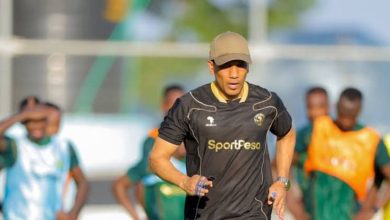
So, having watched Taifa Stars face Nigeria twice in five days, I am ready to offer Miguel Ángel Gamondi some professional advice. Free of charge, naturally.
Our boys travelled to Uyo on November 13 to face the Super Eagles, a squad whose combined market value could probably fund several Tanzanian clubs, complete with buses, training grounds and a reliable supply of bottled water.
It began disastrously.
Barely two minutes in, Alhassan Yusuf scored, while half of Tanzania was still searching for the remote control. My expert diagnosis was instant: Our defenders had forgotten that football starts with the referee’s whistle, not when everyone is comfortably seated.
Yet Taifa Stars bounced back. In the 32nd minute, Alphonce Msanga equalised, reminding the hosts that we had not flown all that way merely to admire their stadium. Hope returned.
Then came the second half. Nigeria brought on Tolu Arokodare, who clearly never received the memo about being kind to guests.
He scored in the 52nd and 60th minutes, and it was Nigeria 3, Tanzania 1. Our defence, solid until then, developed the communication problems of a family WhatsApp group on the night before a wedding.
The numbers agreed with the scoreboard. Nigeria had roughly 65 per cent possession and 13 attempts, seven on target. We managed eight attempts, only two of which troubled the goalkeeper.
Possession alone wins nothing; otherwise, teams would pass the ball around until someone handed them a trophy. But when your opponents dominate the ball, create chances and score three, blaming the referee, the weather, or the hotel breakfast wastes energy.
Even Gamondi admitted Nigeria deserved the win. For once, the coach and the nation’s Wachambuzi were in perfect agreement. Four days later the sides met again at Amaan Stadium, Zanzibar.
This time Gamondi was determined not to offer Nigeria another afternoon of free movement in our penalty area.
Taifa Stars stayed compact, guarded the centre and waited to counterattack. The result was a goalless draw.
Depending on which Mchambuzi you ask, this was either a tactical triumph or proof that our attack needs urgent government intervention. I sit somewhere in the middle.
Keeping out a side that scored three against us in Uyo deserves credit, and the players showed discipline and teamwork. But preventing defeat is not the same as creating victory.
A clean sheet is lovely; a clean sheet with a real attacking threat is lovelier. Sooner or later, somebody in your shirt must put the ball in the other net.
Let us be fair to the Argentine. He is building a competitive team from players with very different levels of experience, tactical education and match fitness, from domestic regulars to overseas professionals such as Novatus Miroshi, Bernard Kamungo and Charles M’Mombwa.
Talent, however, is not the same as a team.
A national coach also lacks a club manager’s luxury of summoning everyone each morning and punishing misplaced passes with extra laps. Understanding must be built quickly.
The two matches taught us that Taifa Stars can compete with stronger sides when organised and disciplined, but wobble when opponents raise the tempo, bring on fresh attackers or turn the game into a string of one-on-one duels.
Uyo exposed the weaknesses; Zanzibar showed adjustments are possible. Now we need stability and ambition together, because football, annoyingly, demands both.
Every Tanzanian supporter knows this scene. The midfielder wins the ball, plays a gorgeous pass, the winger races forward, the crowd rises, someone yells “PIGA!” and then… nothing.
The cross sails behind the goal, the striker arrives late, or the ball lands in a neighbouring postcode.
I exaggerate, but our lack of goals is no joke.
The Stars must sharpen movement in the box, decisions in the final third, finishing under pressure and the speed of transitions.
Forwards must spot chances before defenders close them. Midfielders must do more than destroy attacks; we need players who carry the ball, find passing lanes and create openings.
In Kariakoo terms, guarding the shop matters, but somebody has to sell the goods.
Now for the serious bit.
Tanzania has already qualified for AFCON 2027 as cohost with Kenya and Uganda. Wonderful news, and also a trap: mistaking automatic qualification for progress. Our place is guaranteed; our performance is not.
After four Group L matches, we have two points, from two draws and two defeats. That should worry anyone hoping for a memorable home tournament.
Yes, we are experimenting, and yes, Nigerians are formidable, but preparation must eventually show results. Supporters will not accept talk of “learning experiences” while visitors collect our goals like souvenirs.
Tanzania reached the Round of 16 at the previous AFCON in Morocco, a useful benchmark. Reaching the knockouts again should be the minimum, and a quarter-final would be real progress.
Press conferences will not deliver that. Preparation, quality opponents, tactical consistency and clear responsibilities will.
The Tanzania Football Federation must work with the technical bench and the clubs to protect preparation windows and get players fit and ready.
Friendlies should test specific weaknesses instead of serving as flag-swapping ceremonies. And selection should reward form, fitness and suitability over reputation.
A reminder, colleagues: Football is far easier from the sofa. From our sitting rooms, every passing lane is visible, every substitution obvious and every miss unforgivable. We see the whole pitch on television.
The player on the ball has about two seconds to decide while an opponent built like a refrigerator closes in at speed.
A little humility would improve our uchambuzi. Criticism should name problems and propose solutions; insults do neither.
Gamondi deserves scrutiny, not abuse. The players deserve encouragement, not immunity. The federation should answer hard questions about its preparation and hosting earns it no free pass.
My final tactical masterpiece? Well, if I were Gamondi, and thank goodness for Tanzanian football, I am not; my instructions would be beautifully simple.
Defend with discipline. Move the ball quickly. Support the striker. Avoid silly mistakes. Shoot when the chance comes. Above all, score more than the opposition.
A complete philosophy, developed without a single CAF coaching course. Mourinho, wherever you are, take notes. Behind the giggles there is a serious point.
Taifa Stars have shown they can respond to adversity and organise against stronger teams. What remains unproven is whether that resilience can become regular victories.
The coming months must answer that. AFCON 2027 gives us a chance to show progress in front of our own people, and turning up as hosts should not be mistaken for having achieved anything.
As for us wachambuzi, we will carry on analysing every pass, questioning every substitution and demanding perfection from players whose boots we could barely tie.
If Taifa Stars reach the quarter-finals, I shall proudly announce that my recommendations were decisive.
If they fail? Well, obviously, Gamondi did not listen to me.