THE COURAGE TO LOOK WITHIN: What China’s Fifth Plenum means for CCM and Africa
- Reflections on political leadership, institutional renewal and the future of development
There is something remarkable about a political institution that has endured for generations yet still finds the courage to ask whether it is doing enough, whether its leaders are living up to their responsibilities, and whether its structures remain fit for the future.
It is an uncomfortable exercise. History brings pride, but it can also create complacency. Authority brings influence, but it also demands accountability. And longevity, however impressive, offers no guarantee that yesterday’s achievements will answer tomorrow’s questions.
These reflections came to mind as the Communist Party of China (CPC) concluded the Fifth Plenary Session of its 20th Central Committee in Beijing on 29 October 2026.
Over four days, under the leadership of President Xi Jinping, the CPC examined a question that reaches to the heart of political leadership: how can a governing Party continually strengthen itself, confront weaknesses within its ranks and remain capable of fulfilling its responsibilities to the people?
The answer was not confined to speeches. The Plenum adopted a resolution on persevering with full and rigorous Party self-governance, setting out measures to strengthen discipline, improve leadership selection and supervision, combat corruption, reinforce institutional rules and hold officials accountable.
For a Party that has governed China for more than seven decades, such an undertaking carries considerable significance.
Yet the questions raised in Beijing are not China’s alone.
Thousands of kilometres away, in Tanzania, Chama Cha Mapinduzi (CCM) is approaching its Golden Jubilee in February 2027. At this defining moment, the Party’s Chairperson and President of the United Republic of Tanzania, H.E. Dr. Samia Suluhu Hassan, has directed a comprehensive assessment of CCM’s institutional condition, organisational strength and capacity to respond to contemporary challenges.
The two initiatives arise from different political histories and national circumstances. Nevertheless, they bring into focus a shared truth: the responsibility of leadership does not end with securing an institution’s place in history. It includes ensuring that the institution remains worthy of the responsibilities entrusted to it.
When history speaks
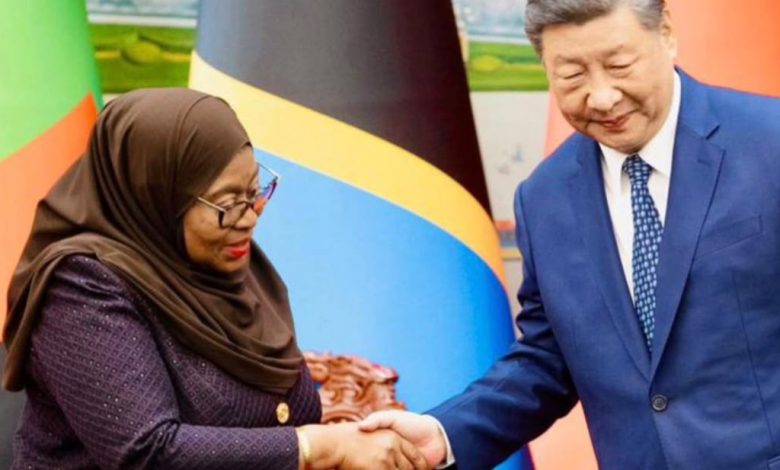
In March 2026, I had the privilege of accompanying Ambassador Dr. Asha-Rose Migiro, CCM’s first female Secretary-General, on her official visit to China. It was her first overseas mission since assuming the Party’s leadership, marking an important chapter in the longstanding relations between CCM and the Communist Party of China (CPC). The visit strengthened our two Parties’ cooperation and was followed, barely two months later, by a reciprocal visit to Tanzania in May 2026 by Comrade Liu Haixing, Minister of the International Department of the CPC Central Committee.
Among the experiences that stayed with me was our visit to the Museum of the Communist Party of China in Beijing.
Walking through its exhibitions, I encountered a story told through photographs, documents and reminders of extraordinary human struggle. There were accounts of hardship, sacrifice, political conviction and the difficult decisions that shaped China’s journey.
What struck me most was not simply the scale of the transformation that followed. It was the thought that behind every historical milestone stood ordinary people who had carried extraordinary responsibilities.
History can be a powerful teacher. But it is not always a comfortable one.
A museum may preserve the achievements of earlier generations. It cannot guarantee that those who inherit their institutions will display the same discipline, conviction or willingness to make difficult decisions.
That thought took me home to Tanzania.
Mwalimu Julius Nyerere understood that political independence was not the final destination of the national struggle. It was the beginning of another demanding journey: building a united nation, strengthening public institutions and ensuring that freedom translated into dignity and opportunity for ordinary citizens.
The unity, peace and political stability Tanzania has cultivated over the decades remain among the most important foundations of that national project.
When TANU and the Afro-Shirazi Party united to establish CCM in 1977, they brought together political traditions shaped by the struggle for independence, national unity and social transformation.
Nearly fifty years later, that inheritance remains significant.
But the greatest tribute a political movement can pay its founders is not simply to preserve their photographs, repeat their words or celebrate their achievements.
It is to carry forward their sense of responsibility.
And sometimes, carrying history forward requires the courage to question how the institution itself is functioning.
Beijing’s message: a Party must be willing to examine itself
The Fifth Plenum’s Communiqué offers a striking reflection on the CPC’s understanding of its own political journey.
It acknowledges that the Party’s history has involved not only achievement, but also the need to recognise mistakes, confront internal weaknesses and strengthen its capacity for self-correction.
Particularly significant is its emphasis on two principles that the CPC associates with overcoming the historical cycle of political rise and decline: supervision by the people and the capacity for self-reform.
This is an important distinction.
An institution cannot rely exclusively on the goodwill of its leaders to maintain discipline. Nor can it assume that its historical contribution automatically protects it against the misuse of power, poor judgement or institutional decline.
It must establish rules that are respected, systems that function and mechanisms through which responsibility can be enforced.
Under President Xi Jinping, the CPC has made rigorous Party governance and the fight against corruption central elements of its approach to political leadership.
The Fifth Plenum carried that agenda forward in concrete terms.
Its resolution places particular emphasis on strengthening political commitment, improving the selection and training of officials, reinforcing grassroots organisations, enforcing discipline and tightening supervision over the exercise of authority.
It also advances an integrated approach to combating corruption: ensuring that officials dare not, cannot and do not want to engage in corrupt conduct.
These three dimensions deserve reflection.
Punishment may discourage wrongdoing, but punishment alone cannot build an ethical institution. Effective rules and oversight must reduce opportunities for misconduct. Equally, political education and leadership culture must cultivate a genuine commitment to integrity.
The Communiqué also places particular responsibility on senior leaders, recognising the importance of regulating how those at the top exercise authority.
This is perhaps one of the most consequential aspects of institutional discipline.
Rules acquire meaning when they apply not only to the ordinary member, but also to those entrusted with the greatest responsibility.
The Plenum’s significance will ultimately be measured by how effectively these commitments are translated into practice. A resolution can establish direction; the daily conduct of institutions and their leaders determine whether that direction becomes reality.
That is a lesson worth considering beyond China.
Chairperson Samia and the responsibility of renewal
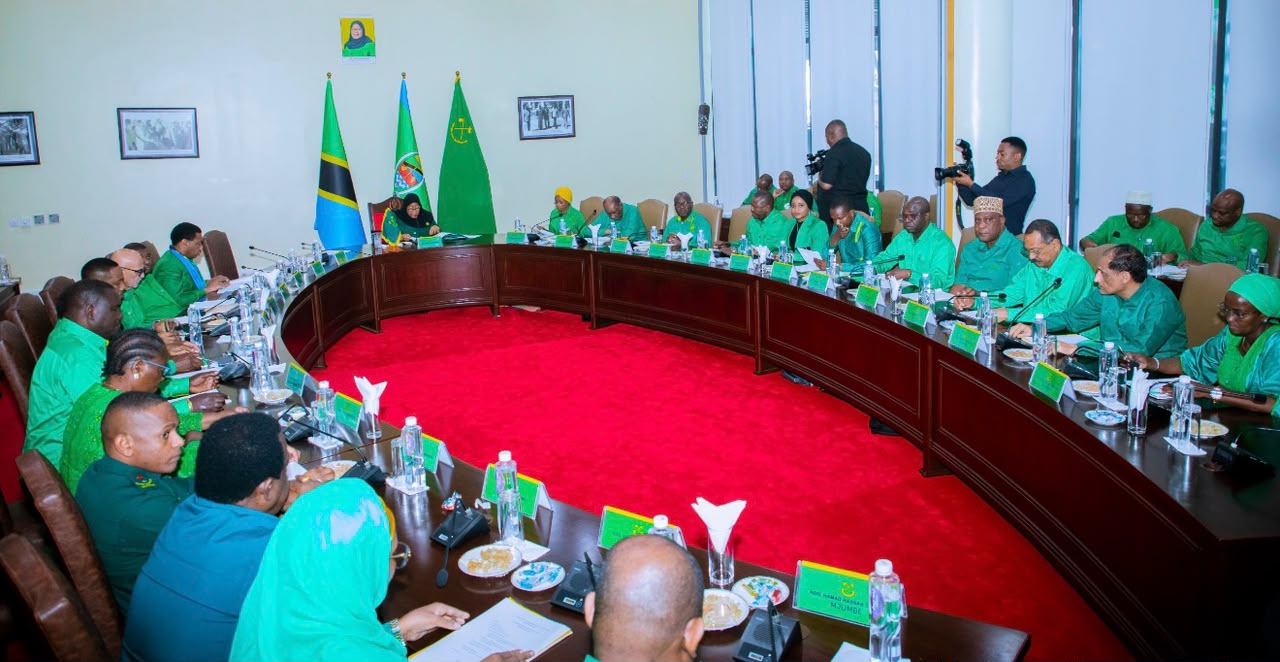
In Tanzania, CCM Chairperson Dr. Samia Suluhu Hassan’s directive for a comprehensive assessment of the Party represents an important exercise in institutional responsibility.
It comes at a moment when CCM has much to reflect upon.
CCM has played a central role in Tanzania’s political development, national cohesion and long-term stability. It has accumulated considerable organisational experience, established structures across the country and maintained relationships with political movements throughout Africa and beyond.
These are important strengths.
But Dr. Samia’s initiative recognises that institutional strength cannot be measured by history alone.
The Party must also examine its present condition and its readiness for the future.
Is it sufficiently connected to the everyday concerns of citizens? Are its structures effective from the grassroots to the national level? Does it prepare leaders with the competence and ethical standards required of them? Are its resources managed responsibly? Can it respond to the expectations of a changing society?
Such questions are not signs of institutional weakness.
They are expressions of responsible leadership.
CCM’s ongoing reflections have identified five important areas of focus: organisational vitality, economic strength, ethics and accountability in leadership, unity, and renewed competitiveness.
Together, they provide a framework for considering how the Party can strengthen its internal foundations while remaining responsive to the people it serves.
There is something particularly significant about the timing.
As CCM prepares to celebrate fifty years of existence, Chairperson Samia is encouraging the Party to look beyond the commemorative moment and examine the responsibilities of its next chapter.
This is an opportunity to ensure that the Golden Jubilee becomes more than a celebration of institutional endurance.
It can become a moment of renewal.
For a political movement with such a substantial historical legacy, the challenge is not merely to remain present in national life. It is to remain relevant to the aspirations of successive generations.
Today’s young Tanzanians are asking questions shaped by their own circumstances: Where will meaningful employment come from? How will education translate into opportunity? Can innovation and entrepreneurship improve their livelihoods? Will institutions respond fairly, efficiently and respectfully to their needs?
A governing Party must remain attentive to these questions.
Historical achievements provide a foundation for public confidence. Continuing trust must also be earned through conduct, responsiveness and results.
This is where Chairperson Samia’s initiative acquires its deeper significance. Institutional assessment is not simply about identifying what is wrong. It is about protecting what is valuable, correcting what needs improvement and preparing the Party to serve more effectively in the decades ahead.
The human character of leadership
Political institutions are often discussed in the language of structures, constitutions, committees and regulations.
Yet behind every institutional success or failure stands a human decision.
A leader chooses whether to listen or dismiss a concern. An official decides whether to act with integrity or abuse a position. A committee determines whether to confront a difficult issue or postpone it. A young cadre learns, through example, what responsible leadership looks like.
This is why the quality of political leadership matters so profoundly.
President Xi Jinping’s emphasis on the conduct and supervision of officials reflects an understanding that political authority must be accompanied by discipline and responsibility.
Chairperson Samia’s call for CCM’s institutional assessment similarly invites reflection on the standards expected of those entrusted with the Party’s responsibilities.
And Mwalimu Nyerere’s legacy reminds us that leadership carries an obligation extending beyond personal ambition.
These leaders belong to different historical moments and political circumstances. Their experiences should not be treated as identical. Yet they draw attention to a fundamental relationship between leadership, institutional character and the wellbeing of the people.
An institution may possess an impressive constitution and carefully written regulations. But its real character becomes visible in the behaviour of the people entrusted to uphold them.
That is why institutional renewal must reach beyond documents and meetings.
It must influence how leaders think, how they make decisions, how they use authority and how they respond when things go wrong.
Preparing those who will lead tomorrow
Another memory from my visit to China remains particularly relevant.
At the Central Party School in Beijing, I encountered an institutional approach to political education and leadership development that prompted a simple question: how deliberately do political movements prepare the next generation to inherit their responsibilities?
Leadership is not automatically acquired through seniority, appointment or political experience.
It requires knowledge, judgement, discipline, ethical conviction and the ability to understand changing social and economic realities.
The Fifth Plenum recognised this challenge by emphasising the education, selection, management and supervision of officials, including the development of outstanding young cadres.
This is an area in which cooperation between the CPC and Africa’s liberation movements has acquired practical expression.
The Mwalimu Julius Nyerere Leadership School in Kibaha, Tanzania, established through cooperation between the CPC and six sister liberation movements of Southern Africa, provides a platform for political education, leadership development and institutional exchange.
In May 2026, the establishment of the Research Centre for Xi Jinping Thought on Socialism with Chinese Characteristics for a New Era added a further dimension to that cooperation.
There is powerful symbolism in a leadership school bearing Mwalimu Nyerere’s name providing a setting for the study of ideas associated with President Xi Jinping.
It brings different political experiences into a shared intellectual space.
The purpose of such engagement should not be to reproduce another country’s institutions or assume that every approach can be transferred unchanged.
It should be to learn, compare experiences, examine what has worked and determine which lessons may be useful within our own national circumstances.
For CCM and its sister movements, the opportunity is substantial.
Political education must prepare leaders not only to understand the history of their movements, but also to manage institutions, interpret economic change, engage younger generations, uphold ethical standards and translate political commitments into practical results.
Africa’s future will depend, in no small measure, on the quality of the people it prepares to lead.
From Party discipline to national transformation
The Fifth Plenum also invites reflection on the connection between institutional governance and national development.
China’s transformation has involved sustained investment, long-term planning, industrial development, technological advancement and extensive institutional coordination.
The Communiqué places the strengthening of Party governance alongside the implementation of the country’s 15th Five-Year Plan for 2026–2030, linking institutional capacity with the broader objectives of Chinese modernisation.
The underlying message is important: national ambitions require institutions capable of implementing them.
A development plan may describe a compelling future, but that future is built through decisions taken every day.
Resources must be allocated responsibly. Projects must be implemented competently. Officials must be held accountable. Institutions must coordinate their work. Results must be measured, and shortcomings must be addressed.
For Tanzania, this reflection is especially relevant as the country advances its Development Vision 2050 under President Samia’s leadership.
The Vision presents a long-term aspiration for a prosperous, inclusive and competitive nation.
Achieving it will require more than policy declarations.
It will demand capable institutions, ethical leadership, continuity of purpose and the discipline to turn commitments into measurable improvements in people’s lives.
This is where political leadership and national development meet.
A Party that seeks to contribute meaningfully to national transformation must ensure that its own institutions are capable of supporting that ambition.
The connection is equally important for Africa.
The continent possesses immense human potential, natural resources and expanding opportunities in trade, technology, energy and industrial development.
But potential alone does not produce prosperity.
The decisive question is whether countries can develop the institutions and leadership capacity necessary to convert opportunity into lasting progress.
China’s experience offers lessons worth studying. Africa must interpret those lessons through its own histories, constitutional arrangements and development priorities.
The objective is not to become another China.
It is to become more capable of realising our own aspirations.
A friendship measured by what it delivers
The relationship between CCM and the CPC has deep historical foundations.
It grew from a period when political solidarity, national liberation and the pursuit of economic independence shaped relations between Tanzania and China.
The Tanzania-Zambia Railway, TAZARA, remains one of the most enduring reminders of that history.
It was more than an infrastructure project. It represented a belief that friendship between nations could be expressed through practical commitments to development, connectivity and economic opportunity.
Today, the relationship has evolved across many areas, including trade, investment, infrastructure, education, technology and institutional cooperation.
Party-to-Party engagement adds another dimension through exchanges on leadership, governance and organisational development.
The Mwalimu Julius Nyerere Leadership School demonstrates the value of moving beyond expressions of friendship towards sustained institutional cooperation.
As CCM undertakes its assessment and prepares for its Golden Jubilee, there is an opportunity to deepen this practical dimension of the relationship.
The most valuable partnerships are not those that produce the longest declarations.
They are those that strengthen institutions, develop human capacity and improve people’s lives.
Friendship acquires its deepest meaning when its benefits extend beyond conference rooms and reach the communities whose futures political leaders are entrusted to shape.
Fifty years on: what will the next generation inherit?
As I reflect on the conclusion of the Fifth Plenum, my thoughts return to the museum in Beijing.
I remember the historical photographs, the stories of sacrifice and the sense of responsibility that accompanies the inheritance of a political movement.
But I also think about the future.
What will the next generation say about the institutions we are shaping today?
Will they inherit organisations that are stronger because their leaders were willing to confront difficult questions? Will they find systems that reward integrity, competence and service? Will they discover that the promises made in political gatherings were followed by the discipline required to fulfil them?
These are questions worth asking in Beijing, in Dodoma and across Africa.
For the CPC, the Fifth Plenum has concluded with a resolution to strengthen Party self-governance, discipline, institutional oversight and accountability.
For CCM, Chairperson Samia’s comprehensive assessment presents an opportunity to examine the Party’s foundations and prepare it for the responsibilities of its next fifty years.
Neither undertaking should be judged by the strength of its declarations alone.
Its true significance will emerge in the decisions implemented, the conduct improved, the weaknesses addressed and the confidence earned through service.
Mwalimu Nyerere’s generation helped establish the foundations of Tanzania’s unity and political identity. Chairperson Samia’s generation now carries the responsibility of renewing institutions and advancing the country’s development ambitions towards 2050. President Xi’s leadership of the CPC offers a contemporary example of how a longstanding governing Party is seeking to strengthen discipline and institutional accountability while pursuing national modernisation.
The circumstances differ, but the underlying challenge is familiar.
Political history is not an inheritance to be admired from a distance. It is a responsibility to be carried forward.
As CCM approaches its fiftieth anniversary, the most meaningful question may not be how much the Party has achieved in the past five decades.
It may be what kind of institution it intends to leave to those who will lead Tanzania through the next five.
And perhaps that is the enduring message connecting Beijing and Dodoma.
The courage to look within is not a rejection of history. It is the determination to ensure that history remains a source of strength rather than an excuse for standing still.
For ultimately, the greatness of a political movement is not measured by how long it has held responsibility, but by how faithfully it continues to serve, how courageously it confronts its weaknesses and how effectively it prepares its people for the future. The future will not ask only what we inherited. It will ask what we did with it.
The writer is Regional Integration expert based in Dar es Salaam- Tanzania.