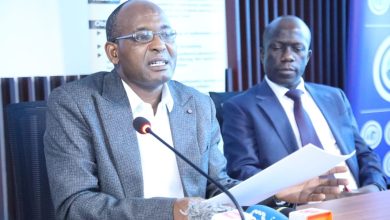
TCRA cherishes communication sector growth

DAR ES SALAAM: AN analysis by the Tanzania Communications Regulatory Authority (TCRA) has revealed that communications sector has experienced significant growth over the past four years under President Samia Suluhu Hassan.
This growth has been driven by improved communication infrastructure, reliable management, and fair competition among service providers.
TCRA’s Director General Dr Jabiri Bakari said the expansion of communication infrastructure includes the construction of additional mobile phone towers, which have enhanced services through the use of advanced communication technologies.
He said TCRA’s efficient regulation has fostered competition, particularly in telecommunications, resulting in expanded services, improved accessibility, and broader adoption of technology.
According to him, the government launched initiatives to build new mobile towers and improve existing ones.
For the 2024/2025 financial year, the government aims to complete the construction of 758 towers across 713 wards in Mainland Tanzania, targeting areas that currently lack reliable communication services.
He said construction began in 2023, with plans to improve and upgrade 300 additional towers. This project aims to provide high-speed internet services through mobile phones and devices.
ALSO READ: Police, TCRA nab five fake NSSF workers
Dr Bakari said the construction of 42 towers across 38 villages in Unguja and Pemba began in 2022. According to TCRA’s quarterly report for October to December 2024, mobile phone systems supporting third-generation (3G) communications have reached 12,762, while 4G systems have increased to 12,562.
The number of fifth-generation (5G) systems has grown by 8 per cent to 900, with expanded coverage in urban areas. TCRA’s analysis of communications statistics reveals that there is no monopoly among telephone and internet service providers.
Data from December 2024 shows that no single mobile service provider—Airtel, Halotel, TTCL, Vodacom, or Yas (formerly Tigo)—holds more than 32 per cent of the active communication SIM cards. However, Vodacom accounts for 54 per cent of all SIM cards using machine-to-machine (M2M) communication technology.
As of December 2024, there were 86,769,161 mobile phone SIM cards in use, with 1,066,566 being M2M SIM cards.
This technology has been implemented over the past four years, with notable applications such as modern electricity and energy meters, and security cameras that transmit information remotely to the owner’s mobile phone.
During this period, mobile call prices have significantly decreased by 58 per cent, from 63/- per minute in March 2021 to an average of 27/- per minute by December 2024.
Dr Bakari noted that this reduction in user costs is linked to a decrease in inter-network call connection fees, which fell from 15.60/- per minute in 2018 to 2.00/- in 2022, and has now reached 1.52/- in 2024.