Tanzania’s rice belt faces growing Aphid menace
KILIMANJARO: FOR decades, rice farming has been a reliable source of income and food security for thousands of households across Tanzania. From the irrigated plains of Mabogini in Kilimanjaro region to the vast rice fields of Morogoro, Mbeya and the Lake Zone, farmers have depended on the crop to sustain their livelihoods.
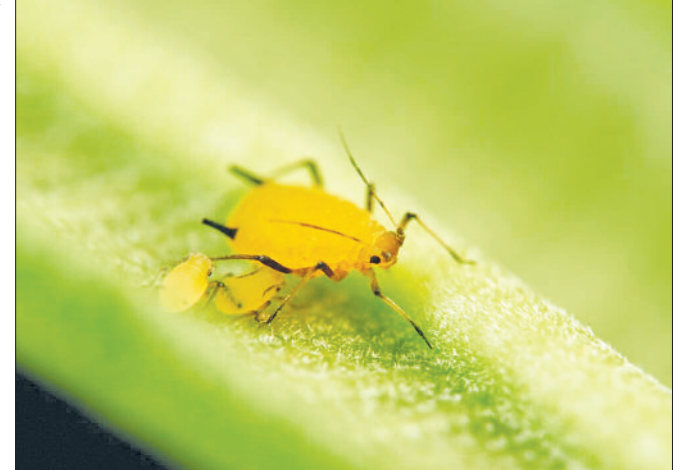
Today, however, a tiny insect no larger than a grain of rice is emerging as one of the biggest threats to the country’s rice production. The Yellow Sugarcane Aphid (YSA), scientifically known as Sipha flava, is rapidly spreading across Tanzania’s ricegrowing regions, causing severe crop damage and threatening the incomes of thousands of farmers.
Researchers warn that unless effective and sustainable control measures are developed, the pest could undermine efforts to increase agricultural productivity, strengthen food security and achieve the ambitions outlined in the country’s Development Vision 2050. Originally reported in the Caribbean Islands, the Yellow Sugarcane Aphid has gradually expanded its geographical reach across North America, Europe, Africa and Asia.
In Africa, the pest was first reported in Morocco in 2006 before spreading to South Africa in 2013 and later to Zambia, Zimbabwe and Malawi in 2015. Kenya reported the pest in 2019.
According to a University of Dar es Salaam (UDSM) lecturer and project coordinator, Dr Constantine Busungu, the pest was first observed in Tanzania around 2018 in major sugar estates including TPC Limited, Kagera Sugar Limited, Kilombero Sugar Company Limited, Mtibwa Sugar Estate, Manyara Sugar Limited, Mkulazi Holdings and Bagamoyo Sugar Company Limited before being officially reported in 2020. Since then, the pest has steadily expanded beyond sugarcane plantations into ricegrowing ecosystems where its impact is becoming increasingly evident.
“The pest has demonstrated an extraordinary ability to adapt and survive in different agroecological conditions,” says Dr Busungu. The aphid feeds by sucking sap from leaves, reducing the plant’s ability to carry out photosynthesis. As a result, leaves turn yellow, plant growth becomes stunted and grain production declines significantly.
The threat has become serious enough to attract national research attention. Through the NORAD Climate Call Programme, the Tanzania Commission for Science and Technology (COSTECH) is funding a fouryear research project worth 301m/- aimed at developing sustainable management strategies for the pest.
Dr Busungu said the project focuses on understanding the distribution, ecology, farmer perceptions, and sustainable management options for the pest in rice production systems under changing climatic condition The project is being implemented by UDSM in collaboration with the Tanzania Agricultural Research Institute (TARI) centres at Naliendele, Tengeru, Dakawa and Kibaha.
One of the researchers involved in the project, Mr Wilson Masele from UDSM’s College of Agricultural Sciences and Fisheries Technology (CoAF), says the initiative goes beyond understanding the pest’s biology. “Our objective is to develop long-term solutions that farmers can practically use,” he says.
ALSO READ: Kibaha disburses 991.5m/- to special groups
The project has engaged Master’s and PhD students who are conducting specialised studies on different aspects of aphid management. Some researchers are evaluating botanical pesticides derived from locally available plants. Others are screening rice varieties for resistance to aphid attack, while another group is studying environmentally friendly biological control methods.
“The ultimate goal is to obtain rice varieties that can tolerate aphid infestation and develop safe pest control products that farmers can easily access and use,” says Mr Masele.
A nationwide survey conducted during the 2025 ricegrowing season showed that infestation has spread rapidly across major rice-producing regions. Morogoro and Manyara recorded the highest infestation levels, exceeding 80 percent. Moderate infestation ranging between 40 and 50 per cent was observed in Kilimanjaro, Arusha and Tanga regions. Meanwhile, infestation levels of between 30 and 40 per cent were recorded in Kagera, Mwanza, Shinyanga, Tabora, Mbeya, Iringa and Rukwa.
The findings suggest that the pest is becoming established across diverse ecological zones, raising concerns among agricultural experts.
Equally worrying are the economic consequences where researchers found that aphid attacks can reduce rice yields by up to 72 per cent. In severe cases, losses may reach between 90 and 100 per cent, particularly when infestations occur during critical crop growth stages. Mr Masele says the pest causes the greatest damage during the flowering stage, although young rice plants are also highly vulnerable.
“When the aphids attack, they suck sap from the plant and interfere with its ability to produce food. This directly affects grain formation and final yields,” he says.
The impact is already being felt by farmers. In Mabogini, Kilimanjaro region, where irrigation has traditionally enabled farmers to harvest between six and seven tonnes of rice per hectare, yields have dropped significantly in some affected farms. Ms Redemta Shiyo, a rice farmer from the area, recalls experiencing substantial losses during recent outbreaks.
“Previously, I could harvest six to seven tonnes per hectare. But after the aphid attacks, production dropped considerably and the income was no longer sufficient,” she says.
Some farmers, she adds, have considered abandoning rice farming altogether in favour of alternative crops perceived to be less vulnerable. Another farmer, Mr Pantaleo Msoka of Moshi, says the pest has become one of the biggest challenges facing rice growers.
“If the infestation occurs early and is not controlled, losses can be devastating. Some farmers harvest less than half of what they expected,” he explains.
Scientists have also discovered that the pest survives on several host plants besides rice and sugarcane. Studies conducted in Morogoro identified aphid populations on okra and other grass species growing near rice fields. This ability to utilise multiple host plants enables the insect to survive throughout the year and quickly reinfest cultivated fields. Climate change may further worsen the problem.
According to researchers, infestation levels tend to increase during January and February when warm temperatures and relatively dry conditions favour rapid aphid reproduction. Heavy rainfall, on the other hand, helps reduce aphid populations by washing insects from plant surfaces.
“Changing rainfall patterns and prolonged dry spells could create conditions that favour the spread of the pest,” notes Dr Busungu. To counter the threat, researchers are developing climate-smart and environmentally sustainable management strategies.
Current efforts include identifying plant extracts with insecticidal properties, promoting beneficial insects that naturally prey on aphids and breeding rice varieties with improved resistance. Scientists are also screening local rice landraces and developing improved lines through mutation breeding of the popular SARO 5 variety. The development of resistant varieties is considered one of the most sustainable long-term solutions because it reduces dependence on chemical pesticides while protecting yields.
Beyond scientific discoveries, the project has contributed to building local research capacity by training young scientists and postgraduate students. Mr Masele believes this aligns with national efforts to strengthen science, technology and innovation as drivers of economic transformation.
“This is exactly what Vision 2050 advocates. Through research, Tanzania is building its own capacity to solve agricultural challenges using local expertise and scientific infrastructure,” he says.
However, researchers caution that more investment is needed. While COSTECH’s support has enabled significant progress, they say additional resources will be required to transform research findings into practical products that can reach farmers.
“The purpose of research is to solve problems facing society. If we stop before technologies reach farmers, then the needs of rice growers will remain unmet,” Mr Masele stresses. As Tanzania seeks to boost agricultural productivity, strengthen food security and expand agro-processing industries, researchers argue that science-driven solutions will be essential.
For now, the battle against the Yellow Sugarcane Aphid continues. The insect may be small, but its impact on farmers’ livelihoods, national food security and the future of rice production is enormous. The outcome of ongoing research could therefore determine whether Tanzania stays ahead of one of the fastest-spreading agricultural pests of recent years.