Tanzania’s green industrialisation drive seeks to turn climate ambition into opportunity
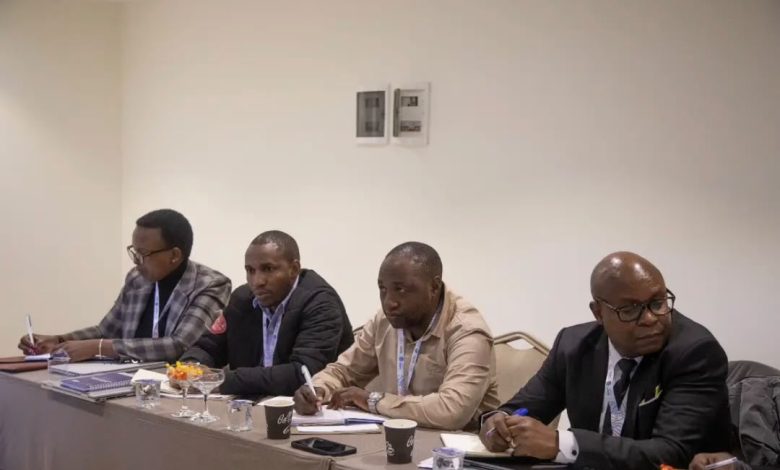
TURKEY: TANZANIA’S ambition to build a competitive industrial economy is increasingly intersecting with one of the defining challenges of global climate policy: how to expand manufacturing, create employment and increase national wealth while reducing the environmental footprint of production.
With mineral wealth, expanding energy infrastructure and a new industrial development framework, Tanzania has an opportunity to position low-carbon manufacturing at the centre of its economic transformation. The challenge is to attract investment; build technological capacity and ensure industrial growth does not come at the expense of environmental sustainability.
The question is particularly relevant as the country pursues the objectives of Dira 2050, which places industrialisation, technological advancement, economic diversification and sustainable development among its long-term priorities.
At the 31st Conference of the Parties to the United Nations Framework Convention on Climate Change (COP31), taking place in Antalya, Türkiye, from November 9 to 20, 2026, green industrialisation features prominently in the Presidency’s Action Agenda.
The initiative seeks to accelerate low-carbon industrial production, while maintaining economic competitiveness, supporting innovation and enabling developing countries to participate more effectively in emerging green value chains.
For Tanzania, the agenda presents an opportunity to connect its industrial ambitions with international efforts to decarbonise manufacturing, strengthen circular production systems and mobilise investment in cleaner technologies.
The country’s substantial mineral resources, expanding electricity infrastructure, agricultural production base and growing investment portfolio provide important foundations. However, converting these advantages into competitive green industries will require more than resource availability.
It will depend on reliable and affordable energy, modern technology, industrial infrastructure, skilled labour, accessible finance and a predictable investment environment. Industry is central to economic development, but it is also a significant source of greenhouse gas emissions.
Manufacturing activities, particularly in steel, cement, chemicals, aluminium and fertiliser production, require substantial amounts of energy and often depend on fossil fuels and carbon-intensive industrial processes. The COP31 Presidency identifies industry as responsible for approximately a quarter of global emissions, highlighting the need to accelerate the transition towards near-zero-emission production.
Its Green Industrialisation Action Agenda focuses on five areas: international cooperation, industrial decarbonisation hubs, market creation and demand, near-zero-emission technologies and sustainable value chains. The initiative also seeks to increase the share of recycled materials used in manufacturing and production to at least 15 per cent by 2035.
Its proposed mechanisms include the Antalya Green Industrialisation Compact, a Circularity Knowledge Sharing Network, an AI-enabled clean technology initiative and a facilitation mechanism for green industrialisation in least-developed countries.
The emphasis is on making low-carbon industrial production commercially viable rather than treating environmental sustainability as an additional cost imposed on manufacturers. This distinction matters for developing economies.
Countries such as Tanzania need to expand their manufacturing capacity, process more of their natural resources domestically and create productive employment. A transition that restricts industrial growth without providing affordable technology, finance and investment support would risk widening existing economic inequalities.
The COP31 initiative therefore seeks to combine industrial competitiveness with emissions reduction, technology transfer and stronger international partnerships. Tanzania has long recognised industrialisation as a central driver of economic transformation.
The Third National Five-Year Development Plan (FYDP III), covering 2021/22–2025/26, was guided by the theme Realising Competitiveness and Industrialisation for Human Development. It sought to improve manufacturing productivity, strengthen science and technology capabilities, promote investment in special economic zones and increase the use of locally available resources in industrial production.
The plan also emphasised industrial value addition, technology transfer, research and development, and the development of productive infrastructure. The transition towards Dira 2050 provides a longer-term framework for advancing these objectives.
Its ambition to build a competitive, diversified and increasingly industrialised economy requires productive sectors to become more efficient, technologically advanced and environmentally sustainable. An important development came in 2025 with the adoption of the Sustainable Industrial Development Policy, providing an updated framework for industrial expansion and competitiveness.
The policy direction is reinforced by the Government’s partnership with the United Nations Industrial Development Organisation (UNIDO). On November 3, 2026, Tanzania and UNIDO officially launched the Programme for Country Partnership (PCP) 2026– 2031, a five-year framework intended to mobilise investment, strengthen productive capacity and advance inclusive and sustainable industrial development.
The programme has an indicative investment framework of nearly US$67 million and is jointly owned and co-led by the Ministry of Industry and Trade in Mainland Tanzania and the Ministry of Trade and Industrial Development in Zanzibar.
Its six pillars cover policy and governance; sustainable value chains and value addition; skills development; investment and export promotion; cleaner production and circular economy; and energy access and efficiency, including clean cooking.
These priorities are particularly relevant to COP31’s Green Industrialisation agenda because they connect industrial growth with resource efficiency, cleaner production and investment in sustainable technologies. The partnership also provides a platform for coordinating government institutions, development partners, financial institutions and private investors around nationally defined industrial priorities.
The challenge will be to translate the programme’s investment framework into commercially viable projects, measurable industrial improvements and sustained employment. Clean energy as the foundation of industrial competitiveness No industrial transformation can be sustained without reliable and affordable energy.
Electricity availability and cost influence the competitiveness of manufacturers, particularly energy-intensive industries such as cement, steel, fertilisers, chemicals and mineral processing. Tanzania’s investment in electricity generation and transmission infrastructure is therefore an important part of its green industrialisation proposition.
One of the country’s major achievements is the completion of the 2,115-megawatt Julius Nyerere Hydropower Project (JNHPP) in May 2025. Located on the Rufiji River, the project has an estimated annual generation capacity of 6,307 gigawatthours.
According to the Ministry of Energy, all nine generating units had been completed by June 2025, marking a major addition to the country’s electricity generation capacity The project has the potential to strengthen electricity supply to households and businesses while supporting the expansion of industrial production. However, generation capacity alone does not guarantee reliable power for manufacturers.
Transmission infrastructure, distribution networks, maintenance, grid stability and the ability to manage variations in hydrological conditions remain important considerations. The National Climate Change Response Strategy 2021–2026 recognises the importance of low-emission development pathways, energy efficiency, renewable energy and climate-smart technologies.
Tanzania’s next industrial policy phase should therefore place greater emphasis on connecting new industrial investments with reliable electricity supply, energy-efficient production systems and appropriate renewable energy technologies.
ALSO READ: Tanzania set for COP31 Climate Change Conference in Türkiye
Solar, wind, geothermal and hydropower can provide opportunities to diversify the energy mix, while energy storage and modern grid management can improve reliability. Industrial parks and special economic zones could also benefit from integrated energy systems, efficient cooling, waste recovery and shared environmental infrastructure.
Such investments would help reduce production costs, improve resource efficiency and strengthen the ability of Tanzanian manufacturers to compete in markets increasingly influenced by environmental standards. Critical minerals: an opportunity beyond extraction Tanzania’s mineral resources provide another important dimension of the green industrialisation agenda.
The global transition towards electric mobility, renewable energy systems, battery storage and other clean technologies is increasing demand for minerals such as nickel, graphite, copper and rare earth elements. Tanzania has deposits of several minerals that are important to these emerging industries, creating opportunities to participate in supply chains associated with the global energy transition.
The strategic minerals study published by the UONGOZI Institute identifies phosphate, copper, graphite, nickel, rare earth elements and titanium as resources with potential to support domestic mineral processing and manufacturing.
However, the study also identifies a significant structural weakness: much of the country’s mineral production has historically been exported in raw or semi-processed form, limiting the opportunities for domestic manufacturing, technology transfer and industrial linkages. Its analysis of mineral exports during 2019–2023 found that 84.5 per cent were exported in raw form, 14.8 per cent in semiprocessed form and only 0.7 per cent in processed form.
The findings underline the scale of the value-addition opportunity, but also the distance Tanzania must travel to develop more extensive domestic processing capabilities. Projects involving nickel, graphite and other strategic minerals could create opportunities for mineral processing, refining and the production of intermediate industrial materials.
The wider ambition should be to develop value chains connecting mineral extraction with manufacturing, engineering services, research institutions, transport infrastructure and skilled employment. Yet this will require substantial investment in processing technology, electricity, water supply, technical expertise and environmental management.
The UONGOZI Institute’s strategic minerals research identifies limited processing capacity, policy coordination challenges and gaps in industrial linkages as obstacles to achieving greater domestic value addition. It recommends stronger policy coordination, investment in advanced processing technologies, workforce development and regional cooperation to create economies of scale.
The findings suggest that Tanzania’s competitive advantage will depend not simply on the minerals it possesses, but on how effectively it develops the industrial capabilities needed to process and utilise them. Circular economy and cleaner production Green industrialisation also requires a fundamental change in how industries use resources.
Traditional production systems often follow a linear model in which raw materials are extracted, processed, consumed and discarded. This approach increases pressure on natural resources, generates waste and creates additional environmental costs.
A circular economy seeks to reduce these pressures by promoting resource efficiency, recycling, reuse, repair and the recovery of materials from industrial waste. For Tanzania, this presents opportunities across manufacturing, agriculture, construction, mining and urban waste management. In the manufacturing sector, industries can reduce material losses through improved production technologies, recycling systems and more efficient use of water and energy.
Agricultural processing can generate additional value through the utilisation of crop residues and other by-products. In the construction industry, recycled materials can contribute to reducing demand for virgin raw materials, provided they meet appropriate technical and safety standards. Mining operations can also improve environmental performance through responsible tailings management, water recycling, rehabilitation of mined land and recovery of useful materials from waste streams.
The COP31 Presidency’s target of increasing the use of circular materials in manufacturing to at least 15 per cent by 2035 provides an international reference point for countries seeking to strengthen resource efficiency. Tanzania’s newly launched UNIDO partnership already identifies cleaner production and circular economy as one of its six pillars.
The next step is to translate these commitments into industrial standards, incentives, recycling infrastructure, research and investment in appropriate technologies. Investment, technology and the implementation gap Tanzania’s industrial transformation will require capital and technical capabilities on a scale that public resources alone cannot provide.
The private sector will be central to developing processing facilities, industrial parks, renewable energy projects, recycling systems and modern manufacturing operations. Investment trends suggest growing interest in the country’s economic potential. Data from the Tanzania Investment and Special Economic Zones Authority show that 915 investment projects, valued at US$10.95 billion, were registered in 2025, compared with 252 projects worth US$3.7 billion in 2021.
The figures cover all sectors and should not be interpreted as investment exclusively directed towards green manufacturing. Nevertheless, they indicate an expanding investment pipeline from which sustainable industrial projects could emerge. To attract more green industrial investment, Tanzania needs to strengthen access to affordable long-term finance, improve technology transfer arrangements and ensure that industrial policies are supported by predictable regulations.
International climate finance can help address the higher initial costs of cleaner industrial technologies, particularly where projects deliver substantial emissions reductions but face difficulties securing commercial financing.
The COP31 Green Industrialisation agenda also offers opportunities for developing countries to engage in international technology partnerships, industrial decarbonisation hubs and financing initiatives.
However, the benefits will depend on whether such mechanisms are accessible to countries seeking to establish their industrial foundations rather than only to economies with mature manufacturing systems. Tanzania also needs to invest in research, technical education and specialised industrial skills.
The adoption of advanced manufacturing technologies, energy management systems and cleaner production processes requires engineers, technicians, scientists and skilled operators.
Universities, vocational training institutions and research centres must therefore become more closely connected to the needs of industry. The challenge is to ensure that technology transfer creates lasting domestic capabilities rather than dependence on imported machinery, exp