Tanzania’s gas bonanza signals jobs, energy and billions in revenue
DODOMA: FOR a household waiting to be connected to natural gas, a small business struggling with rising energy costs or a young Tanzanian seeking employment, the country’s expanding natural gas industry represents more than figures in a financial statement. It holds the promise of more accessible energy, new business opportunities, employment and improved livelihoods.
It is against this backdrop that the Tanzania Petroleum Development Corporation (TPDC) has reported a profit of 73bn/- as it enters the 2026/27 financial year, while intensifying efforts to increase natural gas production, expand distribution infrastructure and promote wider utilisation of the resource across the country.
Beyond its financial performance, the Corporation’s latest achievements highlight the growing contribution of Tanzania’s oil and gas sector to government revenue, industrial development, employment creation and community services.
TPDC Executive Director, Mussa Makame, announced the figures recently in Dodoma while briefing journalists on the Corporation’s achievements during the 2025/26 financial year and its priorities for 2026/27.
He said the Corporation had paid 50bn/- in taxes and contributed 142bn/- through gas profit-sharing and royalties to the Oil and Gas Revenue Fund. It had also paid dividends amounting to 15bn/-.
These contributions demonstrate the sector’s potential to support national development. However, the ultimate measure of success will be how effectively these financial resources and investments translate into better public services, employment, affordable energy and economic opportunities for Tanzanians.
Currently, TPDC, working with operators of the Songo Songo and Mnazi Bay gas fields, produces an average of 170 million cubic feet of natural gas per day. Approximately 85 per cent of this production is used for electricity generation, while the remainder supplies industries, institutions and households.
For industries, reliable energy is essential for maintaining production, controlling operating costs and improving competitiveness. For households, wider access to natural gas offers an additional energy option, with the potential to reduce dependence on other energy sources.
Increasing production is central to TPDC’s strategy to meet the country’s growing energy requirements and support economic expansion. During the 2026/27 financial year, the Corporation plans to increase production from the Mnazi Bay and Songo Songo gas fields while advancing development activities in the Ntorya area of the Ruvuma Block.
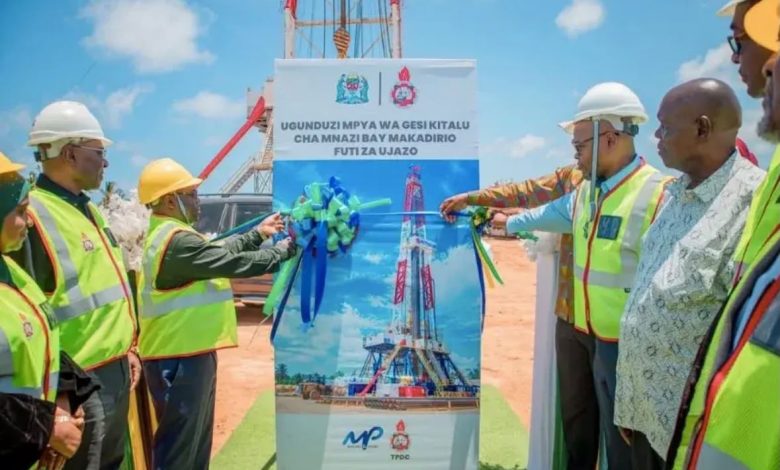
At Mnazi Bay, two new production wells have already been completed and connected to the gas processing system in collaboration with Maurel & Prom. The wells have a combined production capacity of approximately 65 million cubic feet per day.
The project, valued at about 80 million US dollars, (about 211.3bn/-) has also created opportunities for Tanzanian companies to provide various goods and services. This demonstrates how major investments in the energy sector can stimulate business activities beyond the extraction of natural resources.
In Ntorya, TPDC is constructing a 34.2-kilometre gas pipeline connecting the area to the Madimba gas processing system. Valued at 120bn/- , the pipeline is 67 per cent complete and is expected to be completed in the final quarter of 2026.
With a transportation capacity of up to 140 million cubic feet of gas per day, the pipeline is expected to facilitate the development and utilisation of Ntorya’s gas resources for electricity generation, industrial applications and other energy needs.
While increasing production is important, ensuring that natural gas reaches more consumers remains equally critical. One of TPDC’s approaches is exploring alternative transportation technologies that can extend gas distribution beyond areas served by conventional pipelines.
The Corporation has begun discussions with investors on adopting Mini-LNG technology, which involves processing natural gas into liquefied form for transportation by specially designed trucks to locations more than 500 kilometres from existing pipeline infrastructure.
Mr Makame said TPDC was holding discussions with six companies and had already signed gas sale agreements with three of them. The companies are undertaking preliminary activities, including land acquisition and Environmental and Social Impact Assessments, ahead of the engagement of construction contractors.
If successfully implemented, the initiative could expand access to natural gas among industries and other consumers in areas that are difficult or uneconomical to reach through conventional pipeline infrastructure. At the same time, TPDC is expanding its domestic natural gas distribution network to bring the resource closer to households and businesses.
During the 2025/26 financial year, 1,000 households in Coast Region and Lindi were connected to natural gas, alongside two industries. Three Compressed Natural Gas (CNG) stations owned by private investors were also connected to the gas network.
The Corporation is continuing to expand infrastructure in Dar es Salaam, Coast Region, Lindi and Mtwara regions, while preparations are underway to extend natural gas services to Morogoro, Dodoma, Tanga, Kilimanjaro and Arusha.
Another important project is the planned KinyereziChalinze gas pipeline, which is intended to strengthen gas supply to industrial areas, including Zegereni and Kwala. The feasibility study for the project is 90 per cent complete, while the Environmental and Social Impact Assessment has reached 81 per cent.
For households and businesses, the real significance of these investments will ultimately be determined by whether they translate into reliable, affordable and accessible energy services.
Beyond the domestic market, Tanzania is pursuing major investments aimed at adding value to its natural gas resources and strengthening its position in international energy trade. One of the most significant initiatives is the Natural Gas Processing and Liquefaction Project, commonly known as the Liquefied Natural Gas (LNG) project.
The project has reached an important stage following the conclusion of discussions on commercial terms, taxation and revenue-sharing arrangements. According to Mr Makame, the next step is to complete the legal processes that will establish the framework for the project’s construction and operation, while preparations involving human resources, systems and supporting infrastructure continue.
He said the project area had been secured and affected residents compensated. Once implemented, the project is expected to enable Tanzania to process and export liquefied natural gas, opening up opportunities across several sectors, including construction, transportation, logistics, engineering, technical services and other supporting industries.
The anticipated benefits extend beyond export earnings. A project of this scale could also stimulate the development of local industries, strengthen technical capabilities and create opportunities for Tanzanian businesses to participate in the wider energy value chain.
As it advances existing production and infrastructure projects, TPDC is also continuing exploration activities to identify additional oil and natural gas resources that could support the country’s long-term energy needs. The Corporation is pursuing exploration in the LindiMtwara, Eyasi-Wembere, Songo Songo West and North Mnazi Bay blocks.
In the Eyasi-Wembere area, TPDC has completed seismic data acquisition covering 779 kilometres and is proceeding with the second phase of the exercise. The second phase is expected to be completed by the end of the current financial year, with the overall project estimated to cost 53bn/-.
The findings will provide important geological information to help establish the area’s hydrocarbon potential and guide decisions on possible future exploration and development. Such investments are important because securing future energy supplies requires sustained exploration, technical research and careful development of the country’s natural resources.
Another major undertaking in Tanzania’s energy sector is the East African Crude Oil Pipeline (EACOP), in which Tanzania holds a 15 per cent stake. The project has reached 92.7 per cent completion and has generated a total of 10,000 jobs, including 7,500 for Tanzanians, representing 75 per cent of the workforce.
In addition, more than 200 Tanzanian companies have secured contracts to supply goods and services worth over 1.325tri/-. The government has also collected more than 100bn/- through taxes, fees, duties and other charges associated with the project.
These figures illustrate the opportunities that major energy investments can create for local businesses and workers, particularly in the supply of materials, transportation, construction, technical services and logistics. According to Mr Makame, the first oil was expected to reach Pump Station Number One in Uganda in December 2026.
After approximately two months of transportation through the pipeline, the crude oil is expected to arrive at Chongoleani in Tanga in February 2027, with the loading of the first cargo onto a vessel expected to begin in March 2027.
TPDC is also pursuing plans to develop Tanga into an oil trading hub in collaboration with the Uganda National Oil Company (UNOC) and Vitol Bahrain. The proposed development includes a crude oil refinery, oil storage facilities and transportation pipelines.
If realised, the initiative could strengthen Tanga’s position as a strategic energy and logistics centre, while creating additional opportunities in trade, transportation, storage and related services. TPDC’s contribution also extends beyond oil and gas production, with community development initiatives intended to improve access to essential services, particularly transport and healthcare.
One such project is the construction of a modern ferry at Songo Songo, valued at approximately 5.7bn/-. The project has reached 55 per cent completion and is expected to be completed in November 2026. In Mtwara Region, health centres in Dihimba and Madimba are also under construction at an estimated cost of 2.4bn/-.
These investments demonstrate another dimension of the oil and gas sector’s contribution to national development. Beyond production, exports and government revenue, the sector is capable of supporting infrastructure and services that directly improve the welfare of communities.
For residents of areas where such projects are being implemented, the benefits are measured not only in financial terms but also in improved access to healthcare, transport and other essential services.
As Tanzania’s oil and gas industry expands, the need to prepare citizens to participate meaningfully in its development is becoming increasingly important.
TPDC is encouraging young people to equip themselves with relevant knowledge, technical skills and professional qualifications to take advantage of emerging opportunities in engineering, construction, transportation, procurement, technology and professional services.
The opportunities are not limited to highly specialised oil and gas professionals. Tanzanian entrepreneurs, small and medium-sized enterprises, skilled workers and young graduates can also participate in the industry’s broader supply chain.
However, taking advantage of these opportunities will require investment in education, vocational training, professional development and the capacity of local businesses to meet industry standards.
For TPDC, the priorities for the 2026/27 financial year include increasing natural gas production, advancing exploration activities, expanding the use of natural gas in households, industries and transportation, and strengthening the infrastructure required to support the sector’s growth.
TPDC’s 73bn/- profit provides an important indication of the Corporation’s financial performance and the growing economic significance of Tanzania’s oil and gas industry. However, financial returns alone cannot define the success of the sector.
The broader measure will be the extent to which the country’s natural resources are transformed into reliable and affordable energy, competitive industries, thriving local businesses, decent employment and improved public services.
From expanding gas production in Mnazi Bay and Ntorya to extending distribution networks to households, developing the LNG project and creating opportunities through EACOP, Tanzania’s energy sector is increasingly becoming an important driver of economic transformation.
For ordinary Tanzanians, the real value of the country’s natural gas wealth will ultimately be felt when its benefits reach beyond production facilities and financial statements into homes, factories, businesses and communities. The challenge is no longer simply to produce more natural gas, but to ensure that Tanzania’s natural gas wealth delivers prosperity for all.