Tanzania’s 25-year roadmap to financially sustainable public entities
DAR ES SALAAM: For decades, government support has helped sustain public institutions responsible for delivering essential services, building infrastructure and supporting Tanzania’s economic development.
But as the country’s ambitions grow, a fundamental question is becoming harder to avoid: how long should commercially oriented public corporations depend on the Central Government to finance their operations?
Tanzania’s answer is taking shape through a long-term reform agenda coordinated by the Office of the Treasury Registrar (OTR), which seeks to reduce Public and Statutory Corporations’ (PSCs) dependence on government subsidies, strengthen financial discipline and turn public investments into more productive assets.
Commercial entities are expected to move towards financial self-reliance, while institutions delivering essential public services will continue receiving appropriate support.
This reflects a wider government concern that public institutions must demonstrate measurable results, manage assets responsibly and, where their mandates permit, generate sufficient revenue to finance their operations and investments.
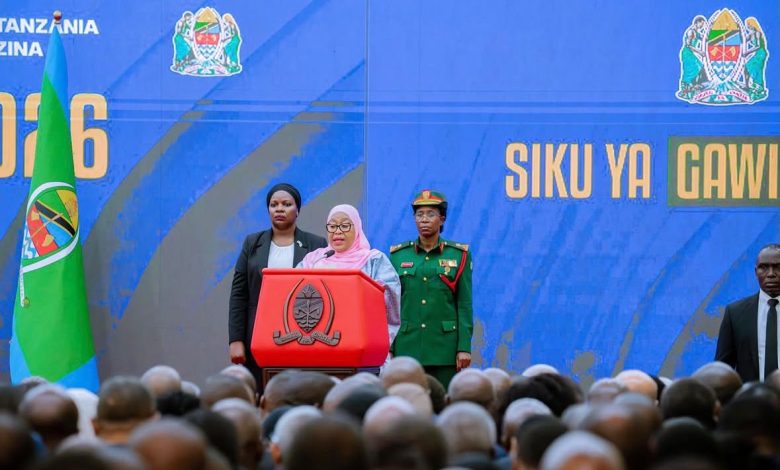
President Dr Samia Suluhu Hassan has challenged public institutions to improve performance and reduce reliance on routine government support. Her concerns about parastatals receiving subsidies without commensurate results place the issue within a broader debate about institutional efficiency, management autonomy and responsible use of public resources.
Chief Secretary Ambassador Dr Moses Kusiluka has similarly emphasised the need for public institutions to improve efficiency, strengthen revenue collection, control unproductive expenditure and make better use of technology.
Together, these priorities point to a central challenge: financial sustainability must come from improvements in how institutions operate, not simply from reductions in budget allocations. The scale of the challenge is considerable.
An analysis of 227 PSCs cited in the reform framework shows that government subventions remain a primary source of financing for most entities. Treasury support increased by an average of about 15 per cent annually over the three financial years covered by the analysis, with much of the funding directed towards development expenditure.
Nearly 82 per cent of the institutions reportedly depend on government financing, while fewer than one in five operate on a financially selfsustaining basis. These figures provide an important baseline, but the distinction between recurrent and development funding matters.
An institution receiving government financing to construct a water-treatment plant, expand a university or build transport infrastructure is not necessarily inefficient. Such investments can deliver benefits over many years without immediately generating sufficient revenue.
A key consideration is how government funding can best support productive investment and clearly defined public-service obligations, while encouraging stronger management, revenue collection and cost efficiency.
The International Monetary Fund (IMF) has documented Tanzania’s commitment to reviewing direct and indirect subsidies to identify weaknesses in efficiency and targeting.
Although this broader review extends beyond public corporations, its underlying principle applies to the reform of state-owned entities: public support should have a clear purpose, reach its intended beneficiaries and deliver results that justify the expenditure.
Every shilling allocated to an institution must also be considered alongside competing national priorities, including healthcare, education, infrastructure and social protection.
The reform agenda provides an opportunity to strengthen the link between public funding and institutional performance, ensuring that additional resources support measurable improvements in service delivery, operational efficiency and long-term sustainability. Yet, subsidies are not inherently wasteful.
They can make essential services affordable, support investment where private capital is insufficient and protect households from economic shocks.
The issue is whether the support is proportionate to the public benefit it delivers and whether there is a credible plan to improve performance.
Different mandates, different expectations
Under the proposed longterm framework, commercial PSCs are expected to move towards zero dependence on the government budget.
Other institutions would operate under differentiated subsidy ceilings reflecting their mandates and their capacity to finance services through user charges or internally generated revenue.
The framework identifies dependency ceilings of 25 per cent for water utilities, 60 per cent for higher-learning institutions and 40 per cent for health institutions.
These should be understood as proposed reform parameters, not evidence that the sectors have already achieved those levels of independence.
A commercial enterprise should generally cover its operating costs, maintain its assets and generate an appropriate return on public capital. Its performance can be assessed through productivity, profitability and financial sustainability.
A public hospital, however, may have to treat patients who cannot afford the full cost of care. A university may be required to expand access beyond what tuition fees alone can finance, while a water utility may need to extend infrastructure to communities where service provision is expensive relative to revenue collected.
In such circumstances, a financial deficit does not automatically indicate institutional failure. Government must identify the cost of these publicservice obligations, provide support transparently and assess whether the institution delivers the expected results.
A rigid drive towards self-reliance could push public institutions to raise charges, restrict access or prioritise profitable customers at the expense of communities with greater needs.
The reform must distinguish between commercial enterprises experiencing persistent losses despite operating in viable markets and public institutions whose deficits partly reflect their obligation to provide essential services at affordable rates.
Commercial enterprises may require stronger management, tighter cost control or business restructuring, while public-service institutions need transparent funding arrangements that sustain service delivery without compromising efficiency and accountability.
One proposal under the reform framework is to convert development subventions into equity injections where appropriate, rather than treating all government financing as recurrent support.
Equity injections increase government’s ownership investment in a company and create an expectation that the capital will be managed to preserve or increase value, subject to the company’s mandate and financial prospects.
The framework estimates that PSC recapitalisation needs could approach 1tri/- over the long term. Such a commitment requires careful prioritisation.
Viable institutions needing capital to expand should be distinguished from those whose difficulties arise from weak governance, unsustainable business models or persistent operating inefficiencies.
Recapitalisation, supported by sound business plans and appropriate performance measures, can help viable institutions strengthen their operations, expand services and protect the value of government investment.
For public-service institutions, the case for investment may rest on wider economic and social benefits rather than dividends. Government must nevertheless establish the outcomes expected from public funding and how they will be measured. The transition also carries risks.
Some PSCs face ageing infrastructure, high debt burdens, limited revenue bases or pricing structures that constrain cost recovery. Withdrawing subsidies before addressing these challenges could lead to deferred maintenance, declining service quality, mounting arrears or higher charges for consumers.
ALSO READ: DSE slows as treasury bond demand surges
A credible transition therefore requires gradual subsidy reduction, realistic performance targets and safeguards for vulnerable users. Where government requires an institution to provide services below cost, the obligation and associated subsidy should be transparent.
Commercial entities, meanwhile, need sufficient operational autonomy to make decisions consistent with their financial objectives. Measuring the success of reform The 25-year horizon provides an opportunity to pursue structural change rather than rely on abrupt budget cuts.
Success will require stronger corporate governance, better management capacity, modern technology, improved revenue collection and investment decisions based on credible assessments of institutional performance.
The proposed subsidy ceilings should be supported by clear baselines, annual milestones and transparent reporting that distinguishes recurrent subsidies from development financing.
Transparent reporting and regular performance reviews will help ensure that reduced dependence on the Treasury is accompanied by stronger financial health, continued investment in infrastructure and affordable, reliable services.
The measure of success should extend beyond the amount of government funding saved. It should include improved productivity, better service quality and accessibility, stronger financial positions and greater value from public investments.
For Treasury Registrar Nehemiah Mchechu, the reform agenda offers an opportunity to strengthen public entities’ contribution to national development while easing unnecessary pressure on the national budget.
“Achieving that objective requires institutions to demonstrate that public resources produce tangible results,” he stressed over the recent past.
Tanzania’s ambition to build a financially sustainable public sector will ultimately be judged by what happens inside its public corporations.
If the reforms deliver stronger balance sheets, better services, disciplined management and greater returns on public investment, reducing subsidy dependence will improve the use of national resources.
The transition must therefore balance financial sustainability with the continued delivery of essential services, ensuring that reforms strengthen public institutions while protecting the development benefits they provide to citizens.
The central test is not whether government can spend less on public corporations at any cost. It is whether Tanzania can build institutions that use public resources more effectively, finance a greater share of their activities where appropriate and continue delivering the services essential to the country’s economic transformation.