

Tanzanians are qualified for UK scholarships, why few apply for them?
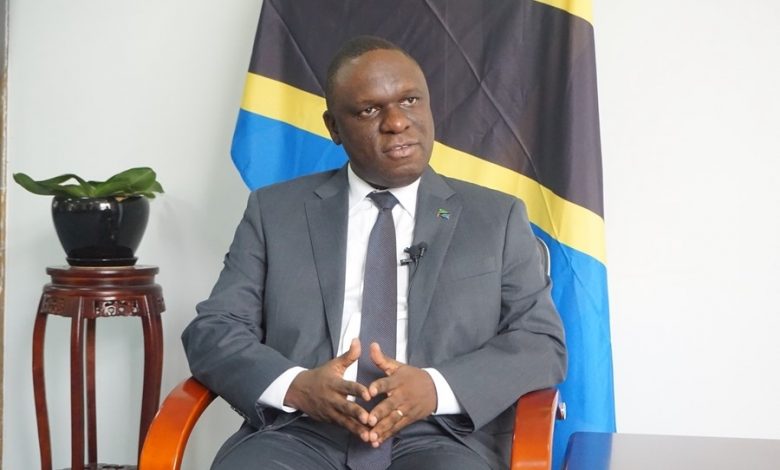
TANZANIA: WHEN I assumed my duties as Tanzania’s High Commissioner to the United Kingdom in August 2023, one of my key priorities was to strengthen partnerships between British universities and their counterparts in Tanzania.
I envisaged collaborations encompassing joint research, joint academic programmes, postgraduate training at master’s, doctoral and postdoctoral levels, as well as opportunities for British students to undertake electives and field placements in Tanzania.
Scholarships are central to achieving this objective. The United Kingdom offers many excellent funding opportunities, but it became increasingly evident that the number of Tanzanians applying for them was considerably lower than that of applicants from other countries in our region and across the Commonwealth.
Our assessment at the High Commission indicated that the challenge was not a lack of qualified Tanzanians. Rather, many potential applicants lacked timely and comprehensive information about the available opportunities.
In some cases, they learned about scholarships too close to the deadline to prepare competitive applications. This naturally resulted in fewer applications and, consequently, fewer Tanzanians securing scholarships.
My colleagues and I at the High Commission therefore resolved to address this information gap. Beginning in 2023, we organised a series of online seminars to raise awareness among Tanzanians about scholarship opportunities in the United Kingdom and to provide practical guidance on preparing strong applications.
Our inaugural seminar was honoured by the participation of the Minister for Education, Science and Technology, Professor Adolf Mkenda, together with representatives from the UK Foreign, Commonwealth and Development Office responsible for the Chevening Scholarship; the Association of Commonwealth Universities, which administers Commonwealth Scholarships; the Mastercard Foundation; and leading universities, including Oxford and Edinburgh.
We also partnered with Tanzanian students and scholars studying in the United Kingdom on various scholarships. They generously shared their personal experiences, explained how they navigated the application process and offered practical advice on writing persuasive applications. Their insights were particularly valuable because they came from people who had successfully gone through the same process.
The positive response to the first seminar encouraged us to organise several more targeted sessions. One focused specifically on admission and funding opportunities at the University of Oxford, led by Tanzanians studying there. Another examined the different categories of Commonwealth Scholarships, because many prospective applicants are unaware that the Commonwealth offers several distinct scholarship schemes.
One participant shared a particularly moving experience: he had applied for scholarships seven times without success, but succeeded on his eighth attempt. His story carries an important lesson for young Tanzanians not securing a scholarship on the first, second or even third attempt should not be regarded as the end of the journey. Every application provides experience, improves one’s understanding of the process and strengthens the next attempt.
We also organised a dedicated session with beneficiaries of the University of Manchester’s Equity and Merit Scholarships. They explained the eligibility requirements, application process and qualities required to submit a competitive application.
These seminars attracted wide participation from young Tanzanians. We recorded them and made them available online so that interested applicants could revisit the discussions. However, I subsequently recognised that some sessions lasted nearly two hours and many students might not have sufficient time or reliable internet access to watch the recordings in full.
That realisation inspired me to consolidate the information gathered from all the sessions into a practical 25- page scholarship guide. The purpose of the guide is to bring essential information together in one accessible document that Tanzanians can read at their convenience and consult while preparing their applications.
The first edition, released on 5 August 2026, includes current information on scholarship opening dates, application deadlines, eligibility requirements and application procedures. Although some dates will change after each annual application cycle, the guidance on preparing competitive applications will remain valuable for future applicants because the fundamental principles of a strong application are largely consistent.
I also recall visiting the London School of Economics, where a professor who had served on a Chevening selection panel told me that very few Tanzanians were applying, while candidates from some other countries were submitting applications in their thousands. He challenged me, as Ambassador, to do more to raise awareness among Tanzanians.
That observation stayed with me. The more qualified Tanzanians who apply, the greater our chances of securing more scholarships. Producing this guide is therefore part of a broader national effort to democratise access to information, encourage more Tanzanians to compete confidently for international opportunities and develop the skilled human capital required for our country’s transformation.
My message to Tanzanians, particularly young people, is straightforward: seek information early, prepare thoroughly and never be discouraged by an unsuccessful first attempt. These opportunities are competitive, but they are attainable. Tanzanians possess the talent, determination and potential to succeed; what they need is timely information, proper guidance and the confidence to apply.
With this in mind and as Tanzania continues to invest in human capital, innovation and sustainable development, education remains one of the strongest foundations for national transformation. I therefore encourage qualified Tanzanians to explore the many scholarship opportunities available in the United Kingdom, particularly the Chevening Scholarship, the UK Government’s flagship international scholarship programme for emerging leaders.
Chevening offers eligible Tanzanian citizens the opportunity to undertake a fully funded, one-year taught master’s degree in the United Kingdom. For Tanzanian professionals and young leaders, this is more than an opportunity to earn a prestigious qualification. It is an opportunity to acquire knowledge, develop leadership capacity, build international networks and return home better equipped to contribute to Tanzania’s development.
Importantly, Chevening selection is not based on academic grades alone. The programme looks closely at demonstrated leadership, relationship-building skills, a well-considered choice of course and university and a credible career plan. Applicants should therefore think beyond certificates and explain what they have already done, the challenge they seek to address and how advanced study will strengthen their ability to create meaningful change.
For Tanzania, the benefits can extend far beyond individual scholars. Chevening alumni can bring home new expertise, international perspectives and professional networks that can support innovation across sectors such as education, health, technology, agriculture, governance, finance, infrastructure and environmental sustainability.
ALSO READ: Kairuki: Why Tanzania’s Kiswahili AI model matters
The programme also creates lasting connections between Tanzanian professionals and counterparts in the UK and other countries. These relationships can open doors to research partnerships, investment, professional collaboration, knowledge exchange and new opportunities for Tanzania.
I encourage prospective applicants to identify a clear development challenge, demonstrate the contribution they have already made and choose a programme that directly addresses their knowledge or skills gap. Most importantly, applicants should show how they intend to apply their knowledge after graduation for the benefit of Tanzania and, where possible, the wider African continent.
Chevening is therefore not simply about studying in Britain. It is about preparing Tanzanians to return with the knowledge, networks, confidence and leadership capacity needed to help build a more innovative, productive and prosperous Tanzania.
I urge eligible Tanzanians to seize this opportunity, prepare carefully and let their achievements, aspirations and commitment to national development speak for themselves.


For my side ,l have started my application for Chevening Scholarship and l am nearly to submit.
Any oppprtunities crossed through my face ,l must try it .
On Friday ,l participated a session concerning with scholarship mobility for East African scholars.
My advice for my fellows f Tanzanain ,it is better trying for any Scholarship.
I earned scholarship for MSc biology under MOFCOM in 2021.
Rright now ,l am fighting to apply for PhD program and even another MSc program from different countries.
Exactly, I am always strongly looking for any opportunity coming ahead on me, and it’s my hope that one day I will win the game, up to now I have submit my application regarding Chevenig scholarship, and I am still looking for other opportunities coming ahead. I wish to get this opportunity so as to achieve my goal.
Exactly, I always strongly looking for any opportunity coming ahead on me, and it’s my hope that one day I will win the game, up to now I have submit my application regarding Chevenig scholarship, and I am still looking for other opportunities coming ahead. I wish to get this opportunity so as to achieve my goal.