

Tanzania touts cancer care gains

VIENNA: TANZANIA is positioning itself as a regional centre for cancer expertise and training in subSaharan Africa as investment in prevention, diagnosis and treatment expands.
Vice-President Deogratius Ndejembi said the country had made significant progress in cancer care, with increased investment in prevention, early detection, specialised treatment and modern medical technologies.
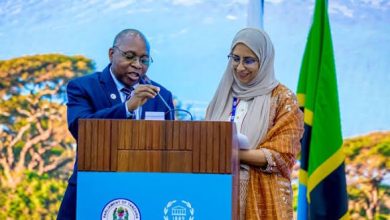
Mr Ndejembi made the remarks yesterday while addressing the International Atomic Energy Agency (IAEA) Scientific Forum in Vienna, Austria, on behalf of President Dr Samia Suluhu Hassan.
“Under President Samia’s leadership, health remains a national priority, with progress recorded in cancer prevention, diagnosis and treatment from primary to specialised levels of care,” he said.
He cited the increase in coverage of the single-dose human papillomavirus (HPV) vaccine among girls aged nine to 14, from 58 per cent in 2018 to 98 per cent this year. The number of centres providing radiotherapy has also increased from three in 2020 to six in 2026, raising access to the service from 14 per cent to 26 per cent and benefiting about 6,500 patients.
“Tanzania plans to establish nine comprehensive cancer care centres across six strategic zones in Mainland Tanzania and Zanzibar by 2030, a move aimed at bringing specialised services closer to communities,” Mr Ndejembi said.
He said the expansion would be accompanied by increased investment in modern technologies for cancer diagnosis and treatment.
Among the new technologies is PET-Scan linked to a cyclotron, which enables production of radioactive isotopes used in advanced cancer diagnosis. Tanzania, he said, is among the first 10 countries in Africa to offer the service.
“Between 2021 and 2026, the number of MRI machines increased from seven to 28, LINAC machines from two to eight, CT scanners from 12 to 97, mammography machines from four to 20, while digital X-ray machines increased from 147 to 770,” he said.
Mr Ndejembi said Tanzania was seeking further international support to strengthen comprehensive cancer services and called on the IAEA, member states and development partners to support medical projects identified under a programme jointly developed by Tanzania and the agency through the Rays of Hope initiative.
The projects are expected to expand screening, diagnosis and treatment services across the country, reducing the need for patients to travel long distances for care and improving access to early treatment.
He said Tanzania was also seeking a greater regional role in cancer care by asking the IAEA to designate the Ocean Road Cancer Institute as a Cancer Centre of Excellence.
Such recognition, he said, would strengthen training and capacity building for cancer specialists from other countries, particularly those in sub-Saharan Africa.
The forum was officially opened by IAEA Director General Rafael Mariano Grossi, with discussions focusing on advancing the Rays of Hope initiative, through which Tanzania is already receiving support to strengthen cancer care capacity.
Beyond cancer, Mr Ndejembi highlighted the importance of expanding cooperation with the IAEA in other applications of nuclear technology, including agriculture and preparations for a future nuclear energy programme.
The two-day forum is being held under the theme, “Rays of Hope: Delivering on the Promise of Cancer Care,” bringing together leaders, scientists, health professionals and other stakeholders to discuss ways of narrowing the global gap in access to cancer screening, diagnosis and treatment.


I appreciate the insightful information presented in this post. The article helps readers understand the topic more clearly. Thank you for creating content that supports learning.
I’m thankful for the informative content presented here. The article is well written and very useful for readers. Thank you for offering such valuable insights.