Tanzania touts African solutions
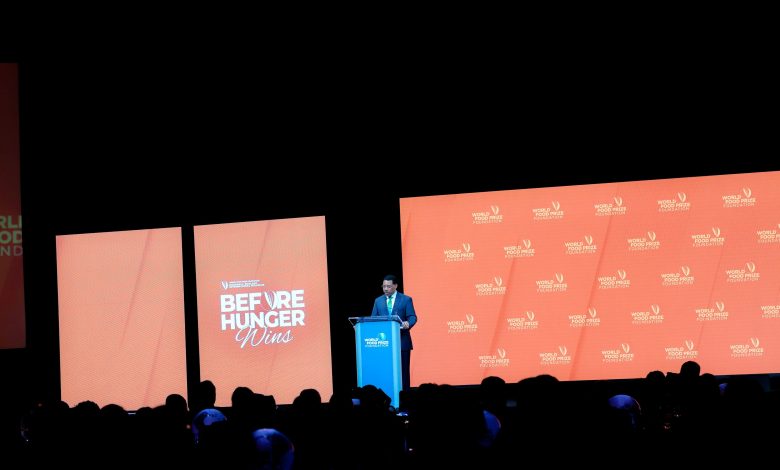
IOWA: TANZANIA has urged African countries to maximise their agricultural potential to end edible oil shortages, saying just five countries can meet the continent’s demand through increased domestic production.
Dr Nchemba made the remarks on Friday while addressing participants at the Norman E Borlaug International Dialogue in Des Moines, Iowa, in the United States, where he outlined investment opportunities in agriculture and agroprocessing.
He said Africa should turn its vast agricultural potential and geographical advantages into a reliable food supply system instead of continuing to suffer shortages whenever global supply chains are disrupted.
“There is no need for African countries to cry over shortages of cooking oil with all the potential we have. We need only about five countries to feed the whole of Africa,” he said.
Dr Nchemba said the Covid-19 pandemic and conflicts in different parts of the world exposed African countries’ vulnerability to external shocks, particularly disruptions to international supply chains.
“The number one solution we have is investing within the geographical premises where ture is conducted,” he said, calling for greater investment in domestic and regional agricultural production.
He said Tanzania offers investment opportunities in cereals, horticulture, oilseeds, coffee, cashew nuts, cotton, sugar, spices, roots and tubers, livestock, fisheries and agro-processing.
Other opportunities, he said, include agricultural inputs, seed systems, fertiliser production, irrigation infrastructure, mechanisation, warehousing, cold-chain facilities, food processing, packaging, logistics and agricultural technology.
Dr Nchemba said exploiting these opportunities would help African countries strengthen food security, reduce dependence on imports and build more resilient agricultural value chains.
He also stressed the need for sustained investment, noting that ambitious agricultural policies and promising technologies could not deliver meaningful transformation without adequate financing.
Citing estimates by the Food and Agriculture Organisation (FAO), he said transforming agrifood systems in low- and middle-income countries would require at least 4 trillion US dollars by 2030.
“Investment is the bridge between ambition and results,” he said, arguing that public resources alone could not finance the transformation needed across Africa’s agricultural sector.
He called on governments to continue investing in essential public goods, including rural and regional infrastructure, irrigation schemes, agricultural research, extension services and supportive regulatory frameworks.
He also urged stronger partnerships among governments, private-sector players, financial institutions, development partners, research organisations and technology companies to mobilise the resources and expertise needed to expand agricultural production.
Drawing on his experience as a former agriculture minister and finance minister, Dr Nchemba said collaboration between the government and development partners helped Tanzania advance major infrastructure projects supporting economic transformation.
He cited the Standard Gauge Railway (SGR), which connects Dar es Salaam with Dodoma and is being extended to strengthen links with neighbouring countries, as an example of infrastructure investment supporting regional connectivity.
He also highlighted the Julius Nyerere Hydropower Project (JNHPP), which has added 2,115 megawatts to the national electricity supply, strengthening the energy base needed to support industries, irrigation and agro-processing.
He said reliable transport and energy infrastructure were essential to reducing production costs, moving agricultural commodities efficiently and attracting investment in value addition.
Dr Nchemba said Tanzania’s approach is to have the government concentrate on infrastructure and other essential public services while allowing the private sector to lead investment in areas it could develop efficiently.
He acknowledged the contributions of development partners, including the African Development Bank, the International Fund for Agricultural Development, AGRA, the International Monetary Fund and the World Bank, to development initiatives.
He said combining public investment, private-sector participation and regional cooperation would help African countries turn their agricultural resources into sustainable economic opportunities.