Tanzania re-elected to global telecoms governing body
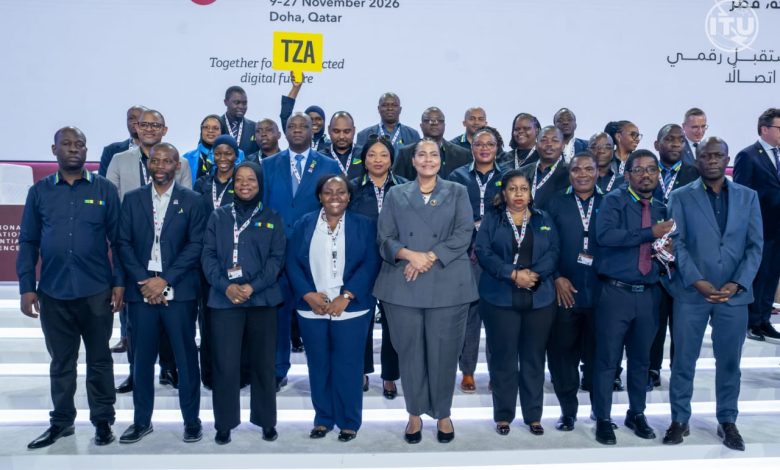
DOHA, QATAR: Tanzania has been re-elected to the governing council of the International Telecommunication Union (ITU) for 2027–2030, securing 131 votes as it presses for affordable internet access and a greater role for developing countries in the digital economy.
The East African country retained one of Africa’s 13 seats on the 48-member Council at the organisation’s Plenipotentiary Conference in Doha, Qatar. The conference runs from 9 to 27 November 2026. Tanzania also served on the Council during the 2023–2026 term.
The result sustains Tanzania’s participation in the governance of the United Nations agency responsible for telecommunications. It also gives the country a forum in which to advance a central concern of its digital policy: ensuring that investment in networks translates into services people can afford and use.
The scale of that challenge extends far beyond Tanzania. The ITU estimated that 2.2 billion people remained offline in 2025. In its Africa region, 36 per cent of people used the internet, compared with 74 per cent worldwide. Those figures place affordability and access at the centre of the organisation’s development work.
The Council governs the ITU between its four-yearly Plenipotentiary Conferences. It considers broad telecommunications policy, coordinates work programmes and oversees budgets and expenditure. For Tanzania, continued membership provides an opportunity to help shape the agency’s priorities and the support it offers countries expanding their digital infrastructure.
Angellah Jasmine Mbelwa Kairuki, Tanzania’s Minister of Communication and Information Technology, has emphasised the relationship between infrastructure and inclusion.
ALSO READ: TCRA reaps gains from the ITU Digital Innovation Board session in Oman
In a statement published for the 2026 World Telecommunication/ICT Policy Forum, she argued that access must be accompanied by affordable services, practical skills and confidence in the safety of digital systems.
“Coverage without affordability is not inclusion,” she said in that statement.
Tanzania’s rural connectivity programme offers a concrete example of the investment behind this agenda. Project information published by the ITU records the construction of 758 telecommunications towers across all 26 regions of mainland Tanzania, benefiting approximately 1,400 villages and more than 8.5 million people.
The project combined domestic resources with World Bank financing and brought public institutions together with mobile network operators. According to the published project description, public subsidies helped attract operators to areas where commercial returns alone would not have justified expansion. Operators are responsible for maintaining and upgrading the towers.
That experience is relevant to a wider policy question: how to sustain services in places where low incomes and dispersed populations make networks difficult to finance. A subsidy can help bring infrastructure into a community; continued use also depends on the price of devices and data, the reliability of services and the skills of potential users.
The ITU’s global findings reinforce this distinction. Its 2025 assessment identifies persistent gaps in service quality and affordability even where mobile broadband coverage is available. Expanding a network and enabling people to benefit from it therefore require related, but different, policy responses.
Tanzania has also linked digital inclusion to the governance of emerging technologies. In her policy statement, Ms Kairuki called for data protection and online safety to be incorporated into digital public infrastructure, alongside stronger participation by developing countries in shaping artificial intelligence. These priorities connect the expansion of access with the conditions needed to sustain public trust.
She also offered to share Tanzania’s Digital Clubs model and work with the ITU and its partners on digital and artificial intelligence skills across eastern and southern Africa. The renewed Council term gives Tanzania a continuing opportunity to pursue that cooperation and bring its experience of rural connectivity into the agency’s work.