

Tanzania pledges to work closely with FAO, WOAH, and AU to bolster livestock disease-control systems
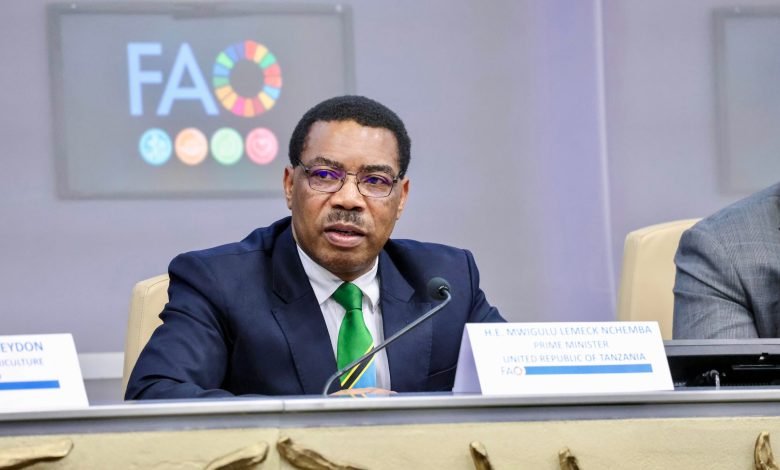
ROME: PRIME Minister Mwigulu Nchemba said Tanzania will continue working with the Food and Agriculture Organization of the United Nations (FAO), the World Organisation for Animal Health (WOAH), the African Union, regional organisations and other stakeholders to strengthen investment and livestock disease-control systems, with the aim of contributing to the eradication of Peste des Petits Ruminants (PPR) by 2040.
“We want to see stronger, more predictable and sustainable investment. National ownership and domestic financing must be the foundation, supported by FAO, WOAH, the African Union, regional organisations, international financial institutions, development partners and the private sector,” Dr Nchemba said.
“We must move from fragmented interventions towards permanent systems; from nationally focused plans to regional cooperation; and from commitments to measurable results,” the Prime Minister emphasised.
Dr Nchemba made the remarks in Rome, Italy, while participating in a high-level discussion on investment in the eradication of Peste des Petits Ruminants and the control of Foot-and-Mouth Disease (FMD).
The discussion was held during an international conference organised by the Food and Agriculture Organization of the United Nations (FAO) on implementing the One Health approach across food and agriculture systems.
ALSO READ: Japanese, SUA begin livestock disease control project
The Prime Minister said vaccination alone was not sufficient, noting that Tanzania also needs functional laboratories, robust surveillance systems, reliable vaccine distribution, livestock identification systems, skilled professionals and cross-border cooperation, particularly in border areas.
On the importance of regional cooperation, Dr Nchemba said livestock diseases do not respect national borders, pointing out that animals were already moving across borders faster than countries were progressing with regional integration efforts.
“While the member states of the East African Community are still discussing the steps towards a federation, animals have already united faster than we have,” he said.

I got what you mean , regards for posting.Woh I am delighted to find this website through google.
I have been examinating out a few of your posts and i can claim nice stuff. I will surely bookmark your site.
Hello! Do you use Twitter? I’d like to follow you if that would be ok. I’m definitely enjoying your blog and look forward to new posts.
시알리스의 성분인 타다라필과 효과, 지속시간, 5mg·10mg·20mg 차이를 알아보세요. 복용 방식, 부작용, 함께 복용하면 안 되는 약, 처방과 가격 확인 방법을 정리했습니다.
It is perfect time to make some plans for the future and it is time to be happy. I have read this post and if I could I desire to suggest you few interesting things or advice. Perhaps you could write next articles referring to this article. I desire to read more things about it!
Its like you read my mind! You appear to know a lot about this, like you wrote the book in it or something. I think that you can do with a few pics to drive the message home a bit, but other than that, this is excellent blog. A fantastic read. I will definitely be back.
포항출장마사지 전문 업체입니다. 24시간 연중무휴 운영과 100 후불제 시스템으로 언제든 편하게 예약 가능! 전원 한국여성 테라피스트가 커플마사지까지 전문 제공
Definitely believe that which you stated. Your favorite justification appeared to be on the internet the easiest thing to be aware of. I say to you, I definitely get annoyed while people consider worries that they plainly do not know about. You managed to hit the nail upon the top as well as defined out the whole thing without having side-effects , people can take a signal. Will likely be back to get more. Thanks