Tanzania looks beyond AFCON as facilities take shape
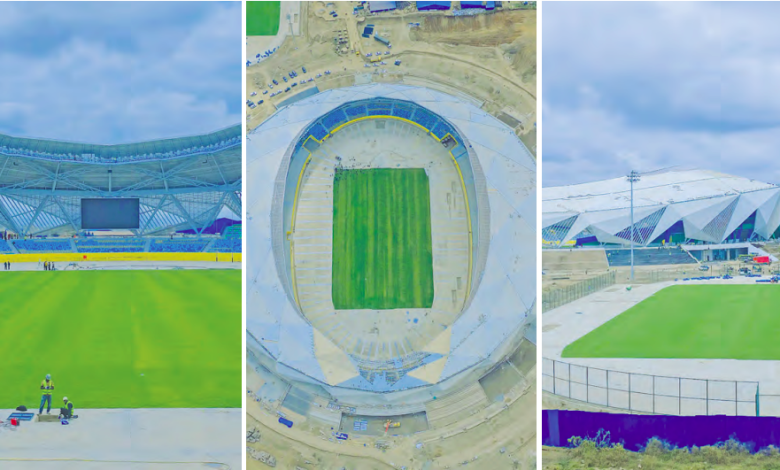
ARUSHA: THE Government is investing heavily in football infrastructure ahead of the Africa Cup of Nations (AFCON), with the facilities being developed for the tournament expected to deliver sporting and economic benefits long after the competition ends.
In Arusha, apart from the 330bn/- invested in the 32000-seat Samia Suluhu Hassan Stadium, 70bn/- is being invested in three football grounds that will serve as training facilities during AFCON.
Regional Commissioner Amos Makalla said the investment could strengthen the city’s sporting infrastructure, expand its economy and open new opportunities in sports tourism.
Makalla made the remarks during a visit to the three sites: Mgambo, Njiro Engutoto and Kisongo Magereza, where construction is under way ahead of the tournament.
The three grounds have a combined contract value of 70bn/-, with Mgambo costing 19.7bn/-, Njiro Engutoto 24.6bn/- and Kisongo Magereza 25.7bn/-.
Makalla said the grounds were expected to be handed over on March 17, ahead of AFCON in August, and urged the contractor to maintain the current pace of construction.
“We are expected to receive these grounds on March 17, while AFCON is in August,” he said.
The city council is also completing a fourth training ground, while the main AFCON stadium will have two additional smaller grounds.
Kisongo Magereza and Njiro Engutoto will each accommodate about 5,000 spectators, according to Makalla, giving Arusha additional facilities capable of supporting high-level football beyond the continental tournament.
“This is an opportunity for Arusha to host most of the Premier League teams as the venues will be available for use after the finals,” he said.
The grounds are being built to Confederation of African Football (CAF) standards, potentially allowing them to host top-flight domestic matches and other major sporting events once AFCON is over.
For Makalla, that longer-term use could also help diversify Arusha’s tourism economy, which has traditionally been driven by wildlife and conference tourism.
“We have wildlife tourism and conference tourism, both international and domestic, but sports tourism is now being added,” he said.
He said the facilities could generate wider economic activity by attracting football teams, supporters and other visitors to the city, creating opportunities for businesses while increasing income for residents and the Government.
“All of this will stimulate the economy of the Arusha region, boost business, and increase income for individuals as well as the government,” Makalla said.
He said the facilities should therefore be viewed as more than temporary infrastructure built for AFCON.
“After AFCON, these grounds will continue to be a catalyst for stimulating the economy of the Arusha region and Arusha City,” he said.
The issue of how Tanzania’s wider sports infrastructure will be sustained after AFCON has also been raised at the national level, with Dar es Salaam Regional Commissioner Albert Chalamila calling for major football clubs to play a role in managing and maintaining the facilities.
Chalamila made the call during Young Africans SC’s Annual General Meeting on Sunday, where he highlighted the scale of the Government’s investment in sports infrastructure across the country.
He said more than 500bn/- was being invested in stadiums and related infrastructure in mainland Tanzania and Zanzibar, arguing that such a significant investment required a clear plan for the period after AFCON.
Chalamila warned that the cost of maintaining major stadiums could become a major challenge if the facilities were left without sustainable users or management arrangements after the tournament.
He pointed to the experience of some countries that have hosted AFCON and other major competitions, say ing some stadiums built for such tournaments had subsequently deteriorated because of the high cost of maintaining them.
His proposal is for major stadiums to be partnered with serious and established football clubs through ownership, shareholding or management arrangements that would help keep the facilities active and financially sustainable.
Using Young Africans SC as an example, Chalamila suggested that the club could work with the Government in supporting the management and maintenance of a major venue such as Benjamin Mkapa Stadium.
In Dar es Salaam, three training grounds are already ready for use: The Major General Isamuhyo Stadium, the Law School and the Gymkhana Club training ground. Two others, Farasi and Leaders Club, are still under construction.
ALSO READ: Beyond the stadiums: How AFCON 2027 can create jobs in Tanzania
“Any serious club should be partnered with a stadium and help support its operation on a shared basis, with the Government and the club sharing responsibility,” Chalamila said.
He said such a model would help prevent the country’s new stadiums from becoming derelict after AFCON, while allowing major clubs to contribute to the Government’s efforts to develop the sports industry.
Taken together, the remarks by Makalla and Chalamila point to a wider ambition for Tanzania’s AFCON investment to ensure that the tournament becomes a catalyst for long-term football development, tourism and economic activity rather than a one-off sporting event.
For Arusha, the new training grounds could provide a platform for more top-flight football and help establish sports tourism as another pillar of the city’s economy.
At the national level, partnerships between the Government and major clubs could provide a model for keeping larger stadiums and other facilities in active use after AFCON.
But the legacy will depend not only on completing the projects on time, but also on putting in place sustainable models for their use, management and maintenance.
Beyond the sporting infrastructure, officials have also urged Tanzanians themselves to prepare for the wider opportunities that AFCON 2027 could create.
Tanzania Broadcasting Corporation (TBC) Director General Asha Dachi has called on citizens to plan and position themselves to benefit from the increased economic activity expected to accompany the tournament.
Dachi said AFCON should leave a lasting positive legacy for the country, with Tanzanians able to look back and identify how hosting the tournament helped them build businesses, improve their livelihoods and achieve greater economic success.
“I urge all Tanzanians to prepare and plan to ensure that we make good use of the opportunities that come with AFCON and that they benefit us,” Dachi said.
She said the opportunities should not be confined to businesses directly involved in football, but should extend across the wider economy, including private enterprises and public-sector institutions providing services to the public.
Her message reflects the broader challenge facing Tanzania as it prepares to host AFCON: Ensuring that the tournament is not only successfully staged, but also leaves behind infrastructure, businesses and economic opportunities that continue to benefit the country long after the final whistle.