Tanzania, Kenya seal potato deal to boost trade
NAIVASHA: TANZANIA and Kenya have signed a five-year agreement to boost potato production, improve seed quality and expand cross-border trade, opening new opportunities for farmers and investors.
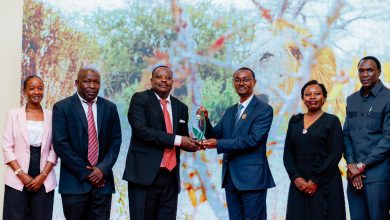
The Memorandum of Understanding (MoU) was signed on recently on the sidelines of the 13th World Potato Congress in Naivasha, Kenya, by the Potato Council of Tanzania and the National Potato Council of Kenya (NPCK).
The partnership seeks to address key challenges facing the potato industry, including inadequate access to certified seeds, limited technology adoption, quality standards and difficulties in accessing markets.
The agreement was signed by Potato Council of Tanzania Board Member Abdalla Luvanda and NPCK Chief Executive Officer Wachira Kaguongo, witnessed by NPCK Chairman Dr Kimani Rugendo and Agricultural Growth Corridors of Tanzania (AGCOT) Centre Head of Partnerships and Communication Tullah Mloge.
Mr Luvanda said the partnership would help address production and marketing challenges through agricultural science, improved seed technologies, stronger cooperatives and direct market connections.
“Our farmers across Tanzania’s agricultural growth corridors have proven that potato farming is a serious, profitable business when driven by agricultural science, soil health and strong cooperatives,” Mr Luvanda said.
He added that cooperation would help align phytosanitary standards, share seed technologies and develop direct market channels, enabling farmers in both countries to benefit from regional opportunities.
The MoU identifies four priority areas, including knowledge and technology exchange, standards and quality assurance, trade linkages and market access, as well as joint capacity building and research.
Under the arrangement, the councils will facilitate the sharing of innovations in seed production, farming practices, post-harvest handling, storage and marketing.
Particular attention will be given to clean seed technologies, including rooted cuttings, tissue culture and aeroponics.
The partnership will also promote joint research, on-farm trials, farmer training and exchange visits involving extension officers, seed producers and processors.
ALSO READ Tanzania, Kenya agree to develop a framework for food radioanalysis certification
In market development, the two councils will connect Agricultural Marketing Cooperative Societies (AMCOS) and other producer organisations with processors, traders and buyers across the two countries.
The cooperation comes amid significant shortages of certified potato seeds in both countries.
In Kenya, annual certified seed demand is estimated at 150,000 tonnes, against production of approximately 24,000 tonnes, according to Kenya Agricultural and Livestock Research Organisation Director General Dr Patrick Ketiem.
This leaves a deficit of 126,000 tonnes, meaning local production meets only about 16 per cent of demand.
In Tanzania, certified potato seeds meet approximately two per cent of national demand. Tanzania produced 1.41 million tonnes of Irish potatoes during the 2024/25 agricultural year, with an average yield of 9.9 tonnes per hectare, according to the National Bureau of Statistics.
Mbeya and Njombe accounted for approximately 85.1 per cent of output from agricultural households, highlighting the importance of the Southern Highlands and the Southern Agricultural Growth Corridor of Tanzania (SAGCOT) in developing the industry.
Kenya’s National Agriculture Production Report 2025 records production of 2.15 million tonnes in 2024, valued at 72.5 billion Kenyan shillings.
Speaking during the signing, Dr Rugendo urged African delegates to ensure that agreements reached during the Congress translate into tangible benefits for farmers and businesses.
“Let us not allow the agreements we have signed here today to gather dust. Let us put them into action,” he said, calling for wider participation by farmers, businesspeople, women and young people.
The 13th World Potato Congress was held from October 26 to 30 under the theme “Global Potato Partnership for Enhanced Food Systems, Nutrition Security and Trade”.