Tanzania invests 350bn/- to boost agribusiness, address climate change impacts

DAR ES SALAAM: THE Sixth Phase Government has continued to take decisive measures to address the impacts of climate change by making substantial investments in the agricultural sector, particularly in irrigation farming, to increase productivity and strengthen the national economy.
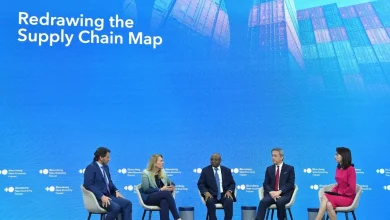
Speaking today in Dar es Salaam during an Agriculture Conference, the Permanent Secretary in the Ministry of Agriculture, Gerald Mweli, said the government has invested over 350bn/- to strengthen the agricultural sector as part of a broader strategy to boost productivity and drive economic growth.
Mr Mweli said that more than 750 agricultural projects are currently being implemented across the country, focusing on improving production, creating employment opportunities, and enhancing farmers’ livelihoods. He added that the government aims to develop over five million hectares of irrigated land by 2030.
“The Sixth Phase Government is implementing productive agriculture by prioritising small-scale farmers and providing them with modern farming tools to ensure they fully benefit from their activities,” Mr Mweli said.
He further noted that the government has established over 1,000 agricultural mechanisation centres nationwide, with the goal of ensuring that nearly every ward has its own centre. Through these facilities, farmers are able to access farming equipment at affordable costs.
On his part, the FAO Regional Officer for Africa, Mack Fynn, said the ongoing agricultural mechanisation conference aims to discuss ways of improving access to farming equipment for smallholder farmers across Africa in order to increase production and stimulate economic development.
Mr Fynn said the knowledge and experience shared during the conference would help farmers address various challenges, including climate change.
Meanwhile, Frola Elias, a farmer from Kilosa District and Secretary of the Kilosa District Youth Network Group, said the conference had been highly beneficial, particularly for young farmers.
He explained that reliance on manual labour in agriculture has been a major challenge, as it is exhausting and causes physical strain, adding that the use of modern farming tools would improve efficiency and accelerate development.
Mr Elias also called on the government to allocate specific land for youth farming activities, noting that lack of fertile land remains a major challenge. He said that if young people are provided with productive land, they would be able to expand their agricultural activities.
He commended the government’s efforts to increase access to farming equipment, noting that more than 10,000 tractors have already been distributed to support agricultural development nationwide.