Tanzania eyes bigger share of lucrative global MICE tourism market
ARUSHA: IMAGINE thousands of delegates arriving in Arusha from across the globe, gathering under one roof to negotiate investment deals, share technical expertise, and shape regional policy.
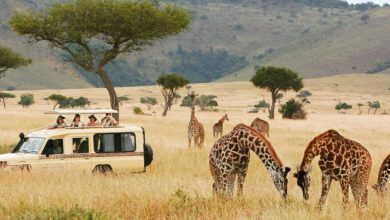
Beyond the boardroom, these high-yielding visitors embark on wildlife safaris in the Serengeti and Ngorongoro, experience Swahili culture, and inject substantial revenue directly into local hotels, transport services, and restaurants.
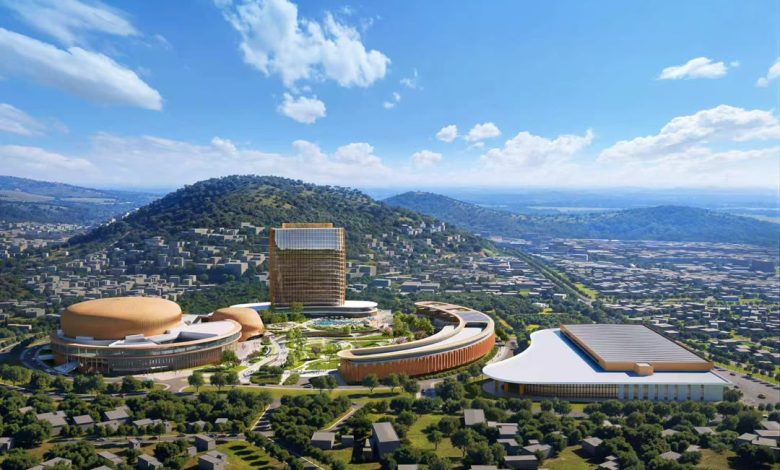
This is the multi-billion-shilling opportunity Tanzania is seeking to capture through the development of the Mount Kilimanjaro International Convention Centre (MKICC) in Kijenge, Arusha, a landmark project valued at 398.92bn/-.
Jointly financed by the Public Service Social Security Fund (PSSSF) and the Arusha International Conference Centre (AICC), and constructed by China Railway Construction Engineering Group Company Limited, MKICC is designed to transform Arusha into a premier hub for Meetings, Incentives, Conferences, and Exhibitions (MICE).
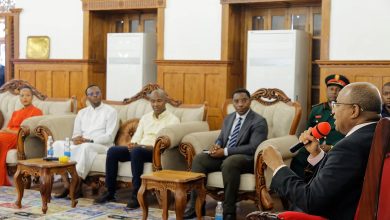
Speaking during a recent media inspection, Project Risk Manager Mr Dennis Bennito emphasized that the facility is built to compete globally:
“We are not building this centre in isolation. We want MKICC to compete with established convention centres across Africa and ensure that international meetings are hosted in Tanzania rather than neighboring destinations,” he said.
To ensure world-class standards, the project team benchmarked leading convention facilities in Rwanda, Ethiopia, France, Switzerland, and China to integrate best practices in venue design, acoustics, exhibition technology, and operational management.
Tanzania’s push into conference tourism comes at a moment of unprecedented growth for the national visitor economy.
According to the 2025 International Visitors’ Exit Survey, jointly produced by the Ministry of Natural Resources and Tourism (MNRT), the Bank of Tanzania (BoT), and the National Bureau of Statistics (NBS), international arrivals rose from 1,808,205 in 2023 to 2,141,895 in 2024, before reaching a record 2,294,495 in 2025.
Over the same period, total tourism export receipts surged from 3.37 billion US dollars in 2023 to 3.90 billion US dollars in 2024, and reached an all-time high of 4.41 billion US dollars in 2025 (a 13 per cent annual growth).
Tourism currently contributes approximately 17 per cent of Tanzania’s GDP, accounts for 27 per cent of total export earnings, and supports 3.6 million direct and indirect jobs.
Average daily visitor spending also expanded by 19.1 per cent in 2025, reaching 289 US dollars per person per night.
However, official macroeconomic reviews from the Tanzania Investment and Consultant Group (TICGL) highlight a structural imbalance: traditional wildlife safaris in the Northern Circuit account for 70 per cent to 80 per cent of total tourism receipts, leaving MICE tourism in a nascent stage.
MICE delegates currently represent a small fraction of arrivals, yet conference visitors demonstrate substantial spending power, averaging 241 US dollars per night overall and $338 per night for package delegates.
Globally, the MICE industry represents one of the most lucrative segments of business travel.
Independent market research values the global MICE market between 945.6 billion US dollars and 961.95 billion US dollars in 2025, with projections crossing 1.02 trillion US dollars in 2026 and expanding to between 1.83 trillion US dollars and 2.36 trillion US dollars over the next decade.
In Africa, the MICE sector generates an estimated 13 billion US dollars annually (roughly 2 per cent of global MICE volume).
International Congress and Convention Association (ICCA) benchmarks show that Africa hosts around 375 international association meetings per year, with South Africa ranking 1st (118 meetings) and Kenya ranking 2nd (38 meetings).
Tanzania currently sits tied at 7th place in Africa with 12 recorded association meetings, signaling immense untapped headroom.
To overcome venue capacity constraints and diversify away from safari dependency, the Tanzanian government has embedded MICE infrastructure into the Fourth Five-Year Development Plan (FYDP IV 2026/27–2030/31).
Out of a total 183 billion US dollars national plan, 7.3 billion US dollars (4.0 per cent) is allocated directly to Tourism and Services.
By pairing world-class convention infrastructure like MKICC with iconic natural attractions, Tanzania is positioning itself to offer a unique “conferencing plus safari” package, securing a larger share of the global business events market.
For Tanzania, the opportunity is to attract visitors whose main purpose is attending conferences, exhibitions, corporate meetings and international conventions, while encouraging them to extend their stays and visit other destinations.
Such visitors create demand for accommodation, air travel, ground transport, restaurants, event management, interpretation and other services.
Arusha already has an established foundation for this market through AICC, which has experience in hosting international meetings and diplomatic engagements.
The centre operates 26 meeting rooms, including a main auditorium with a capacity of 1,350 people. It hosts more than 100 meetings annually and receives approximately 11,000 delegates.
However, as international events grow in scale, the availability of additional facilities capable of accommodating larger gatherings becomes increasingly important.
In May 2025, the Executive Director of the Public-Private Partnership Centre, Mr David Kafulila, said Arusha had the potential to compete with Kigali in conference tourism, pointing to Rwanda’s performance in attracting business events.
His remarks drew attention to the economic opportunities available to destinations that invest in conference facilities and develop the services required to attract international events.
Rwanda’s official MICE earnings figures for 2024 were later reported at 84.8 million US dollars, illustrating the importance of using verified sector statistics when comparing destinations. The MKICC development is expected to increase the range and scale of events that Arusha can accommodate.
According to Mr Bennito, the facility will have two main conference halls, with the Big Dome designed to accommodate up to 5,000 participants and the Presidential Summit Hall 600 participants.
Additional meeting facilities will include four rooms reportedly designed for up to 500 participants each, alongside smaller rooms accommodating approximately 100 and 30 people.
The development will also have a separate exhibition hall covering approximately 20,000 square metres, intended to host trade fairs, product displays and business exhibitions.
The space is intended to accommodate trade fairs, product displays, business exhibitions and events involving different sectors, including agriculture, manufacturing and the automotive industry.
This is significant because the MICE market extends beyond conferences. Exhibitions provide businesses with opportunities to display products, meet prospective buyers, identify suppliers and establish commercial partnerships. They can also attract visitors who might not otherwise travel to a destination for leisure tourism.
Mr Bennito said the centre was being designed with modern information and communication technology systems to support the requirements of international events.
These include integrated audio-visual equipment, sound systems, large display screens, cameras and electronic voting facilities.
The project also incorporates supporting facilities and infrastructure intended to improve the experience of delegates, organisers and service providers.
The intention is to provide a venue where different events can take place while meeting the technical and operational requirements of organisers.
Nevertheless, modern buildings and equipment alone do not guarantee success in the competitive international MICE market.
Destinations also need reliable transport connections, quality accommodation, professional event management, digital connectivity, security and coordinated marketing.
The global market offers both an opportunity and a challenge. The International Congress and Convention Association (ICCA), which tracks international and regional association meetings, recorded 12,438 qualifying meetings worldwide in 2025, up from 11,099 in 2024. This represented an increase of approximately 12 per cent.
Europe accounted for 53 per cent of the meetings, followed by Asia-Pacific with 22 per cent, North America with 10 per cent, Latin America with nine per cent, Africa with four per cent and the Middle East with two per cent.
The figures demonstrate the competition among destinations seeking to attract international association meetings and the opportunity for African cities to increase their participation.
For Tanzania, Arusha’s location offers an important advantage. The city is close to internationally recognised attractions, including the Serengeti National Park, Ngorongoro Conservation Area, Tarangire National Park and Mount Kilimanjaro. Delegates attending conferences could combine their professional engagements with wildlife safaris, mountain tourism and cultural experiences.
Such arrangements can extend visitor stays and create business for tour operators, hotels, restaurants, transport providers, cultural groups and other service providers. They also offer opportunities for local communities to participate in the tourism value chain.
The planned accommodation component of MKICC is expected to support this ambition. Mr Bennito said the second phase of the development was at the design stage and included a five-star hotel and a shopping mall.
The hotel is intended to complement the convention facilities by providing accommodation within the wider development.
The project therefore seeks to bring together conference, exhibition, accommodation and commercial facilities in one development, making it easier for organisers and delegates to access different services.
However, attracting international events will require sustained cooperation between government institutions, tourism operators, airlines, hotels, professional conference organisers and the private sector. Tanzania will also need to strengthen its relationships with international associations and organisations that regularly organise conferences and exhibitions.
For PSSSF, the investment represents the use of workers’ contributions to develop infrastructure expected to support tourism and wider economic activities. Its partnership with AICC also brings together investment resources and institutional experience in hosting international gatherings.
Once completed, MKICC is expected to provide Arusha with additional capacity to compete for large conferences, exhibitions and business events.
The wider economic benefits will depend on the country’s ability to attract a consistent calendar of events and connect them with local businesses and tourism experiences.
The ambition is therefore bigger than constructing another conference venue. It is about turning Arusha’s location, tourism attractions and growing infrastructure into a competitive advantage in the global MICE market, bringing international visitors into the country and creating opportunities across the economy.