Tanzania edges closer to nuclear energy revolution
RUVUMA: TANZANIA is on the cusp of a nuclear energy revolution that could reshape its economic destiny and position the nation among Africa’s elite uranium producers, thanks to a 1 billion US dollars push to transform the country’s vast uranium reserves into a strategic economic asset.
At the heart of this nuclear ambition lies the Mkuju River uranium project in Namtumbo District, Ruvuma Region. Valued at approximately 1 billion US dollars (about 2.6tri/-), the project is emerging from more than a decade of dormancy to become one of the most strategically significant mining ventures in the country’s history.
Developed by Mantra Tanzania Limited, a subsidiary of Russia’s Uranium One Group under Rosatom, the project remained largely dormant after the 2011 Fukushima nuclear disaster triggered a collapse in global uranium prices.
However, rising global demand for nuclear energy as governments pursue lowcarbon solutions has reignited interest.
The deposit is estimated to contain about 139 million tonnes of uranium ore, with projected production of approximately 3,000 tonnes annually at full capacity, enough to contribute about 4 per cent of global uranium supply and position Tanzania as the thirdlargest producer in Africa after Niger and Namibia.
A presidential milestone
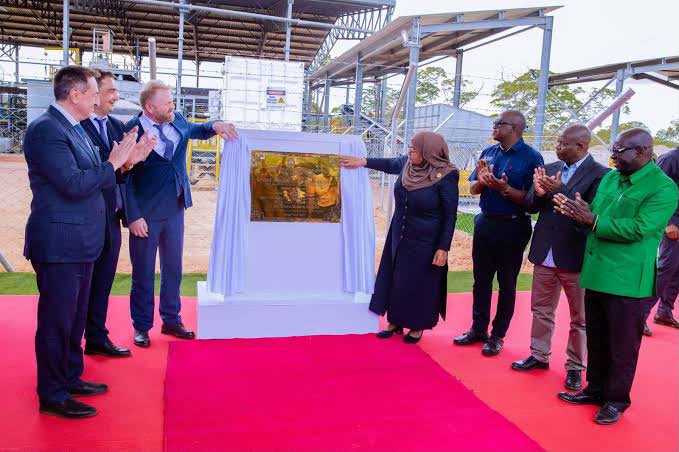
On July 30, last year, President Dr Samia Suluhu Hassan commissioned a pilot uranium processing plant at the Mkuju River site, a moment she described as historic.
“This is a historic day for our nation, as Tanzania officially begins its journey to becoming a major uranium producer for the first time on this scale,” She declared. “Uranium is one of the strategic minerals we have been blessed with and its availability will contribute to generating safe energy and strengthening Tanzania’s position in the global mining sector.”
Sustainability Manager Majani Moremi confirmed financing was being structured in phases.
“The project is viewed by the company and its shareholders as a long-term strategic investment for Tanzania,” he said.
Deputy Minister for Minerals, Dr Steven Kiruswa, reassured investors: “This is a strategic project for the nation.
Tanzanians are expecting to benefit from the economic opportunities that will come with its implementation.”
Speaking at the St Petersburg International Economic Forum in June this year, President Dr Samia made Tanzania’s nuclear ambitions clear to the global business community, listing nuclear energy among the country’s top five investment priorities.
“Tanzania is open for business. Tanzania is ready for new ideas and innovation,” she declared, noting that foreign direct investment had increased to about 5 billion US dollars (about 13.3tri/-) last year from nearly 3 billion US dollars (about 7.95tri/-) in 2021.
Russian President, Vladimir Putin, acknowledged Tanzania’s growing strategic importance, describing the country as playing a similar role in East Africa to that of Uzbekistan in Central Asia.
A billion-dollar economic transformation
Minister for Minerals, Mr Anthony Mavunde, described the project as a flagship investment. “The Mkuju project is a flagship investment not only for the mining sector but also for the wider economy. Tanzania is among a small number of African countries with the opportunity to develop a uranium industry of this scale,” he said in Moscow.
He noted the President Samia’s visit had added significant momentum. “We expect to see major developments within a relatively short period because several preparatory stages have already been completed.”
Jobs and community benefits
For Tanzanian citizens, the project promises substantial employment opportunities. Government estimates indicate more than 4,000 direct jobs could be created during operations, while more than 100,000 indirect jobs may emerge through construction, transport and logistics.
Mantra Tanzania estimates at least 21,000 households in Namtumbo and neighbouring communities stand to benefit. Moremi said workforce localisation remained a priority. “The project is intended not only to produce uranium but also to build local technical expertise and create sustainable economic opportunities for communities around the mine.”
Nuclear energy: The bigger picture
Beyond mining exports, Tanzania is positioning itself for nuclear-generated electricity. Tanzania Atomic Energy Commission Director General, Prof Najat Kassim Mohammed, confirmed that the country is preparing for nuclear energy in accordance with the International Atomic Energy Agency roadmap.
“The entire process is being carried out in accordance with international nuclear safety standards and every step is aimed at ensuring the safe use of nuclear technology for the population and the environment,” she said.
Prof Mohammed added that in the initial stages, uranium would be exported to Russia for reprocessing, after which the reprocessed nuclear fuel would be returned to Tanzania for electricity generation.
President Dr Samia declared at the pilot plant inauguration: “Tanzania is entering the global map as one of the top ten uranium-producing countries in the world.”
For the people of Namtumbo and Tanzania as whole, for Tanzanian businesses and for a nation aspiring to industrialise, the uranium project represents more than mineral extraction, it is a statement of ambition, a catalyst for jobs and a bridge to a future powered by clean, sustainable energy.