Tanzania, Algeria deepen pharmaceutical cooperation to strengthen local production and expand African medicine access

ALGERIA: Tanzania and Algeria are moving to deepen cooperation in pharmaceutical manufacturing, with the two countries exploring how technology transfer, technical expertise and investment can help strengthen Tanzania’s domestic production capacity and open opportunities for supplying medicines and medical equipment to wider African markets.
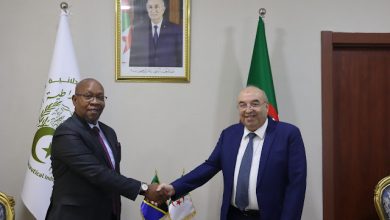
The latest development followed a meeting in Algiers between Tanzanian Ambassador to Algeria, Mobhare Matinyi, and Algerian Minister of Pharmaceutical Industry, Dr. Wassim Kouidri, at the ministry’s headquarters. Their discussions centred on strengthening bilateral cooperation in the pharmaceutical industry, an area Tanzania is increasingly treating as both a public-health priority and an industrial opportunity.
For Tanzania, expanding pharmaceutical manufacturing is closely linked to reducing dependence on imported medicines and building a more secure domestic health-supply system. The Tanzania Medicines and Medical Devices Authority (TMDA) says the country relies heavily on imports for medicines and medical devices, while the Government has set a target of achieving 80 percent local production of health products by 2030.
It is against this background that the discussions with Algeria assume particular importance. Ambassador Matinyi told Dr. Kouidri that the Tanzanian Government has introduced special incentives to attract investment into the pharmaceutical industry and that five factories are already under construction, with additional investments expected.
The incentives are intended to make pharmaceutical manufacturing more commercially attractive while strengthening Tanzania’s ability to produce medicines locally. According to TMDA, investors in the sector can benefit from fiscal and non-fiscal incentives, including exemptions and reductions on selected taxes, duties and regulatory fees, expedited regulatory processes, and other measures designed to facilitate investment.
The Government is also seeking to ensure that increased production serves a market much larger than Tanzania alone. Ambassador Matinyi therefore presented the country’s strategic geographical position and growing manufacturing ambitions as foundations for developing an export-oriented pharmaceutical industry.
ALSO READ: TIA expands entrepreneurship skills
“Our government is determined to turn Tanzania into an export hub for pharmaceutical and medical equipment in the eastern, central and southern African region, which has a population of approximately 350 million people,” said Ambassador Matinyi.
That ambition reflects a broader shift in Tanzania’s pharmaceutical policy: from concentrating primarily on securing supplies for the domestic market to developing the capacity to manufacture competitively for regional markets. The potential benefits extend beyond medicines. A stronger pharmaceutical industry can create skilled employment, stimulate research and development, attract foreign investment, develop local supply chains and reduce exposure to international disruptions affecting medicine availability and prices.
However, establishing factories alone will not be enough. Sustainable pharmaceutical manufacturing requires sophisticated technology, skilled personnel, reliable infrastructure, quality-assurance systems, research capabilities and strong regulatory oversight. This is where Algeria’s experience could become particularly valuable.
Algeria has developed one of Africa’s largest pharmaceutical manufacturing sectors. In 2025, Algerian authorities said the country had nearly 230 pharmaceutical factories out of 649 across the continent, representing more than one-third of Africa’s pharmaceutical manufacturing establishments. The World Health Organization has also highlighted Algeria’s progress, noting that the country has more than 230 manufacturers and produces about 82 percent of its pharmaceutical needs locally.
Such experience offers Tanzania an opportunity to learn from a country that has already moved substantially towards domestic pharmaceutical self-sufficiency. The proposed cooperation can therefore go beyond conventional trade to encompass industrial know-how, manufacturing processes, regulatory systems, professional training and technology transfer.
Dr. Kouidri pledged Algeria’s support in helping Tanzania access critical expertise in pharmaceutical and medical equipment production.
“Tanzania is certainly located in a strategic part of the continent of Africa, and Algeria is open to cooperate with it in the transfer of technology to ensure it achieves its industrial objectives,” said Dr. Kouidri.
Technology transfer is particularly significant because pharmaceutical manufacturing involves much more than assembling finished products. Manufacturers need capabilities covering formulation, quality control, Good Manufacturing Practices, validation, packaging, storage and, at more advanced stages, the production of active pharmaceutical ingredients and other higher-value inputs. Tanzania’s ability to acquire and retain these capabilities will determine how far its manufacturing ambitions can progress.
ALSO READ: Water bond plan targets strategic projects
Regulatory cooperation is consequently another important component of the emerging partnership. Ambassador Matinyi commended the Algerian National Pharmaceutical Products Authority (ANPP), which is expected to visit Tanzania later in October this year at the invitation of TMDA to explore areas of technical cooperation.
Such engagement is timely because effective pharmaceutical regulation is essential for ensuring that locally manufactured and imported medicines meet standards of quality, safety and efficacy. It can also make it easier for regulators to share expertise, improve inspection systems, strengthen pharmacovigilance and work towards greater regulatory convergence across African markets.
Tanzania has a strong foundation in this area. In 2018, it became the first confirmed country in Africa to achieve WHO Maturity Level 3 under the Global Benchmarking Tool, which assesses the performance of national regulatory systems for medical products. WHO describes ML3 as a stable, well-functioning and integrated regulatory system, while ML4 represents the highest level, characterised by advanced performance and continuous improvement.
Tanzania’s regulatory achievement is important to its industrial ambitions because manufacturing medicines for export requires confidence that products consistently meet internationally recognised standards. A strong regulator therefore does not merely protect patients; it can also strengthen the credibility and competitiveness of domestic manufacturers.
Africa’s regulatory landscape has also evolved since Tanzania achieved ML3. WHO reported in 2024 that Senegal and Rwanda had become the seventh and eighth African countries to attain ML3, joining Egypt, Ghana, Nigeria, South Africa, Tanzania and Zimbabwe. World Health Organization This progress creates an increasingly favourable environment for regulatory cooperation and the eventual expansion of intra-African trade in health products.
Tanzania has already been pursuing such cooperation. TMDA’s recent engagement with Algerian pharmaceutical manufacturers and the ANPP identified opportunities for training, technology transfer, medical-device inspection and regulatory strengthening. Algerian manufacturers also expressed interest in registering products in Tanzania, supplying medicines to the Tanzanian market and potentially establishing manufacturing operations in the country, beginning with activities such as secondary packaging and expanding towards full-scale production. Tanzania Minerals Authority
These developments suggest that the Tanzania-Algeria relationship could develop into a practical industrial partnership rather than remaining at the level of diplomatic commitments. For Tanzania, Algerian companies could become sources of investment, technology and expertise. For Algeria, Tanzania could provide a strategic gateway into East and wider sub-Saharan African markets.
The economic case is reinforced by Tanzania’s continuing dependence on imported health products. The Medical Stores Department says it currently sources approximately 80 percent of medicines and 90 percent of medical supplies from various countries, while the Government is prioritising local procurement to encourage domestic manufacturing.
Reducing that dependence will not happen overnight. It will require sustained investment, competitive production, reliable electricity and water, access to finance, skilled human resources, research and development, efficient regulation and predictable government procurement. Equally important will be the ability of local manufacturers to produce medicines at internationally competitive prices and quality.
The Tanzania-Algeria discussions therefore come at a significant moment. Tanzania has the market, strategic location, regulatory foundation and policy ambition; Algeria brings substantial pharmaceutical manufacturing experience and technological expertise. If these strengths are connected effectively, cooperation could help Tanzania move from being predominantly a pharmaceutical importer towards becoming a credible regional producer and exporter.
Ultimately, the success of the partnership should be measured not simply by agreements signed or factories constructed, but by medicines manufactured, skills transferred, technologies adopted, investments realised and African patients gaining more reliable access to safe, effective and affordable health products.
ALSO READ: Kimoto refuses to relax after Singida rout
The emerging Tanzania-Algeria partnership consequently represents more than bilateral economic diplomacy. It is an opportunity to strengthen health security, industrial capacity and intra-African trade while advancing Tanzania’s ambition to become a pharmaceutical manufacturing and export hub for the continent.
The additional context is supported by current official sources: Tanzania’s 2030 target is 80% local production, while Algeria reports more than 230 pharmaceutical manufacturers and approximately 82% local coverage of its pharmaceutical needs.
Issued by the Embassy of Tanzania in Algeria.