

SHINE lights the way for vulnerable children
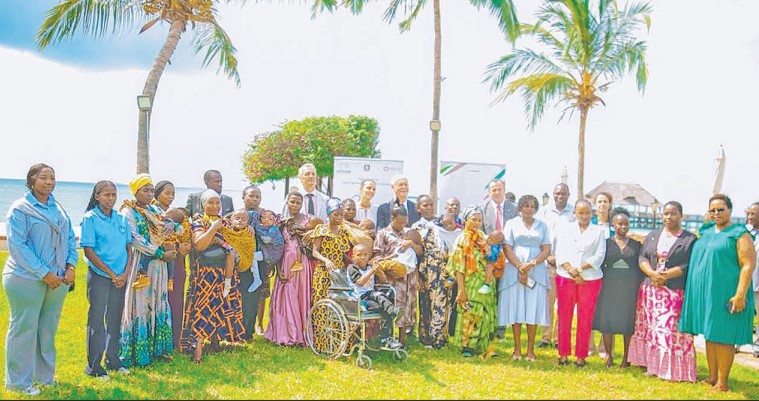
IN Tanzania, thousands of children living with disabilities are caught in a web of complex health challenges, with epilepsy and malnutrition ranking high among the conditions they face.
These health issues, often interconnected, are exacerbated by stigma, limited medical infrastructure, and a shortage of specialized healthcare services.
Recognizing this need, the SHINE project, a twoyear initiative funded by the Government of Italy, has been working to close critical gaps in diagnosis, treatment, and community awareness. Implemented in Dar es Salaam, Mbeya, and Morogoro, the project is already leaving a lasting impact.
A dual health burden
Epilepsy and malnutrition are each serious in their own right. When they intersect especially in children with disabilities the consequences can be devastating.
According to the World Health Organization (WHO), epilepsy affects over 50 million people globally, with 80 per cent residing in low- and middle-income countries. In Tanzania, prevalence rates range from 1.6 per cent in urban areas to as high as 3.7 per cent in rural regions.
Malnutrition is equally alarming: 30 per cent of Tanzanian children under five are stunted, and 58 per cent suffer from anemia. Children with disabilities are particularly vulnerable, facing feeding difficulties, poor nutrient absorption, and often, neglect.
In turn, malnutrition can worsen epilepsy and other underdevelopment conditions, creating a vicious cycle. However, until recently, few healthcare facilities in Tanzania were equipped to treat both conditions simultaneously.
SHINE clinics: A lifeline for families
To address this gap, the SHINE Project established integrated clinics in Ifakara, Mbeya, and Dar es Salaam, with a special focus on children with disabilities.
These clinics offer diagnosis and management of epilepsy and malnutrition under one roof, a rare model in the region. “Children with epilepsy and nutritional issues require coordinated care,” said Dr Winfrid Gingo from St Francis Referral Hospital. “By combining services, we not only simplify access but improve outcomes.” The project also trained healthcare workers and caregivers, equipping them with skills in managing these complex conditions.
Training topics included seizure recognition, feeding practices for children with disabilities, and use of anti-epileptic medication. Importantly, the training extended to psychosocial care, reflecting the project’s holistic approach.
Tackling stigma through awareness
One of SHINE’s most impactful components has been its anti-stigma campaign. In many communities, epilepsy is still viewed with fear and superstition, leading to isolation and mistreatment of children.
“We found that stigma was often a bigger barrier than the illness itself,” said Sr. Anjela Jeremiah, coordinator at Antonia Verna Kila Siku Rehabilitation Centre. “By educating families and leaders, we began to shift attitudes.” Community events, radio programs, and school outreach initiatives were used to spread awareness and promote empathy and inclusion.
Real stories, real change
Parents of children living with epilepsy shared powerful testimonies during the project’s evaluation event. One mother from Mbeya described how her son, once rejected by neighbors due to frequent seizures, has now returned to school with improved health and confidence.
“They thought he was cursed,” she recalled. “Now they see him thriving and understand it’s a medical condition.” Ms. Judith Mlelwa, known as Mama Esther, shared the challenges she has faced raising her daughter, who began experiencing health problems at just three months old. “After the symptoms started, my husband abandoned us,” she recalled. “I was left alone with no idea what to do.” Ms Mlelwa said that things began to change when she learned about the Antonia Verna Kila Siku a Community Rehabilitation Centre (CBR).
She brought her daughter there, and treatment began shortly thereafter. “Since starting care at the center, my daughter has shown good progress,” she said. “She could have made even greater strides she can stand, but due to my limited income, I can’t manage to bring her for treatment every day.” “The progress he has made is truly remarkable,” said Ms Faraja Charles, a mother of a child with a disability.
“I thank God for how far he has come, because in the beginning, he could not even hold up his head like he does now.” Sr Anjela Jeremiah, a leader and specialist at the Antonia Verna CBR, shared powerful reflections on the positive outcomes she has witnessed among families.
“Caregivers are now more confident and better equipped to care for children with disabilities, especially those with epilepsy. The difference in the children’s progress is clear.” Sr Jeremiah.
Challenges still persist
Despite progress, the SHINE project also uncovered deep-rooted systemic challenges including widespread stigma against both epilepsy and disability, lack of diagnostic and treatment services for severe neurological conditions like Cerebral Palsy, poor health seeking behavior and underuse of epilepsy medication.
Other are inaccessible services due to cost and distance and limited inclusive education and social support for children with disabilities These findings informed a set of key recommendations to national authorities.
From data to policy: A roadmap for the future
At a national workshop in Morogoro, SHINE stakeholders including experts, policymakers, and NGOs developed practical recommendations for scaling up success. Among the proposals were include disability related nutritional data in the Health Management Information System (HMIS), Develop clinical protocols for feeding challenges in children with disabilities (e.g., dysphagia, autism, CP), train caregivers and clinicians on positioning and feeding strategies, expand demonstration gardens to promote food diversification.
Other recommendations are conduct longitudinal research on nutrition and disability, secure steady micronutrient supplies for under-five children and scale up to other Community-Based Rehabilitation (CBR) centers.
CSM’s role: Strengthening the rehabilitation backbone
The success of the SHINE Project was supported by Comunità Solidali nel Mondo (CSM), an Italian NGO active in Tanzania for several years. CSM operates three major rehabilitation centers: Simama Programme (Mbeya), Inuka Rehabilitation Hospital (Njombe), and Antonia Verna Kila Siku CBR centre (Dar es Salaam). Italian Ambassador to Tanzania, Mr Giuseppe Seán Coppola, praised SHINE as one of Italy’s most impactful development initiatives in Tanzania in recent years.
“Its impact has been tangible, and we are proud of the achievements made possible through true partnership. We were especially honored to witness this during the visit of high-level Italian representatives,” said Mr. Coppola. “At the heart of this project is a strong social dimension particularly the focus on inclusion and disability. This is a core value not only in our work in Tanzania but across Africa.
The SHINE Project exemplifies the spirit of genuine cooperation.” He added that Italy’s development approach is based on three key principles: closeness to the people, support with respect for autonomy, and collaboration for the common good.
The country Representative Comunita Solidali nel Mondo Tanzania, Ms Valentina De Cao, emphasized that the project focused on educating communities on the best practices for caring for children with epilepsy, including the importance of proper nutrition and appropriate healthcare. These centers currently serve over 2,700 children and young adults with moderate to severe disabilities.
Through daily collaboration with local health workers, psychologists, and social workers, CSM has built a deep understanding of the realities on the ground.
Government Support and National Integration
At the closing ceremony, Dr Omary Ubuguyu, Assistant Director for Non-Communicable Diseases at the Ministry of Health, acknowledged the project’s contributions.
“In 2024/2025, we recorded over 192,000 epilepsy cases in our facilities. The SHINE Project is a vital tool in addressing this growing burden especially among our children,” said Dr Ubuguyu.
The Ministry reaffirmed its commitment to strengthening reproductive and child health services, integrating lessons from SHINE into national strategies. However, he noted that stigma and societal misconceptions continue to prevent many more people from seeking care.
A technical expert with the Italian Agency for Development Cooperation, Ms Sara Pini said the SHINE initiative, financed by the Italian Ministry of Foreign Affairs and International Cooperation, represents a major milestone. Noting :“When we invest in inclusive, community centered health models, we transform lives.” As Tanzania and other Sub-Saharan countries confront rising non-communicable diseases, the SHINE project offers a replaceable blueprint for tackling multiple challenges through integrated, compassionate care.
The hope is that by building on this foundation with continued support from local and international partners no child will be left behind due to a preventable or manageable condition.
SHINE has demonstrated that with community involvement, strong partnerships, and targeted resources, even the most complex health challenges can be addressed. The project stands as a beacon of hope and a blueprint for the future. “No child should suffer in silence. SHINE has given our children a voice and a chance at life.” Parents stated.

574391 440612I actually got into this post. I identified it to be fascinating and loaded with exclusive points of interest. I like to read material that makes me believe. Thank you for writing this great content. 491864
833195 783367Youre so cool! I dont suppose Ive read anything in this way before. So good to uncover somebody with some original tips on this subject. realy appreciate starting this up. this outstanding site is something that is necessary more than the internet, a person if we do originality. valuable work for bringing something new towards the internet! 421147