Sandponics lifts sweet potato seed output
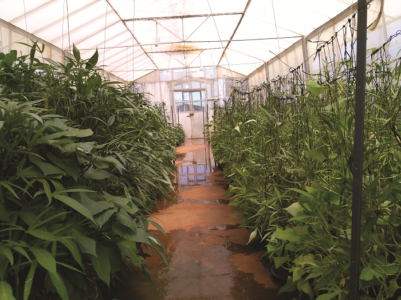
MWANZA: A TECHNOLOGY for producing sweet potato planting vines, the Sandponics System, has recorded strong results, raising output by 21 per cent compared to conventional nurserybased methods.
The Sandponics System is a soilless propagation technology that uses clean sand as a growing medium to multiply sweet potato planting materials, helping increase production faster and more efficiently than conventional nursery-based methods.
The Tanzania Agricultural Research Institute (TARI)–Ukiriguru Crop Research Officer, Ms Mwanjia Ngangambe, said yesterday here that the introduction of the technology has boosted production while addressing challenges related to timely access to quality planting materials.
“TARI, in collaboration with the International Potato Centre (CIP), established this regional seed producers’ association to enable farmers to access clean sweet potato seeds more easily,” she said.
Also, the collaboration between CIP, TARI-Ukiriguru and the Tanzania Official Seed Certification Institute (TOSCI) has enabled association members to receive training on proper seed production in compliance with regulatory standards, thereby improving productivity.
“Through this technology, a farmer can harvest planting vines up to five times in a single season, with each cycle taking only six weeks,” she said.
Globally, trends show that in conventional sweet potato nursery systems, vine production varies with management practices, but on average one square metre of nursery bed yields about 80–150 vines per 6–8 weeks cycle, while a 10 square metre nursery can produce roughly 800–1,500 vines per cycle.
Ms Ngangambe said that TARI is adapting the sandponics system by introducing affordable, locally available pots to reduce production costs while maximising the output of quality planting materials.
She said the technology’s success is also attributed to the use of magnesium sulphate fertiliser, which supplies essential sulphur nutrients required for optimal crop growth.
“In addition, magnesium sulphate provides sulphur, an essential nutrient for sweet potato development,” she explained.
Ms Ngangambe pointed out that one of the major challenges in sweet potato production is the limited availability of clean, quality planting materials.
“Many farmers continue to use contaminated planting materials that have been recycled for more than five seasons,” she said.
She explained that such contamination often arises from the practice of cutting vines after harvest and storing them in water for reuse in subsequent planting seasons.
“As a result, some farmers end up using low-quality planting materials for 10 to 15 years,” she said, noting that these materials frequently harbour pests and diseases, leading to reduced yields.