Samia’s Kremlin honor: Tanzania levels up globally
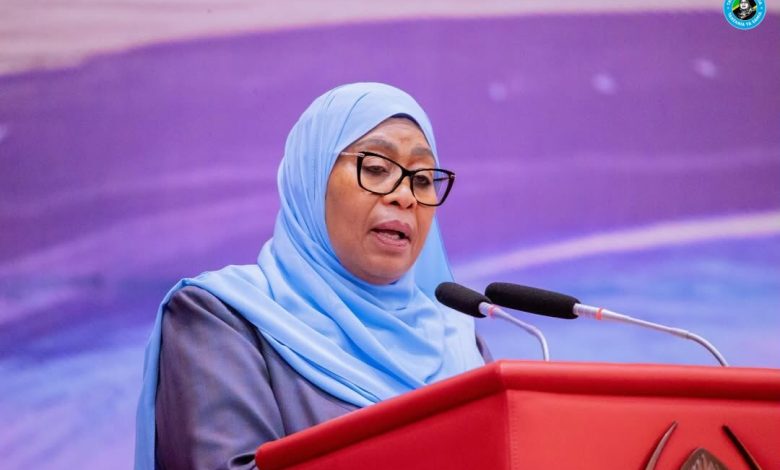
DAR ES SALAAM: WHEN President Samia Suluhu Hassan receives an Honorary Doctorate from the Peoples Friendship University of Russia (RUDN University), the occasion will represent far more than an academic ceremony. It will stand as recognition of a leadership approach that has increasingly emphasized education, human capital development, international cooperation, economic transformation, and Tanzania’s growing influence on the global stage.
Honorary degrees are often misunderstood as personal accolades. In reality, they are typically conferred upon individuals whose work, achievements, and values reflect principles that institutions seek to celebrate and associate with. In President Samia’s case, the award can be viewed as international recognition of the reforms and policy direction that have shaped her presidency over the past five years.
The significance of this honour is heightened by the institution bestowing it. RUDN University occupies a unique place in the history of Africa’s development. Established during the era of decolonization, the university was created to educate students from newly independent nations across Africa, Asia, and Latin America. Over the decades, it has produced generations of professionals, scientists, engineers, diplomats, and academics who have gone on to play influential roles in the development of their countries.
Against this backdrop, awarding President Samia an honorary doctorate is not merely about recognizing a sitting head of state. It is an acknowledgment of a leader whose priorities closely align with the university’s longstanding commitment to education, international cooperation, and sustainable development.
Perhaps the strongest connection between the honorary doctorate and President Samia’s record can be found in the education sector. Since assuming office in 2021, her administration has invested substantially in expanding access to education and improving learning infrastructure throughout the country.
Thousands of classrooms have been constructed, new schools have been established, teacher recruitment has been expanded, and funding has been increased for education projects. The government has also continued implementing fee free basic education while broadening opportunities in technical and vocational training. These efforts are rooted in the understanding that Tanzania’s long term competitiveness will depend largely on the quality of its human capital.
This vision closely mirrors the philosophy upon which the University was founded. The institution was built on the belief that education is among the most powerful instruments for national development. By honouring President Samia, the university is in effect recognizing Tanzania’s commitment to nurturing a more educated, skilled, and productive population capable of driving future economic growth.
The award also reflects the President’s emphasis on science, technology, and innovation as critical pillars of national development. Under her leadership, Tanzania has intensified efforts to advance digital transformation, modernize public services, expand information and communication technology infrastructure, and strengthen scientific research. These initiatives are intended to position the country to compete effectively in an increasingly knowledge based global economy, where innovation is a key determinant of prosperity.
Russia remains a global leader in science, engineering, technology, energy, and space research. Strengthening educational and scientific cooperation with Russian institutions therefore presents Tanzania with valuable opportunities to develop expertise in strategic sectors that are essential for industrialization and economic modernization.
ALSO READ: Samia, Putin unveils major tech, industrial power shift
Viewed from this perspective, the honorary doctorate symbolizes a partnership founded not only on diplomacy but also on knowledge exchange, scientific collaboration, and human capital development.
The recognition also speaks to President Samia’s broader approach to international relations. Since taking office, she has pursued an active foreign policy aimed at reconnecting Tanzania with the international community, attracting investment, expanding trade opportunities, and strengthening diplomatic ties across multiple regions of the world.
Her administration has embraced economic diplomacy as a key instrument for national development. Rather than relying on a limited number of traditional partners, Tanzania has sought to engage constructively with countries across Africa, Asia, Europe, the Middle East, and the Americas. This diversified approach has helped elevate Tanzania’s profile while opening new avenues for trade, investment, and strategic cooperation.
The Russia visit itself illustrates this policy direction. For nearly six decades, no Tanzanian president had undertaken an official visit to Russia. By making the trip, President Samia is revitalizing a relationship that dates back to the early years of Tanzania’s independence, while positioning the country to benefit from emerging opportunities within a rapidly changing global environment.
The honorary doctorate can therefore be interpreted as recognition of a foreign policy approach that prioritizes practical partnerships capable of delivering tangible benefits to Tanzanians.
Another important dimension of the award relates to tourism, a sector specifically cited among the reasons for the recognition. Tourism has recorded significant growth under President Samia’s leadership. Her internationally acclaimed documentary, The Royal Tour, introduced Tanzania’s attractions to global audiences, and substantially elevated the country’s visibility as a premier tourism destination.
The initiative helped reposition Tanzania within international tourism markets, while complementing broader government investments in infrastructure, air transport connectivity, hospitality services, and tourism promotion. For an institution that values international cultural exchange and global engagement, such achievements are fully consistent with its mission of fostering greater understanding and cooperation among nations.
The timing of the award is equally noteworthy. Tanzania is currently implementing Vision 2050, an ambitious national blueprint aimed at transforming the country into a competitive, industrialized, and upper middle income economy driven by productivity, innovation, and sustainable development.
Achieving these aspirations requires more than financial resources alone. It demands strong international partnerships, access to advanced technology, a highly skilled workforce, robust research capacity, and expanded educational opportunities. The agreements expected during President Samia’s visit in areas such as education, science, technology, agriculture, mining, and energy have the potential to contribute directly to these national priorities.
In this context, the honorary doctorate becomes more than symbolic recognition. It reflects confidence in Tanzania’s development trajectory and signals Russia’s readiness to deepen cooperation in sectors that are critical to the country’s long term transformation.
Beyond the immediate symbolism, the award points to a broader shift in how Tanzania is perceived internationally. It suggests a country that is increasingly attracting attention not only for its economic potential and strategic location, but also for the direction it has chosen in navigating a rapidly changing world.
In that sense, the honour transcends the individual recipient. It reflects a growing awareness of Tanzania’s place within wider conversations on progress, partnership, and shared prosperity. That, perhaps, is the deeper significance of the recognition being accorded to President Samia by one of Russia’s most internationally oriented institutions.