Samia’s economic empowerment puts women, youth on path to prosperity
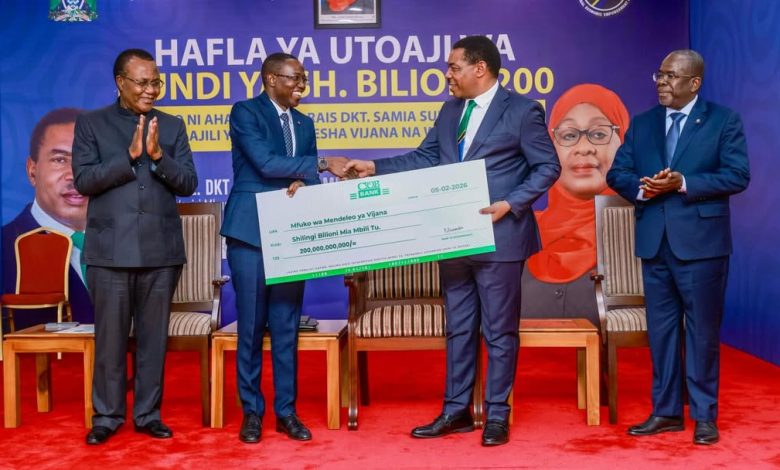
DAR ES SALAAM: ACCESS to business capital, affordable loans and markets has been among the key achievements of President Samia Suluhu Hassan’s first year in her current term, with the release of a 200bn/- empowerment fund providing women and youth with greater opportunities to grow their businesses, create jobs and build sustainable livelihoods.
The funding, released within the first 100 days of the administration, forms part of efforts to expand economic opportunities for groups that continue to face challenges in accessing finance, business skills and reliable markets.
When opening the 13th Parliament in Dodoma on November 14, 2025, President Samia said the government would prioritise economic opportunities for young people, women, persons with disabilities and older people, with a focus on job creation and improved livelihoods.
She also expressed the need to expand affordable financing for youth-owned businesses and improve support for women entrepreneurs.
The 200bn/- fund is part of implementing the Chama Cha Mapinduzi (CCM) Election Manifesto for 2025–2030 and the Fourth Implementation Plan of the National Development Vision 2050.
It complements local government loans, entrepreneurship training, business formalisation and sector-specific programmes aimed at widening participation in productive economic activities.
Figures released by the Ministry of Community Development, Gender, Women and Special Groups during the first 100 days show that 3,776 groups received 33.45bn/- through the local government loan scheme.
Women’s groups accounted for 2,074 beneficiaries received 15.68bn/-, while 1,357 youth groups received 16.23bn/-.
Another 345 groups of persons with disabilities obtained 1.54bn/-. The government has also expanded financing through institutions serving small-scale traders and entrepreneurs.
During the period covered by the ministry’s first-100-days report, it received 10.5bn/- for loans to small-scale traders at an annual interest rate of seven per cent. Of this amount, 1.35bn/- had been disbursed to 588 traders through NMB Bank.
Through the Women’s Development Fund, another 337.97m/- was provided to 45 women entrepreneurs at an annual interest rate of four per cent.
Business formalisation has also been a major part of the empowerment agenda, helping entrepreneurs become more visible to institutions providing finance, licences, training and market opportunities.
The Ministry of Community Development, Gender, Women and Special Groups registered 119,595 small-scale traders through the Small-Scale Traders Management and Registration Information System. Women accounted for 73,341 of those registered, compared with 46,254 men.
The group included 103,102 Machinga traders, 12,384 food vendors and 4,109 motorcycle and three-wheeler operators.
Entrepreneurship training has accompanied financing, recognising that capital alone may not be enough to sustain a business without financial management, production and marketing skills.
ALSO READ: Digital transformation: Mobile payments to economic empowerment
Through the Ministry of Industry and Trade and the Small Industries Development Organisation (SIDO), 11,000 entrepreneurs received entrepreneurship and business skills training during the reporting period, while 12,325 obtained loans to expand their capital.
More than 3,900 small and micro-enterprises also received taxpayer identification numbers and business licences. A further 16,325 entrepreneurs were formalised, including 8,462 women and 7,863 men.
The interventions are intended to improve business management, strengthen compliance with formal requirements and prepare enterprises to compete for wider economic opportunities. Support for product quality has also been part of the programme.
The Tanzania Bureau of Standards (TBS) trained 1,059 entrepreneurs in product quality and management, while 192 entrepreneurs’ products received quality marks.
Meeting quality requirements can help businesses build consumer confidence and improve their prospects of entering larger markets. SIDO financing has also contributed to employment.
Between November 1, 2025, and January 23, 2026, its National Entrepreneurship Development Fund and Credit Guarantee Scheme issued 265 loans worth more than 1.08bn/-, creating 652 jobs, including 489 for young people.
These results illustrate how financing can contribute to employment when businesses use capital to increase production and expand their operations.
Market access remains equally important because businesses that receive financing but struggle to sell their products may find it difficult to repay loans or sustain operations.
The Public Procurement Regulatory Authority (PPRA) registered 1,216 groups representing women, youth, persons with disabilities and older people in the National e-Procurement System of Tanzania (NeST).
The registration enables eligible groups to pursue opportunities under the 30 per cent of public procurement opportunities reserved for special groups.
During the reporting period, 1,123 groups secured procurement contracts. Women’s groups obtained 426 contracts worth 13.71bn/-, while 630 youth groups secured contracts worth 15.40bn/-.
Groups of persons with disabilities received 25 contracts worth 233.3m/-, while 42 groups of older people obtained contracts worth approximately 1.73bn/-. The banking sector has also provided financing to entrepreneurs.
NMB reported that 511,898 small traders and entrepreneurs benefited from loans totalling 646.76bn/-. Tanzania Commercial Bank provided 56.11bn/- to 1,418 entrepreneurs, including 319 women and 1,099 men, while DCB Bank lent 4.54bn/- to 1,752 entrepreneurs.
The empowerment agenda also extends to productive sectors where young people and women can participate in agriculture, fishing, livestock keeping, mining and value addition.
Through the fisheries sector, 317 young people were formalised and supported to invest in aquaculture and other marine-related activities.
Of these, 164 were involved in cage fish farming, while 153 were supported in sea cucumber farming, seaweed cultivation and crab fattening.
The government allocated 7bn/- to support the implementation of these projects. The Fisheries Education and Training Agency also trained 150 young people in cage fish farming and 200 women entrepreneurs from Mwanza Region in processing and business.
The initiatives provide opportunities to earn income from fisheries and related activities, including processing and marketing.
Their contribution will depend on access to equipment, suitable production sites, technical support and buyers for the products.
In agriculture, 282 young people enrolled in the Building a Better Tomorrow (BBT) programme were formalised and supported to undertake commercial farming on 6,465.69 acres in Kaliua District, Tabora Region.
The government also registered 532,023 farmers in the fertiliser subsidy system, including 171,705 women and 360,318 men.
Access to subsidised inputs can help farmers manage production costs, although improved output and earnings also depend on weather conditions, farming practices and market prices.
Livestock development has offered further opportunities. Outreach programmes by the Tanzania Livestock Research Institute reached 8,024 beneficiaries with training and support in pasture cultivation, rangeland improvement and livestock health.
The programme also distributed 4,000 kilogrammes of pasture planting material. Improved breeding animals were distributed to support livestock production, including 177 goats in Dodoma, Mwanza and Kilimanjaro regions and 45 breeding cattle in Dodoma, Iringa and Coast regions.
In the mining sector, 2,239 small-scale miners were formalised to help them operate within the formal system and improve their prospects of accessing finance and other services.
Minister of State in the President’s Office – Youth Development, Mr Joel Nanauka, outlined a broader approach to youth empowerment encompassing employment, practical skills, entrepreneurship, innovation, digital technology and access to markets.
According to the 2022 Population and Housing Census, Tanzania has approximately 20.6 million young people aged between 15 and 35, representing more than 55 per cent of the national labour force.
Expanding opportunities for this group is therefore important to employment creation and the country’s wider economic development.
Plans for a Youth Digital One Stop Platform are intended to improve access to information on jobs, training, financing and markets, making it easier for young people to identify opportunities and access relevant services.
For women, the government has strengthened coordination through the National Economic Empowerment Platform Secretariat, which brings together sectoral ministries and institutions to connect women with opportunities in agriculture, mining, energy, livestock and fisheries.
During the period 923 women’s economic empowerment platforms were revitalised at village and street levels in Morogoro, Dodoma and Ruvuma regions.
The platforms provide a channel for sharing information, encouraging collective action and linking women with support available across different sectors.