Samia touts social services milestones
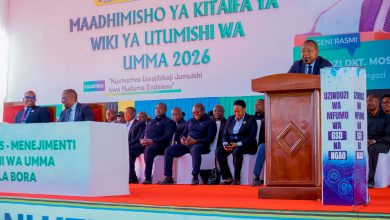
DODOMA: AS the curtain falls on the 12th Parliament, President Samia Suluhu Hassan says the past five years have been a journey of delivering better social services to Tanzanians, backed by massive investments in education, health and water sectors.
Speaking during a special address to mark the conclusion of the activities of the 12th Parliament, she said her administration has worked to ensure that every Tanzanian, especially women and children, has access to quality services, no matter where they live.
“As we close this chapter, it is important that everyone understands how far we have come and what we have achieved together,” President Samia said during her special address, in which she also announced that the 12th Parliament will be dissolved on August 3 this year.
She made it clear that transforming social services has been a central part of her administration’s mission over the past five years.
Education sector
“Our focus has been to produce skilled Tanzanians who are ready for the job market, not just graduates with certificates,” said the President.
She said that the education budget has increased from 4.72tril/- in 2020 to 6.16tril/- in 2025, enabling the government to expand schools, upgrade facilities and overhaul the curriculum to focus on skills development.
ALSO READ: Tanzania cherishes teachers’ contribution with 40,527 in service
“We built 26 girls’ science secondary schools, one in every region. For boys, we constructed seven science schools across the zones. On top of that, we added 103 vocational secondary schools to prepare youth with practical skills,” she said.
Classroom numbers rose from 191,708 in 2020 to 254,393 and the free education programme continues to support millions of learners.
“We have increased the free education budget from 312bn/- to 796bn/-. Today, more than 16 million students are in school under this programme,” said Samia.
No one has been left behind. She confirmed that 18,347 students who dropped out due to various challenges have been reinstated.
The government also built model inclusive schools in Geita, Mtwara and Arusha for students with special needs.
Vocational training has expanded too. “In 2020, we had 662 vocational colleges. Today, we have 860,” Samia said.
Enrolment has increased to over 446,000 students, receiving hands-on training in key sectors like energy, ICT and manufacturing.
Higher education has not been left out. The student loan fund grew from 464bn/- to 787.4bn/-. “The Samia Scholarship has also supported over 1,300 students in science, health, technology and engineering,” she added.
Health Services
“Our goal has been simple, no woman should lose her life while giving life and no Tanzanian should walk long distances to find healthcare,” President Samia said.
She pointed out that health facilities have increased from 8,783 in 2020 to 12,846 in 2025. “Today, 75 per cent of Tanzanians can access health services within a five-kilometre radius,” she said.
Special maternal and child health centres are now operating at Meta Zonal Hospital in Mbeya and several regional hospitals including Sekou Toure, Geita, Simiyu, Mawenzi, Njombe and Songwe.
Emergency surgical centres for childbirth have jumped from 340 in 2020 to 577. Emergency units in hospitals have expanded from just 7 to 125 in five years.
“The number of MRI machines has nearly doubled, CT scans tripled and digital X-rays increased from 147 to 491. This is not just infrastructure, it’s about saving lives,” said Samia.
Availability of medicines in public facilities improved from 73 per cent to 86.2 per cent. Specialised services like kidney transplants, cochlear implants, heart surgeries and cancer treatments are now offered locally.
“More Tanzanians are now coming home for treatment instead of traveling abroad. Medical tourism within Tanzania has more than doubled,” she said.
Fight against HIV
On HIV/AIDS, the President said that Tanzania is progressing well toward the global 95-95-95 targets. “Right now, 98 per cent of those who know their HIV status are on treatment and 94 per cent of them have suppressed the virus,” she said.
She acknowledged that challenges remain, especially with reduced donor funding. “But let me assure Tanzanians, we will not reverse the gains we’ve made. Health remains our top priority,” she said.
Water sector
Samia described clean and safe water as a basic right that no Tanzanian should struggle to access. “When I say we want to remove the water bucket from a woman’s head, this is what I mean,” she said.
The government has implemented over 2,331 water projects in towns and villages. Major projects include the 1.3tril/- upgrade of water systems in 28 urban centres, benefiting nearly 6 million people.
The Arusha Water Project increased water production fivefold, while the Same-Mwanga-Korogwe project has improved supply for more than 450,000 residents.
She noted that drilling rigs and dam construction equipment have allowed the government to dig 1,749 boreholes and build 16 dams. An additional 45 rainwater harvesting dams were completed.
The massive Kidunda Dam, which will hold 190 billion litters of water, is under construction and expected to solve water shortages in Dar es Salaam and Coast regions.
“Water access in urban areas has improved from 84 to 91.6 per cent and in rural areas from 70.1 to 85 per cent,” said Samia.
As the 12th Parliament comes to an end, Samia said the story of social service delivery is one of partnership between the government and the people.
“These achievements are not just numbers; they are about transforming lives. As we dissolve this Parliament on August 3, we look forward to continuing the journey to serve Tanzanians even better,” she said.