Samia, El-Sisi broaden ties
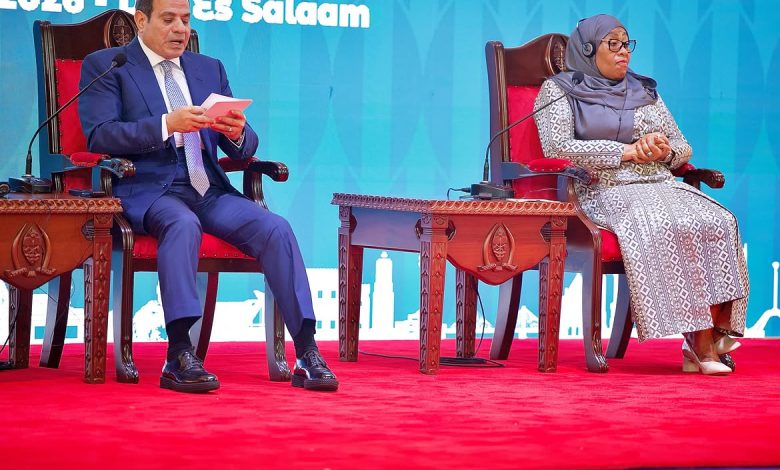
DAR ES SALAAM: PRESIDENT Samia Suluhu Hassan and her Egyptian counterpart, Abdel Fattah El-Sisi, have agreed to deepen bilateral cooperation in energy, transport, healthcare, science and technology following high-level talks held at the State House in Dar es Salaam yesterday.
The two leaders, who met during President El-Sisi’s one-day State Visit to Tanzania, witnessed the signing of two Memoranda of Understanding (MoUs) covering cooperation in electricity and renewable energy, as well as the transport sector.
Speaking at a joint press conference, President Samia said the agreements would strengthen the long-standing partnership between Tanzania and Egypt while opening new opportunities for trade, investment and regional integration.
She said the discussions focused on expanding cooperation in infrastructure development, including Egypt’s support for the development of Bagamoyo Port and improvements in maritime transport.
According to President Samia, the transport agreement will pave the way for closer collaboration in ports, railways, aviation and maritime transport.
She said the two countries also agreed to cooperate in developing Bagamoyo Port and linking it to the Standard Gauge Railway (SGR) at Kwala in the Coast Region to facilitate cargo movement and strengthen regional logistics.
“We have agreed to strengthen cooperation in the transport sector. This includes our ports, railways and maritime transport because efficient infrastructure is essential for expanding economic cooperation,” she said.
The President added that both countries would continue discussions on enhancing maritime transport links to improve the movement of goods and expand access to regional and international markets.
On aviation, President Samia said EgyptAir currently operates three weekly flights to Tanzania, while Air Tanzania is preparing to launch direct flights to Egypt to boost connectivity between the two countries.
Healthcare featured prominently during the talks, with President Samia revealing that Egypt had offered to construct a fully equipped and modern hospital in Tanzania.
“They have expressed readiness to build a new hospital and equip it with all the necessary medical facilities, should we agree. We will continue discussions on this proposal,” she said.
She added that Tanzania and Egypt had also agreed to strengthen cooperation in specialised healthcare through training and skills development in cardiac, kidney and cancer treatment.
ALSO READ: A warm welcome for Egyptian President El Sisi as he lands in Dar
President Samia commended Egypt for supporting Tanzania’s health sector through scholarships and specialist medical missions, noting that Egyptian doctors working alongside Tanzanian specialists have performed more than 420 heart surgeries on Tanzanian patients over the past decade.
The two leaders also discussed on education, science and technology, with Egypt pledging to support Tanzania in building expertise in artificial intelligence, cybersecurity, Information and Communication Technology (ICT) and other scientific fields through scholarships and specialised training programmes.
President Samia described the Julius Nyerere Hydropower Project (JNHPP), constructed by Egyptian companies, as a symbol of successful African cooperation, demonstrating the continent’s capacity to deliver major strategic infrastructure projects using its own expertise and resources.
The leaders further agreed to enhance cooperation in water resource management, security and international affairs, including protecting the Nile Basin through dialogue and strengthening efforts to combat terrorism, piracy and other transnational crimes.
President Samia said Tanzania would continue protecting the Lake Victoria ecosystem to ensure sustainable water flows into the River Nile, while reaffirming that the Nile should remain a source of cooperation and shared development.
She called on ministers and officials from both countries to ensure timely implementation of all agreements reached during the State Visit, including those signed by government institutions and the private sector, so that they deliver tangible benefits to the people of Tanzania and Egypt.