Referee accuracy, VAR still debatable
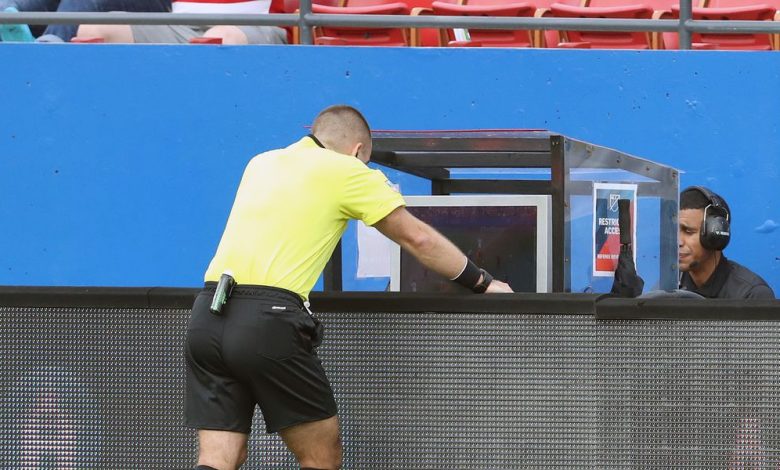
IN the beautiful game of football, referees serve as guardians of fairness, responsible for enforcing rules and ensuring order on the pitch.
Yet, despite their training, experience and dedication, officiating errors remain an inevitable part of the sport and a recurring source of debate.
Data offers both reassurance and concern. According to Sky Sports, referees and their assistants average around five errors per match, yielding an estimated 98 per cent accuracy rate.
While that figure suggests a high level of reliability, even a single incorrect call can have a dramatic impact, especially in tightly contested matches.
Further research published on ResearchGate highlights that while experienced referees tend to maintain an error rate of five per cent, this can spike to 15–20 per cent during high-pressure international tournaments, where the stakes and scrutiny are higher.
Such discrepancies reveal the influence of external factors like crowd pressure, match importance and fatigue on decision-making.
VAR: Game-changer or double-edged sword? The introduction of the Video Assistant Referee (VAR) system was meant to reduce the margin of error in officiating. And in many cases, it has.
The English Premier League reports that the accuracy of referee decisions improved from 82 per cent to 96 per cent following the implementation of VAR.
Similarly, a Taylor & Francis online study found accuracy rates rose from 92.1 per cent to 98.3 per cent with VAR support.
But VAR is not a cureall. It remains dependent on human interpretation and its application is sometimes selective, an issue at the heart of recent controversies in African football.
In April 2024, Tanzania’s Young Africans SC filed a formal complaint to the Confederation of African Football (CAF) after a contentious CAF Champions League quarter-final against Mamelodi Sundowns of South Africa.
The flashpoint came in the 57th minute, when a goal by Stephane Aziz Ki was disallowed under unclear circumstances.
Despite apparent grounds for review, Yanga alleged that referee Dahane Beida of Mauritania and the VAR team refused to consult the video replay.
“The goal was clear, yet the referee team refused to check VAR,” read Yanga’s letter.
“This act undermines the values of fair play and casts serious doubt on the credibility of officiating at this level.”
Yanga further accused officials of selective VAR usage, claiming reviews were only triggered for potential fouls by their players, while ignoring calls that could benefit them.
The club even hinted at possible match-fixing, a grave charge underscoring their frustration.
The controversy deepened when the same referee oversaw a heated CAF Confederation Cup match between Simba SC and RS Berkane in Zanzibar.
The game, which ended 1–1, featured several disputed calls, most notably the red card issued to Simba’s midfielder Yusuf Kagoma for what replays suggested was a fair challenge.
Again, VAR was not consulted, prompting outcry from Simba’s technical bench. Head coach Fadlu Davids received a yellow card and one of his assistants was ejected.
These incidents have reignited concerns about refereeing standards, transparency and consistency in African competitions.
While CAF’s data aligns with global trends, placing average referee mistakes at around five per match, high-profile errors continue to erode trust.
In an effort to detect potential bias, analysts are turning to statistical models, examining trends over multiple games.
They assess patterns in fouls, cards and penalties, comparing them to tournament averages.
If a referee consistently awards more penalties to certain teams or favours home sides disproportionately, it could indicate unconscious or systemic bias.
Regression analysis is often used to control for variables like team strength and match context. Most referees carry out their duties with professionalism and integrity.
However, the few but influential errors, particularly in critical moments, can fuel controversy and damage the sport’s credibility.
Technologies like VAR have undoubtedly improved accuracy, but they are not immune to the same human limitations they were designed to mitigate.
Until football strikes the right balance between human judgment and technological support, the debate over refereeing decisions is likely to continue.