

REA’s electrification sparks era in four years
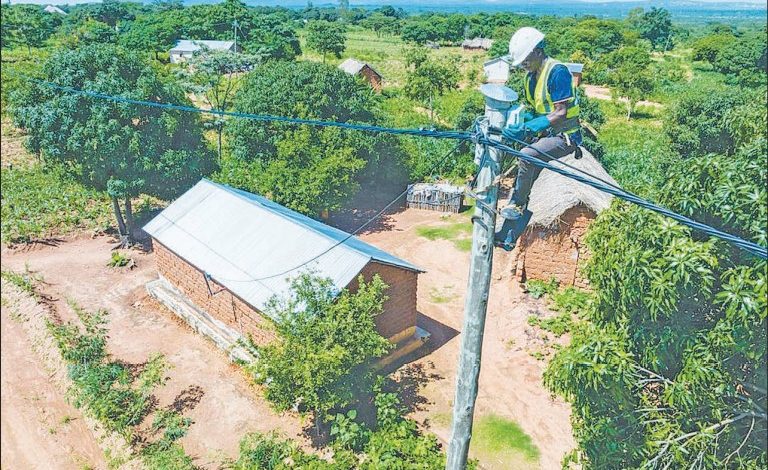
Tanzania, “lights out” was not just a bedtime routine, it was a lifestyle. Families huddled around kerosene lamps, students squinted at homework lit by candlelight, and chickens slept soundly knowing that no refrigerator would ever threaten their leftovers. But today, things are changing, and not just by a flick of a switch.
Welcome to Tanzania’s quietest revolution, one not led by megaphones or political rallies, but by something even more powerful: power itself. Quite literally.
Thanks to a determined government, a visionary president, and a Rural Energy Agency (REA) that clearly missed the memo on moving slowly, electricity is finally going where it used to fear to tread, that is the deep, dusty heart of Tanzania’s countryside.
At the helm of this current-powered crusade is none other than President Dr Samia Suluhu Hassan. Since taking office in April 2021, she has made one thing clear: no village left in the dark. With development as her mantra and transformers as her tools of trade, the president has turned rural electrification from a wishful idea into a full-blown national mission.
And the numbers? They are not just impressive, they are electric. Over 12,318 villages across mainland Tanzania are now officially wired. To put that into perspective: if each village threw a lightbulb party, you would run out of bulbs before they ran out of villages. Add to that the 34,162 hamlets (out of 64,359) that now glow in the soft hum of progress, and you have got a movement sparking real change.
That still leaves a whopping 30,000 plus hamlets to go, but don’t worry, they are already on the to-do list, courtesy of fast-charging projects like HEP 1, HEP 2A/2B and peri-urban electrification. Procurement meetings have never looked this hopeful. Now let us talk about something we all care about: food. Or more specifically, how we cook it.
Because here is the twist, you can’t really say a home is powered up if the kitchen still runs on smoky wood fires and charcoal.
The government knew this and launched the National Clean Cooking Energy Strategy on May 8, 2024. The goal? Have 80 per cent of Tanzanians cooking clean by 2034. And no, that doesn’t mean using fancy hashtags or washing their hands before chopping onions.
We are talking clean, safe, sustainable energy for cooking, minus the smoke, firewood hunting, and lung damage. Phase one has already seen a whopping 99,350 LPG cylinders distributed (we are 97.8 per cent there!). Phase two is heating up too, that is 80,114 of the 452,445 cylinders have been rolled out, with more coming soon.
If you have seen shiny new stoves popping up in your local prison, you’re not hallucinating, 211 prisons got clean energy systems. Even the prison beans are getting cooked in style now. And what about those improved cookstoves? So far, 4,200 units have been distributed out of a planned 205,000. Plus, a spicy 558 tonnes of alternative charcoal (yes, there is such a thing) worth 35bn/- have been introduced.
Your grandmother’s three-stone fire just got seriously outclassed. Watts next? A transformer Tsunami When we say Tanzania is on a mission, we mean a wiring frenzy. In just four years, the government has added more than 413,000 households to the grid.
To make that possible, they have laid over 40,000 km of medium-voltage lines, 29,000 km of low-voltage lines, and installed a jaw-dropping 12,115 transformers.
Now, these are not just transformers like the ones that turn into robots in Hollywood. These ones power the real heroes of development: schools, health centres, irrigation schemes, local industries, and even the humble village chapel.
In fact, the rollout includes: 312 small-scale mines getting their power fix; 213 local industries switching on; 72 irrigation schemes pumping confidently; 2,184 public institutions lighting up, including: -675 schools (no more “I forgot my homework because I couldn’t see it”); 410 health centres (vaccines now with refrigeration!); 105 water pumps (clean water without carrying it uphill both ways); 1,311 houses of worship (heavenly vibes with actual lighting); 8,308 businesses with newly energised ambitions. Plugged in, not priced out Of course, what is the point of electrification if it is only for the rich? To ensure everyday Tanzanians can get connected, the government introduced subsidised connection fees.
For just 27,000/- (about the price of a family outing involving sodas and mishkakis), anyone in even the remotest village can connect to the national grid. That fee includes VAT, making it possibly the only time you will be happy about taxes. The result? Rural folks aren’t just turning on lights, they are opening shops, charging phones, running machines, and staying put instead of migrating to overcrowded cities.
The electrification wave is doing more than just brightening homes, it is transforming lives and economies.
Consider this
The number of local energy equipment manufacturers has jumped from 26 to 84 companies, a serious glow-up for the economy. Students are now revising at night (cheers to higher pass rates). Health centres store vaccines and deliver babies without kerosene lanterns or phone flashlights. Agro-processing is booming in the countryside with milling machines and cold storage solutions.
Again, rural-urban migration is slowing down because, surprise! This is again, because people will stay in villages when there is power, internet, jobs and a cold soda. And in some areas like Malinyi and Mahenge, shiny new substations (like the Ifakara 220/33kV beast) are helping move power around more efficiently. That means more reliable electricity in farming zones for crops like rice, maize, and the occasional sugarcane moonshine (unofficially, of course).
Still waiting, but no longer in the dark
Now, let us be honest, there are still 30,000 plus hamlets waiting patiently (or not so patiently) for their moment to shine. But here’s the good news: the government isn’t playing hide-and-seek.
The roadmap is clear, the tenders are rolling, and the cables are coming. Whether it’s HEP 1, 2A/2B, or peri-urban electrification programs, these next phases are already well into procurement and planning. If all goes according to schedule, we might soon need sunglasses just to visit the countryside.
Tanzania’s electrification journey is not just a technical achievement. It is a story of equity, ambition, and everyday empowerment. It is about giving that Form Two student a chance to revise past 7 PM. It is about helping Mama Ntilie refrigerate her ingredients. It is about keeping vaccines cold, sermons lit, factories running, and businesses booming, all powered by something as simple as a current. And for those still waiting? The wires are coming. The switches are being flipped.
And soon, when someone in the most remote hamlet flicks on their first lightbulb, it won’t just be a bulb that lights up, it will be a future. So, here is to the unsung heroes of the power grid. The engineers in boots, the policymakers with spreadsheets, the linemen climbing poles in the rain, and the villagers who waited patiently (and sometimes impatiently) for the light to come. Your time is now. Let there be light and lots of it.

169988 631794quite good put up, i undoubtedly really like this web internet site, keep on it 926192