Public entities reposition for Dira 2050 economic transformation

DAR ES SALAAM: TANZANIA’S ambition to transform into a 1 trillion US dollars economy by 2050 is a bold national aspiration that will require more than increased investment.
Achieving this milestone will demand strategic planning, sustained commitment, effective implementation of development priorities and the collective efforts of both public and private sector players.
It will depend on how effectively the country converts resources into productive activities, creates employment, strengthens essential services and builds a competitive private sector.
This places public institutions at the centre of an important transition.
Under Dira 2050, public entities are expected to contribute 30 per cent to the envisaged economic transformation, while the private sector is expected to account for 70 per cent.
The distinction points to a public sector that must improve its own performance while creating conditions for businesses to invest, expand and generate wealth.
For the Office of the Treasury Registrar (OTR), which oversees the Government’s investments in public entities and companies, this ambition places considerable responsibility on the performance of its portfolio.
OTR oversees 308 institutions and companies, comprising 252 majority-owned Public and Statutory Corporations (PSCs) and 56 companies in which the Government holds minority interests, with a combined investment value of approximately Sh92.3 trillion.
The significance of this portfolio extends beyond the value of Government assets.
These institutions are expected to generate economic returns, deliver essential services, support productive activities and create opportunities for private-sector participation.
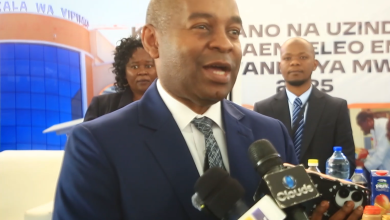
Treasury Registrar Nehemiah Mchechu has emphasised that public entities must move beyond measuring performance primarily through routine operations and financial remittances to the Government.
Their contribution should also be reflected in productivity, service quality, financial sustainability, innovation, competitiveness and the wider economic value they generate.
Addressing public sector leaders at the 2026 Chairpersons and Chief Executive Officers Forum in September, Mr Mchechu stressed the importance of measurable outcomes, including efficient resource utilisation, technology adoption and improved service delivery.
His emphasis reflects the need for public entities to become more productive and competitive institutions capable of supporting industrialisation, employment creation and sustainable economic growth.
The scale of government investment makes this shift increasingly important. The value of the portfolio rose from 67.95tri/- in 2020/21 to 92.28tri/- in 2024/25, an increase of 35.8 per cent.
The greater test, however, is whether these investments generate adequate returns, strengthen productive capacity and deliver tangible benefits to citizens.
Across the portfolio, institutions are translating the national ambition into priorities within their respective sectors.
Their plans range from mobilising long-term savings and widening access to education financing to attracting investment, supporting local enterprises and expanding specialised services.
At the National Social Security Fund (NSSF), Director General Masha Mshomba said recently that the Fund will strengthen its capacity to mobilise long-term savings and channel them into productive investments that support economic activity.
Under its Eighth Strategic Plan, NSSF intends to increase its investment portfolio from 9,608.72bn/- in 2025/26 to 20,354.58bn/- by 2030/31, representing growth of 112 per cent.
The Fund also plans to widen social security coverage, with membership projected to increase from 2,144,906 to 6,609,403 over the same period.
NSSF projects that its investments will contribute to 13,729 jobs, comprising 2,759 direct and 10,970 indirect opportunities.
Its Environmental, Social Responsibility and Governance management guideline is intended to integrate sustainability considerations into investment decisions.
The wider significance of the plan lies in the ability to turn domestic savings into investments that expand productive capacity, create employment and support long-term economic growth.
Human capital development is another priority. Higher Education Students’ Loans Board (HESLB) Executive Director Dr Bill Kiwia said the Board will strengthen financing opportunities, expand private-sector collaboration and improve digital services as part of its contribution to Dira 2050.
These interventions support the national ambition for at least 25 per cent of Tanzanians to attain higher education by 2050.
However, expanding access must go hand in hand with developing skills relevant to the labour market.
A growing economy will need people capable of operating industries, managing businesses, adopting technology and raising productivity.
Public procurement is also being positioned as a tool for widening economic participation.
Public Procurement Regulatory Authority (PPRA) Director General, Dennis Simba pointed out that the Authority will continue enabling special groups, including youth, women and people with disabilities, to access opportunities in public procurement.
The initiative involves registering groups, including those formed at local government level, and facilitating their participation through the National e-Procurement System of Tanzania.
It targets 300,000 groups, with the potential to support approximately three million jobs. Registered groups can compete for tenders valued at up to 500m/-.
Mr Simba renewed his call on Tanzanians to seize these public procurement opportunities to contribute to nation-building and improve their economic wellbeing.
“I would like to once again urge Tanzanians to seize these public procurement opportunities so that we can build our nation and improve our economic well-being,” he said recently.
He went on to add: “By participating fully in public procurement, we can make a significant contribution to achieving the goals of Dira 2050 and attaining full middleincome country status.”
The expected contribution goes beyond increasing the number of groups registered.
The opportunity must help them develop the financial capacity, skills, supply chains and delivery standards required to build sustainable enterprises and participate in the formal economy.
Investment promotion will be equally important in expanding productive capacity.
Tanzania Investment and Special Economic Zones Authority (TISEZA) Director General, Gilead Teri said on Monday this week that the Authority will continue attracting capital, promoting industrialisation, increasing exports, strengthening the participation of local producers and improving the business environment.
These priorities are intended to support Dira 2050’s development ambitions and position Tanzania as a competitive investment and production hub in East and Southern Africa.
Greater participation by local producers is particularly important because investment should create opportunities for domestic businesses to join supply chains, while industrial expansion should generate employment and strengthen the country’s export capacity.
Mr Teri said that between July 2025 and September 2026, TISEZA registered 1,148 investment projects valued at 15.32 billion US dollars, with the potential to generate more than 344,031 jobs.
Of the total investment value, 9.60 billion US dollars came from foreign investors, while 5.72 billion US dollars was domestic investment.
The extent of their contribution will depend on how many projects move into implementation and the productive activities, jobs and business opportunities they ultimately generate.
Mobilising investment also requires accessible financing.
Dar es Salaam Stock Exchange (DSE) Chief Executive Officer, Peter Nalitolela said the Exchange will continue working with stakeholders, including the Capital Markets and Securities Authority and OTR, to increase awareness among public institutions and Tanzanians about opportunities to raise capital through the market.
The objective, Mr Nalitolela said, is to encourage businesses and institutions to consider capital-market instruments as alternative sources of financing for expansion and development.
” As Tanzania seeks to grow its economy from approximately 85 billion US dollars to 1 trillion US dollars, government resources alone will not finance the scale of investment required,” he stressed.
He added: “Domestic savings, private capital and alternative financing mechanisms will be essential, supported by transparency, sound corporate governance and investor confidence.”
In healthcare, Benjamin Mkapa Hospital is preparing to expand specialised services, strengthen professional training and attract investment in the local production of medicines and medical equipment.
The hospital’s Executive Director, Prof Abel Makubi said the facility is working to increase its specialised services from 17 to at least 25 by 2050.
It is pursuing opportunities to attract two investors to establish pharmaceutical and medical equipment factories at Mloganzila, while potential investment opportunities in Dodoma have been identified in collaboration with the University of Dodoma.
The plans could strengthen local healthcare capacity, create opportunities for specialised services and support medical tourism.
The hospital is already receiving patients from Burundi, the Democratic Republic of Congo and Malawi.
Prof Makubi also highlighted training and mentoring in medicine, pharmacy and laboratory sciences, alongside digital health innovation.
Communicating the national development agenda is another part of implementation.
Tanzania Broadcasting Corporation (TBC) Director General, Asha Dachi said the broadcaster will play an important role in promoting public understanding of Dira 2050 and connecting its national targets with citizens’ everyday experiences.
This includes helping the public understand the ambition of raising income per capita to 7,000 US dollars by 2050 and the role individuals, businesses and communities can play in achieving it.
“Effective public communication will be important in ensuring that the national vision is understood beyond policy institutions and government offices,” said Ms Dachi.
For the Institute of Adult Education (IAE), private-sector partnerships offer an opportunity to expand infrastructure and learning facilities while allowing the institution to concentrate on its core mandate of providing adult education.
Head of IAE, Prof Philipo Sanga, said public institutions should create an enabling environment for private investors to complement public service delivery rather than undertake every investment themselves.
He cited the possibility of private investors constructing and operating student hostels, allowing the Institute to concentrate on its core responsibilities of developing education programmes and delivering teaching.
Such partnerships can mobilise additional capital and operational expertise while enabling public institutions to focus resources on their primary mandates.
Taken together, these plans illustrate how public entities can play different but complementary roles in advancing Dira 2050. However, institutional strategies and announced targets are only the starting point.
The real test will be whether planned investments materialise, services improve, jobs are created and public institutions become more financially sustainable and accountable for results.