Proposed budget rises to 62.3tri/-, targets stronger economy
DODOMA: THE government yesterday unveiled a 62.33tri/- proposed budget for the 2026/27 financial year, representing a 10.3 per cent increase from the 57.04tri/- allocated in the current fiscal year as it seeks to build a strong, inclusive and competitive economy.
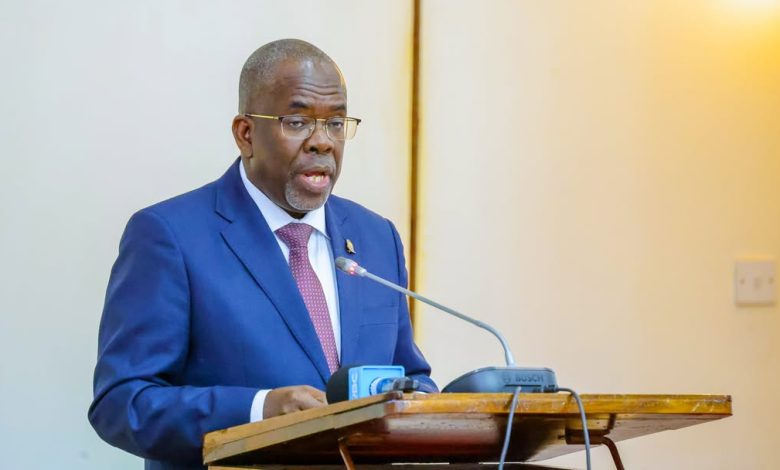
Presenting the budget framework and expenditure ceilings to Members of Parliament in Dodoma yesterday, Finance Minister Ambassador Khamis Mussa Omar said the ceiling was determined after considering several key factors.
These include domestic revenue performance, maintaining the budget deficit within three per cent of Gross Domestic Product (GDP) in line with agreements of the East African Community (EAC) and the Southern African Development Community (SADC).
Other considerations, he said, included the growth of public debt, borrowing costs, debt servicing obligations and changes in development partners’ policies.
According to the minister, between January and June 2026, the government expects to collect and spend about 28.27tri/-, equivalent to 50.1 per cent of the 56.49tri/- budget for the 2025/26 financial year.
Of the projected revenue, 20.16tri/- will come from domestic sources, 448.5bn/- from grants and 7.66tri/- from both domestic and external borrowing.
The proposal complies with parliamentary standing orders that require the government to present the budget framework and expenditure limits by March 11 each year, unless the date falls on a weekend.
Amb Omar said the 2026/27 budget will be the first to implement the National Development Vision 2050, which aims to transform Tanzania into an inclusive, prosperous, just and self-reliant nation by 2050.
“The vision targets raising the country to upper-middle-income status, building a one-trillion-dollar economy, achieving an average income of at least 7,000 US dollars per person, improving living standards, promoting environmental conservation, enhancing climate resilience and creating a technologically skilled society,” he said.
ALSO READ: MPs call for increased budget in research, innovation
Implementation of the vision will be guided by the Long-Term Perspective Plan 2050 (LTPP 2050) and executed through five phases of the National FiveYear Development Plans, beginning with FYDP IV, which will run from 2026/27 to 2030/31.
The minister outlined five key priorities under the upcoming development plan, including building a strong, inclusive and competitive economy through nine transformation sectors, promoting human capital and social development, strengthening environmental conservation and climate resilience, advancing economic transformation drivers and reinforcing governance, peace, security and stability.
Government expenditure and investment in non-financial assets in the 2026/27 fiscal year are projected at 54.49tri/-, excluding debt principal repayments, compared to 48.78tri/- in 2025/26, representing an 11.7 per cent increase.
“The government will also maintain a budget deficit not exceeding three per cent of GDP, financed through both domestic and external borrowing in line with the Medium-Term Debt Management Strategy (2025/26–2027/28),” he said.
Under the strategy, the government plans to borrow 15.54tri/- in 2026/27, including 6.56tri/- from domestic sources, 6.55tri/- from concessional external loans and 2.43tri/- from commercial external loans.
At the same time, the government intends to repay 7.84tri/- in matured loan principal, bringing net borrowing to about 7.41tri/-.
Amb Omar said that by December 2025, Tanzania’s public debt stood at 109.44tri/-, up from 93.69tri/- recorded in the same period in 2024, representing an increase of 16.82 per cent and equivalent to about 47 per cent of GDP.
Of the total debt, 37.90tri/- was domestic debt while 71.55tri/- was external debt.
He explained that the increase was largely driven by borrowing to finance major development projects such as roads, railways, airports, electricity and water infrastructure.
However, the minister said a Debt Sustainability Analysis conducted in October 2025 showed that the country’s public debt remains sustainable in both the medium and long term.
He added that the government will continue prioritising concessional loans where available, while commercial loans will be directed to projects that accelerate economic growth and expand exports.
Amb Omar further noted that one factor contributing to debt growth has been borrowing for projects that were not ready for implementation, leading to the payment of commitment fees on undisbursed loans.