

Prophet Ibrahim and the legacy of sacrifice for Eid al-Adha
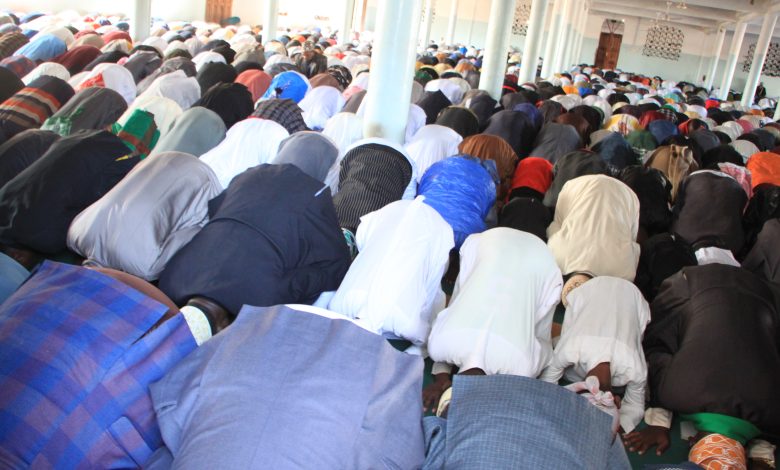
IN Islam, Prophet Ibrahim (AS) known as Abraham in Christianity and Judaism is revered as one of the greatest figures in the history of humanity.
Often referred to as the “father of the prophets,” his legacy spans generations, with many of the most prominent prophets including the final messenger, Prophet Muhammad (PBUH) tracing their lineage to him.
As Eid al-Adha approaches, Muslims around the world turn their hearts toward the timeless story of Ibrahim (AS) and his profound act of faith.
His unwavering submission to Allah (SWT) remains a powerful reminder of devotion, obedience and trust in the divine will. Born in Babylon, in present-day Iraq, Prophet Ibrahim (AS) was raised in a society steeped in idol worship.
His own father was a master sculptor of these idols. Yet, from a young age, Ibrahim (AS) questioned the logic of worshipping lifeless statues carved by human hands. He looked instead to the heavens, the stars, the moon, and the sun signs of something far greater.
Through reflection and reason, Ibrahim (AS) recognised that none of these creations could be the ultimate source of power. He submitted his heart to “the Lord of the universe” Allah (SWT) and became one of the earliest champions of monotheism.
This submission was the first of many profound acts of faith. When Ibrahim (AS) was commanded to challenge the idol-worshippers, he faced persecution, rejection and even a death sentence cast into a blazing fire by his own people. Yet, Allah (SWT) protected him and he emerged from the flames unharmed.
Despite the miraculous event, many remained in disbelief, but Ibrahim (AS) continued his mission with steadfast devotion.
Years later, having endured many trials, Ibrahim (AS) faced one of the greatest tests of all: a divine command to sacrifice his beloved son, Ismail (AS).
Though heart-wrenching, he knew this was a test of faith. With unshakable trust in Allah (SWT), Ibrahim (AS) shared the dream with his son. Ismail (AS), noble and obedient, accepted his fate, saying: “O my father, do as you are commanded.
ALSO READ: Stop fighting, start helping the girl child
You will find me, if Allah wills, among the steadfast. Prophet Ibrahim who is highly revered figure in Islam, considered a foundational prophet and the “father of monotheism”.
He is known for his unwavering faith, his willingness to sacrifice his son, Ismail, for God’s will (the “Holy Sacrifice”) and his role in establishing the Kaaba. His life is a model of submission to God and devotion to the teachings of Islam. As they reached Mount Arafat, Prophet Ibrahim was commanded by Allah to sacrifice his son, Ismail, as part of a test of faith and obedience.
Ibrahim, along with Ismail, obeyed and prepared for the sacrifice, with Ismail even suggesting they be bound and blindfolded. However, Allah intervened and a ram was provided as a substitute sacrifice, instead of Ismail. This event is commemorated during the Hajj pilgrimage and celebrated as the day of sacrifice (Eid al-Adha).
The Meaning Behind the Sacrifice…Every year, Muslims commemorate this incredible act of submission during Eid al-Adha, the Festival of Sacrifice, in the sacred month of Dhul Hijjah. Across the globe, believers offer a qurbani usually a sheep, goat, cow, or camel as a symbolic act of devotion to Allah (SWT), following in the footsteps of Ibrahim (AS). This sacrifice is not merely a ritual.
It is a profound reminder of our duty to obey Allah (SWT), to give generously and to stand firm in faith, even in the face of hardship. It’s a call to reflect, to renew our intentions and to care for those who are less fortunate. Muslims are encouraged to approach this act with sincerity and humility.
According to the Sunnah and upheld by the majority of scholars, it is recommended to avoid cutting one’s hair, nails, or skin in the days leading up to the sacrifice.
In the Hanbali school of legal thought, this is considered obligatory. As we prepare for Eid al-Adha, expected to fall on the first week of June, let us not forget the millions around the world who face hunger, poverty and hardship.
The essence of qurbani, a spiritual practice that reminds Muslims of the importance of obedience to God and the willingness to sacrifice for the sake of His command is not only to remember Ibrahim’s sacrifice but also to extend mercy and care to those in need.
Donating during Eid al-Adha, particularly through Qurbani (animal sacrifice), is a significant act of charity and piety in Islam, the act of sacrifice which can also bring hope, dignity and nourishment to those struggling across the globe.
It’s a way to share the blessings of the holiday with those in need, fostering a sense of community and ensuring that everyone can participate in the festivities.
Qurbani is a reminder of the Prophet Ibrahim’s (Abraham) willingness to sacrifice his son Ismail (Ishmael) as an act of obedience to God.
The act of Qurbani is also seen as a way to express gratitude for God’s blessings and to enhance one’s faith. Prophet Muhammad the final prophet in Islam, known as the ‘Seal of the Prophets’ where Muslims regard him also as Allah’s final messenger, honoured Eid al-Adha by prioritising the Eid prayer, performing the sacrifice (Qurbani), and emphasising acts of charity and generosity.
He also stressed the importance of dressing in one’s best clothes, applying perfume and celebrating with family and friends.
The Prophet Muhammad (peace be upon him) stated that anyone who slaughtered their sacrifice before the Eid prayer had merely slaughtered it for themselves, while those who slaughtered after the prayer were considered to have offered their sacrifice correctly and followed the tradition of Muslims.
Muslims typically sacrifice domesticated livestock such as camels, cattle, sheep, or goats.
The choice of which animal to sacrifice is a personal one and Muslims can choose to sacrifice any of the permissible animals based on their preferences and circumstances.
The sacrificed animal must be healthy and free from any physical defects. It should also be of a certain age, with sheep needing to be at least one year old, but a healthy, fat six-monthold lamb is also acceptable.




663813 712108Properly, that is wonderful, however consider further options weve got here? Could you mind submitting an additional write-up relating to them also? Numerous thanks! 502305
104467 508955This kind of lovely weblog youve, glad I located it!?? 425392