PCCB executives to be assessed by performance

THE Minister of State, President’s Office Public Service Management and Good Governance, Jenista Mhagama has said that Prevention and Combating of Corruption Bureau executives (PCCB) in all regions and districts will be assessed based on their performance.
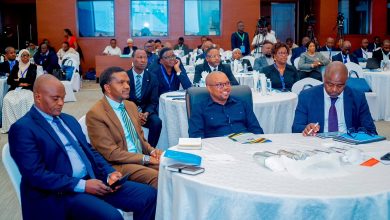
“There will be a list of the first region and the last, PCCB leaders at Regional and District levels must take the corruption agenda seriously, we want to increase efficiency, the next meeting will assess the performance,” she said during the PCCB leaders General Meeting held in Dodoma this week.
The meeting aimed at evaluating the performance of the bureau for the period between July 2021 and June 2022 as well as launching of PCCB’s Rafiki programme.
“PCCB Rafiki Programme which I am launching today (Tuesday) will involve participation of all stakeholders and citizens and you will be the supervisors, thus since the programme involves all these people then you will also be assessed according to your performance based on the efforts on executing this programme,” Ms Mhagama said.
The Minister also called on all Tanzanians, government institutions and development stakeholders to cooperate with PCCB in the fight against corruption.
“The government is allocating huge sums of money for financing various projects in villages, districts and regions, lets join our forces to support the PCCB in the war against corruption,” she said.
She said it is the responsibility of every Tanzanian, government institution and development stakeholder to be a part of the fight against corruption.
On his part, PCCB Director General, Salum Hamdun said that the PCCB Rafiki programme aims at involving all stakeholders in identifying the sources of corruption and find solutions to the problem.
The program was designed in response to instructions issued by President Samia Suluhu Hassan.
He explained that the bureau expects to perform better through the programme because it will focus on providing services to the community by monitoring the implementation of development projects in priority sectors such as water, education, health, agriculture, roads and land sector.
“Following the President’s instructions and the opinions from different studies conducted, we decided to strengthen the responsibility of preventing corruption by directing our efforts in public education on corrupt practices and monitoring the use of public resources in development projects,” he said.
He said the move will help to take action and advice on how to strengthen the systems in order to close corruption loopholes.
The program will increase the scope of citizen’s participation in the identification and provision of solutions to corruption.
“This programme will be implemented from ward level throughout the country and it will be managed by the Regional, District and officers at PCCB special centres,” he said.
He said feedbacks about the problems raised and how they have been resolved will be provided to various groups.
He added that implementation of the goals set for the year 2021/2022 in preventing corruption, educating the public, investigation and legal services were achieved by 89.4 percent with an increase of 1.7 percent compared to the implementation achieved of 87.7 percent in 2020/2021.
The DG noted that the success resulted from efforts made by the government in strengthening IT systems in payments and services to citizens as well as different national and international studies aimed at assessing the state of corruption in administrative organs.
Hamdun said that from July 2021 to June 2022, PCCB has succeeded in implementing the goals in accordance with their strategic plan for the year 2021/2022, where among its achievements was saving 14.3bn/- and 14571 US dollars (34.9m/-) through various operations to control corruption in implementation of development projects.
“The research conducted in 2020 regarding the state of governance and corruption showed that we have made progress in the fight against corruption, because 78 percent of the people who were interviewed said that corruption exists at low level while 87.7 percent said that corruption has decreased significantly,” he said.
“Also, the Transparency International report on Corruption Perception Index shows that Tanzania has risen from 119th position in 2015 with 39 points to 87th position in 2021 with 30 points among 180 countries” he added.
The rule of Law Index of World Justice shows that Tanzania continues to advance and perform well for three consecutive years in the fight against corruption, especially in preventing bribery, abuse of power and misuse of administrative structures, courts and parliament by scoring 0.46 marks and ranks 98 out of 140 countries in the world.
Tanzania has been listed among six countries that have advanced in the fight against corruption; other countries are Angola, Ethiopia, Rwanda, Ivory Coast, Senegal and Seychelles.