Orthopaedic institute denies amputation claims

DODOMA: THE Muhimbili Orthopaedic Institute (MOI) has dismissed allegations that doctors deliberately amputate limbs of accident victims, insisting that such procedures are carried out strictly as life-saving interventions.
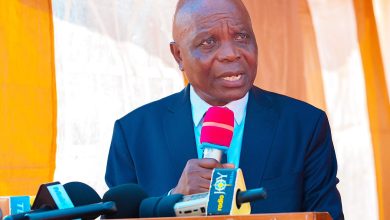
Speaking to journalists in Dodoma while presenting the institute’s 2025 performance report, MOI Executive Director, Ambassador Dr Mpoki Ulisubisya, said amputations are only performed when there is no alternative to save a patient’s life or prevent further life-threatening complications.
“All patients who undergo amputation following severe accidents do so because there is no medical option left to save the affected limb,” Dr Ulisubisya said.
He explained that many patients, particularly victims of motorcycle (bodaboda) accidents, are often referred to MOI after receiving initial treatment at facilities that lack specialised trauma capacity, leading to delayed intervention and irreversible damage.
“Delayed referrals from facilities without specialised capability contribute significantly to the need for amputation. By the time some patients arrive, the limb is already extensively damaged,” he noted.
Dr Ulisubisya stressed that medical ethics do not permit the removal of any body part without compelling clinical justification.
“We are human beings, and we use every possible medical intervention to save a limb. An artificial limb can never fully replace a natural one,” he said.
He added that MOI prioritises limb salvage procedures wherever possible and only resorts to amputation when leaving the limb intact would endanger the patient’s life.
The clarification follows unverified reports circulating in sections of the public suggesting that bodaboda accident victims treated at MOI routinely have their limbs amputated.
ALSO READ: MOI inaugurates soft tissue reconstruction services
Meanwhile, Dr Ulisubisya said the institute continues to strengthen partnerships with local and international hospitals to enhance capacity in treatment, research and adoption of new technologies.
He said MOI has signed cooperation agreements with Benjamin Mkapa Hospital for research, training and clinical services, as well as with Tosamaganga Hospital for training and treatment collaboration.
Several other memoranda of understanding are at advanced stages of review, including partnerships with Chato Zonal Referral Hospital, Mtwara Zonal Referral Hospital, Morogoro Regional Referral Hospital, Arusha International Conference Centre (AICC) Hospital and the Jakaya Kikwete Cardiac Institute (JKCI).
In collaboration with the Muhimbili University of Health and Allied Sciences (MUHAS), the institute continues to train specialists in orthopaedics, neurosurgery, anaesthesia and nerve surgery.
MOI also remains a recognised teaching hospital for the College of Surgeons of East, Central and Southern Africa (COSECSA) and the College of Anaesthesiologists of East, Central and Southern Africa (CANECSA), reinforcing its role as a regional centre of excellence.
Dr Ulisubisubisya reiterated that the institute remains committed to ethical practice, advanced trauma care and continuous professional development to improve patient outcomes nationwide.