Mbinga rallies to save Ruvuma waters
RUVUMA: AUTHORITIES in Mbinga District have reaffirmed their commitment to safeguarding the Ruvuma Water Basin and its surrounding environment, stressing the need to protect it from degradation.
Mbinga—fondly known as “Mbinguni” (Heaven)—has in recent years attracted a growing number of visitors, particularly during the harvest season of its renowned aromatic coffee.
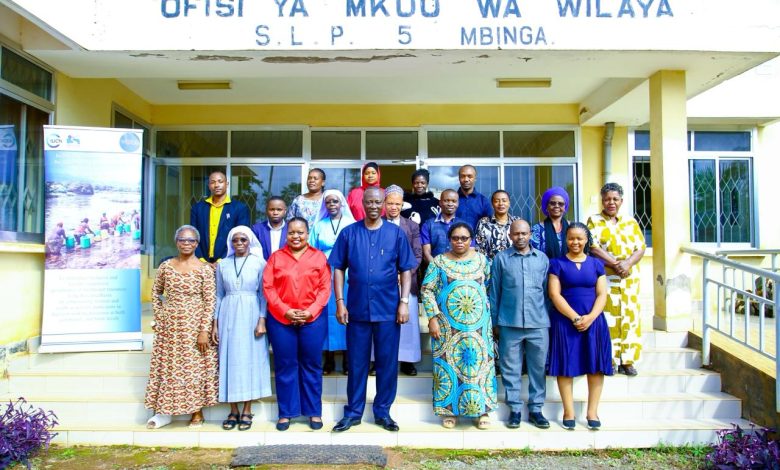
Speaking over the weekend while officiating an empowerment workshop for women and youth leaders on water resource management, District Commissioner Kisare Makori underscored the importance of collective action in addressing environmental challenges.
“The climate crisis demands joint efforts. Human activities continue to threaten our environment, and failure to act now will bring serious consequences in the future. We are grateful to YOGE for this initiative, as climate and environmental issues remain a top priority for our government,” said the DC.
The workshop was organised by Youth Environmental Justice and Gender Equality (YOGE) in collaboration with Tanzania Media for Community Development, with support from IUCN’s BRIDGE Women Leadership Grants.
YOGE Executive Director, Advocate Philomena Mwalongo, said the activity forms part of the Inclusive Freshwater Governance for Sustainable Communities in the Ruvuma Basin – Voices for Water project, launched in February 2026.
ALSO READ: When nations investigate themselves: TZ’s institutional approach to national questions
She explained that the project aims to strengthen inclusive, equitable and gender-responsive water governance by empowering women and youth to actively participate in decision-making processes at both community and basin levels.
Participants were equipped with skills in financial literacy, technology use and environmental conservation strategies to combat degradation along the Ruvuma River. By the end of the workshop, two committees were established—one focusing on water and the other on environmental management.
The session adopted a socio-cultural approach, bringing together traditional and religious leaders, women and youth representatives, Water User Associations, sub-catchment committees, the Office of the District Commissioner, local government authorities, water resource management bodies, civil society organisations, community-based organisations, media practitioners and other key stakeholders.