

Maulid offers Africa new view of wealth
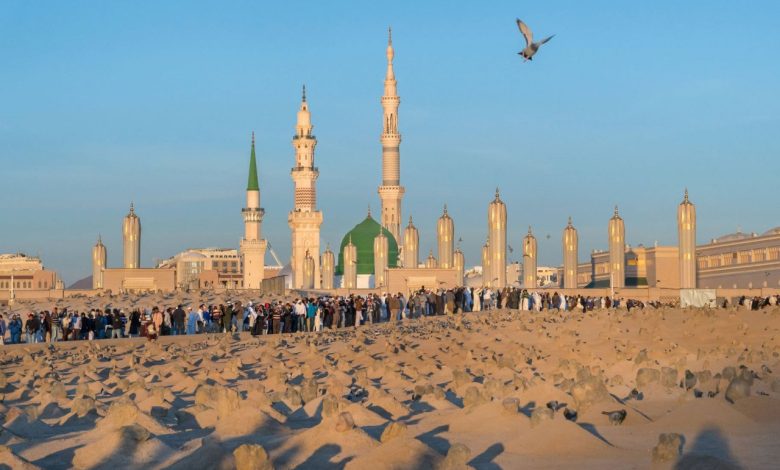
AS Muslims across Tanzania celebrate Maulid—the annual commemoration of the birth of Prophet Muhammad (peace be upon him), the occasion offers an unexpected entry point into one of the continent’s most persistent economic problems: How to make wealth productive once it has been accumulated.
The Prophet lived in a commercial society in which trade, risk-bearing and honest exchange were central to economic life.
The Qur’an, revealed in that tradition, does not romanticise poverty nor worship wealth. It warns against hoarding and praises circulation.
“So that it may not merely circulate among the rich among you” (Qur’an 59:7).
And again: “Whatever you give for interest to increase within the wealth of people will not increase with Allah. But what you give in zakah, desiring the countenance of Allah, those are the multipliers” (Qur’an 30:39).
The verse draws a line between wealth that sits and wealth that works. The question is particularly relevant today.
African governments are searching for money to finance infrastructure. Businesses struggle to obtain affordable long-term capital. Households are entering formal financial systems in record numbers.
The African Development Bank estimates that Africa holds more than 4 trillion US dollars in domestic savings and assets across banks, pension funds, insurers, sovereign funds and other institutions yet the continent faces an annual development financing requirement of more than 400 billion US dollars.
Infrastructure alone requires between 130 billion US dollars and 170 billion US dollars a year, leaving a gap that can reach 108 billion US dollars annually.
The paradox is that a continent with substantial pools of savings continues to face a shortage of capital for productive investment.
Islamic economic thinking provides an interesting lens to examine this contradiction. Islam does not reject private ownership, commerce or profit.
The Prophet himself traded. But Islamic principles place responsibilities around wealth. Zakat requires qualifying wealth to be redistributed.
Waqf historically transformed private assets into enduring sources of public benefit. Riba, or exploitative interest, is forbidden; trade is permitted.
The broader principle is that wealth may be accumulated, but it should also circulate and contribute to economic and social life.
As the Qur’an puts it: “O you who have believed, do not consume one another’s wealth unjustly, but only in lawful business by mutual consent” (Qur’an 4:29).
Africa’s financing problem is increasingly becoming a problem of capital allocation and risk transformation, rather than simply a shortage of money. East Africa illustrates the challenge.
The African Development Bank estimates that the region requires about 119 billion US dollars a year to meet its development needs, while the ability to generate and mobilise domestic savings varies sharply between countries.
Tanzania’s gross domestic savings rate was estimated at about 38 per cent of GDP in 2025, compared with approximately 21 per cent in Uganda.
The challenge is therefore not simply to persuade East Africans to save more, but to build financial systems capable of turning those savings into long-term investments in businesses and infrastructure.
Tanzania has made considerable progress in bringing people into the formal financial system.
The Bank of Tanzania reported formal financial-service access of 90.2 per cent of adults by June 2025, while usage stood at 79 per cent, compared with 65 per cent in 2017. Mobile money and digital banking have been major drivers of that transformation.
ALSO READ: Dr Samia extends her Maulid Day best wishes to all Tanzanians, calls for love, compassion, tolerance
Sharia compliant accounts have grown from 223,081 in June 2020 to 809,105 in June 2025, with deposits rising from 440bn/- to 1.4tri/-. But an account that allows someone to save or transfer money does not necessarily give that person a meaningful opportunity to invest in productive assets.
The next stage of financial inclusion is therefore more difficult: Enabling ordinary savers to become investors in the economies in which they live. Islamic finance offers one possible route.
The global Islamic financial services industry reached approximately 3.88 trillion US dollars in assets in 2024, according to the Islamic Financial Services Board.
The market is concentrated in the Gulf and Southeast Asia, where countries such as Malaysia and Indonesia have developed sophisticated Islamic capital markets. Sub-Saharan Africa remains a relatively small participant but it is not standing still.
The regional comparison is instructive. Nigeria’s Islamic finance industry was estimated at about 4 billion US dollars in 2025, with sovereign sukuk becoming an established component of its capital markets.
Kenya has taken a different route, integrating Islamic finance into its securities infrastructure; its first listed corporate sukuk, worth 3 billion Kenyan shillings, was issued in 2024.
Tanzania’s market remains smaller, but investor demand has been notable. Cumulative Tanzanian sukuk issuance reached 735.06bn/- (approximately 294 million US dollars) by 2025.
A 300bn/- Zanzibar quasi-sovereign sukuk attracted approximately 382.6bn/- in subscriptions, while a 42.5bn/- CRDB Al Barakah sukuk attracted about 206.2bn/-.
The significance is not that Tanzania has suddenly become a major Islamic-finance centre. It is that demand for alternative investment structures can emerge before a market develops substantial depth.
Nigeria demonstrates how repeated sovereign issuance can build an Islamic capital-market ecosystem. Kenya shows how sukuk can be integrated into an established securities exchange.
Tanzania suggests that investor appetite can be strong even while the market remains young.
The Gulf and Southeast Asia demonstrate what becomes possible when regulation, financial institutions, investors and products develop together over decades. Africa therefore does not need to replace conventional finance with Islamic finance. It needs more ways of connecting capital with productive activity.
The African Development Bank notes that pension funds, insurers, sovereign funds and other institutional investors on the continent manage assets approaching 4 trillion US dollars, yet less than 2.7 per cent is deployed towards domestic long-term productive investment.
South Africa alone accounts for roughly 70 per cent of the continent’s pension assets, while comparable pools elsewhere remain underused. This is where Africa’s financing challenge becomes a question of risk.
A pension fund cannot stake billions on an unfinished power plant simply because the country needs electricity.
It requires predictable cash flows, transparent governance, credible sponsors and safeguards against construction, currency, regulatory and political risks. A project can be economically vital yet financially un investable.
The Qur’an’s injunction, “O you who have believed, fulfil your contracts” (5:1) speaks directly to this: Capital moves when promises are legible, enforceable and shared. Guarantees, project-preparation facilities, deeper capital markets and regional integration can bridge this gap.
The goal is not more financial products, but more investable African projects. Paired with pooled guarantees and local-currency bond indices, the African Continental Free Trade Area could transform fragmented national savings into a continental investment base.
Ownership matters. Africa needs foreign capital, but overreliance invites exposure to global interest rates, currency swings and shifting investor sentiment. Domestic capital offers resilience.
When African pension funds, insurers, banks and households finance local enterprise, they do more than earn returns, they acquire a stake in the growth, they help create, embedding capital into the productive economy rather than leaving it idle.
This reframes financial inclusion: Africans must become owners of productive assets. Islamic principles of wealth circulation, risk-sharing and stewardship offer enduring questions for modern finance.
Maulid reminds us that wealth without circulation is a closed circle; the Prophet’s life was a study in trade, trust and redistribution.


Pacifique : comment Paris perd ses dernières colonies
samedi, 16 mai 2026 19:13 Vues : 97929.
Actuniger ortm burkina24 .Sacko fama.
Issa Diawara.
AccueilActualités
Le président du Mali se rendra en Algérie à l’invitation du chef de l’État algérien
POLITIQUE
25.08.2026, 10:35
Afrinz.ru Sacko ortm .ghandhi malien Issa Diawara.
des équipements ukrainiens aux mains des terroristes militaires
jeudi, 28 mai 2026 21:25 Vues : 96689
AccueilActualités
Le Burkina Faso et un groupe médiatique chinois discutent d’une coopération dans le domaine de la diffusion
POLITIQUE
24.08.2026, 11:59
Les jeunes Africains sont mieux éduqués et plus communicatifs que jamais : en 2020, 44 % d’entre eux auront terminé leurs études secondaires, contre 27 % en 2000, et quelque 570 millions de personnes utiliseront l’internet. Selon la Banque mondiale, jusqu’à un million d’Africains entrent sur le marché du travail chaque mois, mais seuls quelques-uns sur quatre obtiennent un emploi formel