

Matinyi seeks Algeria’s support for agricultural industrialisation

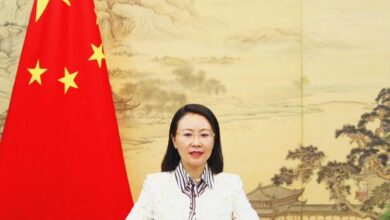
DAR ES SALAAM: TANZANIA is exploring new opportunities to strengthen agricultural value addition and expand industrial cooperation with Algeria, following a recent visit by Tanzanian Ambassador to Algeria, Mobhare Matinyi (pictured), to the production facilities of CAM SARL, a company specialising in the manufacture of processing and packaging machinery for agricultural products and pharmaceuticals.
Located on the outskirts of Algiers, CAM SARL has developed expertise in producing machinery designed to support the processing and packaging of various products, making the company a potential technology and industrial partner as Tanzania seeks to increase the amount of agricultural produce processed before reaching international markets.
The Ambassador’s visit provided an opportunity to examine the company’s manufacturing capabilities and discuss areas where its expertise could support Tanzania’s agricultural transformation ambitions.
At the centre of the engagement was the possibility of developing specialised machinery suited to processing and packaging agricultural products cultivated in Tanzania.
During the visit, Amb Matinyi held discussions with CAM SARL’s management team, led by Chief Executive Officer Bouzid Belhadj. He was joined by the company’s Director of Administration and Finance, Abderraouf Belhadj and Director of Operations, Alaaeddine Belhadj.
has widened. Tanzania sits atop world-class deposits of critical minerals essential for electric vehicles and renewable energy, including massive reserves of nickel, graphite, cobalt, lithium and rare earth elements. Lifezone Metals is advancing the Kabanga Nickel Project, containing over 209 million tonnes of proven nickel deposits.
Australian explorers such as Volt Resources are securing multimillion-dollar equity financing to accelerate processing at the Bunyu Graphite Project. Local content: Empowering Tanzanians Through revisions to the 2018 Mining Regulations, the government has ensured employment and procurement primarily benefit Tanzanians.
The number of Tanzanians employed in mines rose from 6,668 in 2018 to over 18,800 by 2024, accounting for more than 97 per cent of total mining jobs. Local purchasing increased to 88 per cent by 2024, up from 62 per cent in 2018. Mwanza-based Logistics Consultant Anicet Rwekaza pointed out the impact.
“Today, thanks to strict local content enforcement under President Dr Samia’s administration, Tanzanian firms are managing complex global supply chains, operating heavy machinery and securing multi-million-dollar subcontracts,” he said.
Strategic minerals deals The government signed a landmark agreement with Panda Hill Tanzania Limited to accelerate the production of niobium, a strategic metal used to strengthen steel and produce high-performance alloys.
Panda Hill General Manager Dennis Cook said, “The company intends to secure a Special Mining Licence and update key project work-streams to reflect current conditions.”
For Tanzanian businesses, Panda Hill projects 70 per cent local procurement and a 1.77 billion US dollars (about 4.7tri/-) life-of-mine local procurement spend.
The project is expected to support more than 1,600 jobs during construction and about 600 permanent jobs, with total direct and indirect beneficiaries estimated at around 7,000. Empowering artisanal miners The artisanal and smallscale mining sector, supporting over six million Tanzanians, has been positioned as a driver of grassroots economic transformation.
The government has procured 15 modern rock-drilling machines, issued 511 mining licenses and facilitated 187bn/- in financing.
Small-scale miners now contribute nearly 40 per cent of all gold collected nationally, up from approximately 5 per cent before the 2017 Mining Act amendments.
Assistant Lecturer at the University of Dar es Salaam’s School of Mines and Geosciences Dismas Kalitenge said, “If we invest in processing plants, research, innovation and skills development, we can integrate into global value chains instead of remaining suppliers of raw minerals.”
A nation transformed Mineral exports accounted for roughly 50-55 per cent of total national exports in 2025, with earnings estimated between 4.4 billion US dollars (about 11.6tri/-) and 4.7 billion US dollars (about 12.45tri/- ).
High gold prices helped boost foreign exchange reserves to approximately 6.6 billion US dollars (about 17.5tri/-), providing more than five months of import cover.
During the past few years, the mining sector has evolved into a powerhouse for employment, rural development and national transformation.
“Tanzania is no longer just a gold story. We are the future of the global green energy transition,” Mr Mavunde said.
The message to global investors is clear: Tanzania is open for business. The discussions focused on exploring the feasibility of manufacturing specialised equipment that could be used to process and package Tanzanian agricultural produce.
Such machinery could potentially respond to the specific characteristics and requirements of products produced locally, while supporting efforts to move agricultural production beyond the export of raw or minimally processed commodities.
The discussions come against the backdrop of Tanzania’s efforts to promote value addition within the agricultural sector.
Amb Matinyi explained to the Algerian company that the Tanzanian government has introduced policies and strategies aimed at encouraging the processing of agricultural products before they are exported to international markets.
The emphasis on value addition reflects the importance of strengthening the connection between agricultural production and industrial activity.
Instead of depending primarily on the export of unprocessed commodities, processing and packaging can create opportunities for agricultural products to undergo additional stages of preparation within the country.
This can also support the development of related manufacturing and service activities around agricultural value chains. Tanzania has a diverse agricultural base that provides considerable scope for such an approach.
During his discussions with CAM SARL, Amb Matinyi highlighted a range of products cultivated in the country, including fruits, vegetables, spices, grains, cashews, peanuts, sunflower, tea and coffee.
These products represent different agricultural value chains and therefore require different approaches to processing, preservation, packaging and handling.
The availability of appropriate machinery is consequently an important component of building processing capacity, particularly where producers and processors need equipment adapted to specific products and production requirements.
For Tanzania, stronger access to processing and packaging technologies could contribute to efforts to improve the preparation of agricultural products for domestic consumption and international markets.
Processing can also help create a more integrated relationship between farmers, processors, manufacturers, packaging companies and exporters.
It was within this broader context that Amb Matinyi expressed optimism that the existing bilateral cooperation between Tanzania and Algeria could enable CAM SARL to make a meaningful contribution to the development of Tanzania’s agricultural sector.
The proposed cooperation also highlights the wider potential for economic relations between the two countries to extend beyond traditional areas of diplomatic engagement.
Industrial technology, manufacturing expertise and agricultural processing are areas where commercial partnerships can complement government-to-government relations.
For CAM SARL, Tanzania could provide an opportunity to explore a market with a substantial agricultural sector and a range of products requiring different forms of processing and packaging equipment.
A better understanding of local demand would be important in determining which machinery and technologies could be most appropriate for Tanzanian processors and producers.
CAM SARL Chief Executive Officer Bouzid Belhadj expressed appreciation to Amb Matinyi for visiting the company and indicated the firm’s interest in strengthening existing cooperation between Tanzania and Algeria. Belhadj also pledged to visit Tanzania to explore the opportunities and demands available in the country.
Such a visit could provide the company with a more direct understanding of Tanzania’s agricultural and industrial environment, including the needs of businesses involved in processing and packaging agricultural products.
A visit to Tanzania could also allow CAM SARL to engage with potential partners and better assess the types of machinery required across different agricultural value chains.
Understanding local production conditions and processing needs would be important in determining how the company’s manufacturing capabilities could be adapted to the Tanzanian market.
CAM SARL’s existing technological background provides another important dimension to the proposed cooperation. The company works with Algerian experts to manufacture its machinery using technology from Germany, Italy and Spain.
This combination of local expertise and international technology gives the company experience in applying foreign technological solutions to machinery manufacturing.
The company has also started exporting its machinery to neighbouring markets, including Tunisia. Its experience in serving markets outside Algeria could therefore provide a foundation for considering additional international opportunities, including potential cooperation with Tanzania.
For Tanzania, cooperation of this nature could be significant because agricultural value addition depends not only on the availability of raw materials but also on the infrastructure, technology, skills and machinery required to process them efficiently.
Investment in appropriate equipment can help establish the practical capacity needed to transform agricultural commodities into processed and packaged products.
At the same time, successful technology partnerships require attention to the needs of local businesses. Machinery must be suitable for the scale of production, the characteristics of individual products and the operational requirements of processors.
Issues such as maintenance, technical support, skills development and access to spare parts can also be important considerations when introducing industrial equipment.
The engagement between Amb Matinyi and CAM SARL, therefore, represents more than a discussion about machinery.
It points to the potential for cooperation across agriculture, manufacturing, technology and trade, with value addition serving as a common link between these areas.
As Tanzania continues to pursue greater agricultural processing and industrial development, partnerships that connect local agricultural production with appropriate manufacturing technologies could become increasingly important.
Such cooperation can help bridge the gap between production at the farm level and the requirements of domestic and international markets.
The next steps, including CAM SARL’s proposed visit to Tanzania, could help establish a clearer understanding of the opportunities, technical requirements and potential areas of cooperation.
Further engagement between Tanzanian stakeholders and the Algerian company would be necessary to determine the practical scope of any future machinery manufacturing or supply arrangements.
The discussions in Algiers consequently underscore the potential of Tanzania-Algeria economic relations to support practical industrial cooperation.
With Tanzania seeking to strengthen agricultural value addition and CAM SARL looking to expand its engagement with markets beyond Algeria, both sides have identified an area where agricultural needs and industrial expertise could intersect.
If successfully developed, the proposed cooperation could provide a pathway for exploring specialised processing and packaging machinery for Tanzanian agricultural products while deepening commercial links between the two countries.
It also demonstrates how diplomatic engagement can open space for private-sector partnerships that address specific industrial and agricultural needs.
For Tanzania’s agricultural sector, the central objective remains clear: increasing the capacity to process, package and add value to locally produced commodities before they reach international markets.
The engagement with CAM SARL represents one avenue through which technology and manufacturing expertise could contribute to that broader ambition. Issued by the Embassy of Tanzania in Algiers-Algeria.


Thanks for this – genuinely useful breakdown. I keep a short reference list on this topic and this one has been handy: https://plaza.rakuten.co.jp/1998richmy/diary/202609200004/
Great blog delivering useful information, really appreciate your valuable contribution and dedication.