Mahama launches Pan-African Court Judicial Year, calls nations to respect court’s rulings

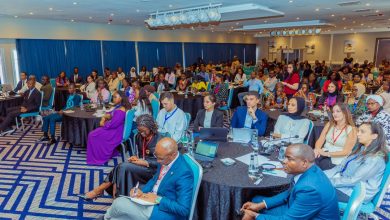
ARUSHA: THE President of Ghana, John Dramani Mahama, who officially launched the 2026 Judicial year for the Pan-African Court in Arusha, has assured all countries on the continent they should not have any reservations in allowing their people to directly access the institution.
“In most countries of Africa, the Judiciary arms are no longer independent and there is still public distrust of authorities; opening access to the regional legal institutions is vital,” said President Mahama.
“I humbly ask all African nations and individuals to respect and implement the Court’s judgements in good faith. And to also make the declaration to allow individuals and NGOs direct access to the Court,” the Ghanaian Head of State maintained.
He pointed out that over the past two decades of its operation, the African Court of Human and Peoples’ Rights has proven that it has the fortitude and courage to recalibrate our moral compass.
“We need that kind of oversight so that we remain observant and respectful of the rights and duties enumerated in the articles of the Banjul Charter, to which all the continent’s nations are signatory.”
“That Charter complements the Court’s mission. Now, we must empower the Court to be the institution that stands guard over those ideals, protecting and preserving our greatest inheritance,” he concluded.
In other hand Tanzania is still in discussions degrading the country’s position to once more allow its citizens to directly file cases at the African Court on Human and Peoples’ Rights in Arusha.
Solicitor General Ally Possi said the government was mulling the possibility of rejoining the African Court.
ALSO READ: Tanzania issues a security alert to its citizens staying in the Middle East
Speaking during the occasion to open the 2026 Judicial year for the Pan-African Court, Solicitor General Possi explained that they were still determining how Tanzania can effectively make use of the continental legal institution.
In 2018, the Tanzanian government, under President John Pombe Magufuli, withdrew its special declaration to the African Court on Human and Peoples’ Rights (African Court), and as a result, individuals and Non-Government Organizations cannot directly file cases there.
Dar was the second country in East Africa to withdraw from the African Court (AfCHPR) after Rwanda pulled out earlier in 2016.

Tanzania is regarded as a special case because the country hosts the African Court at its Northern City of Arusha, where a permanent headquarters premises for the institution is also near completion.
On his part, the Chief Executive Officer at the Pan African Lawyers Union (PALU), Donald Omondi Deya, insisted on the importance of all African nations to ratify the Protocol establishing the African Court on Human and Peoples’ Rights.
“Most leaders must understand that it is not only the common man who needs legal services, but at one time in their lives they will also come to find the court useful,” pointed out Advocate Deya.
Operating from Arusha, Tanzania, the African Court on Human and Peoples’ Rights (AfCHPR) is the judicial arm of the African Union (AU) and one of three regional human rights courts in the world, including the European Court of Human Rights and the Inter-American Court of Human Rights.
The President of the African Court, Justice Blaise Tchikaya, said the new judicial year will see the launch of the court’s new website, which goes hand in hand with celebrating the AfCHPR’s 20th Anniversary.