

Legends recall derby golden era
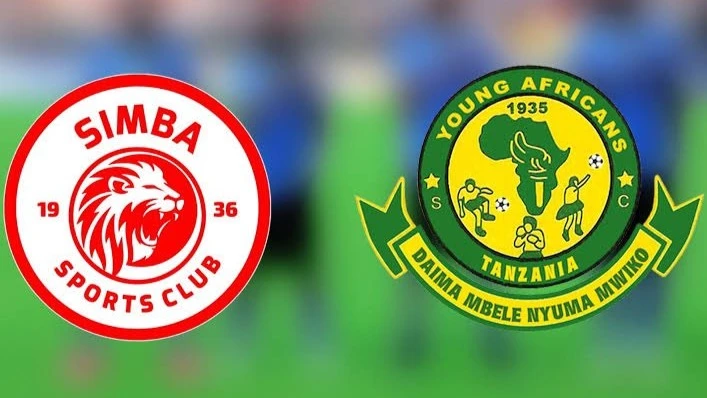
DAR ES SALAAM: AS the highly awaited Kariakoo Derby approaches, football legends Dua Said (Simba), Bakari Malima (Young Africans) and Edgar Fongo (Young Africans) have stepped forward to share their reflections on how this iconic fixture has evolved over the years.
For these football greats, the derby was far more than just a match; it was a battlefield where reputations were shaped and careers could be made or broken in 90 minutes.
The legends fondly reminisced about the intense grit and meticulous preparation that once defined this epic showdown, offering a stark contrast to the more relaxed approach seen in the current generation.
According to Said, match preparation during his playing days resembled a military operation rather than a mere football fixture. Training camps were designed to isolate players from distractions and protect them from the dark specters of match-fixing or bribery scandals.
“Back in our day, the derby was all about total seclusion. You wouldn’t see players casually strolling around Kariakoo just days before the game. Today, that’s common, but back then, such carelessness was simply unheard of. The derby was sacred; we were locked away in camp to prevent any speculations,” Said revealed.
Despite the evolution of the derby, Said emphasised that it remains a do-or-die encounter, where a poor result could cost coaches their jobs, stir internal club strife and even damage personal relationships.
“This is not just a game; it’s a verdict on players, coaches and officials alike. Careers have been built and shattered in this very fixture,” Said stated.
In the past, winning the Kariakoo Derby wasn’t just about bragging rights—it was a golden ticket to unexpected riches. Said recalled how victorious players were showered with rewards that went beyond cash bonuses.
“After a win, we’d be gifted with furniture, building materials, shoes and even rare items like sugar. Business owners would go out of their way to reward us,” he laughed.
But beyond the material rewards, a derby victory carried a psychological boost, providing a confidence boost for the team that lasted for the rest of the season.
“Winning a derby was more than just a result—it was a mental triumph. The rest of the league matches felt easier after that,” Said explained.
Fongo also weighed in on the financial transformation of football, noting that the sport has become much more lucrative than it was during his playing days.
“In our time, there were fewer wealthy investors. Today, the money is flowing and you can see how much players are now rewarded for a derby win,” he observed.
However, both Said and Fongo lamented that the derby has lost some of its former magic. They attributed that to the influx of foreign players and the frequency with which Simba and Yanga now face off in various competitions, from the Charity Shield to the CRDB Cup and the Premier League itself.
“Back then, the derby was rare and special. Now it happens too often and that dilutes the excitement,” Said noted.
Modern football is no longer confined to the pitch; it thrives in the digital world. Said pointed out how technology, social media and sports betting have shifted the focus away from the actual match.
“Football is now played more outside the stadium than on the field. Fans dissect everything online without even attending games. In our days, the stadiums were packed because watching live was the only way to experience the drama,” he said.
Legendary figure Malima painted a vivid picture of a time when players earned their wages directly from matchday ticket sales. Unlike today’s well-compensated professionals, players in the past had to fight for every penny.
“Before a derby, we were promised 70 to 80 per cent of the gate collections. Salaries were low, and personal transportation ing meant facing the wrath of fans in the streets,” Malima recalled.
He also noted how the rise of foreign players has diluted the local rivalry that once made the derby so intense.
“In our days, the derby was a battle of Tanzanian players who knew they would face their fans after a loss. Now, foreign players dominate the fixture and that personal connection is starting to fade,” he said.
For Fongo, derby preparations during his era felt like a military campaign. Players were closely monitored and completely isolated to avoid distractions.
“The tension was so tangible; it felt like a liberation struggle. We were locked away in camp, fully focused on the task at hand,” he said.
And when victory came, the celebrations were legendary. The winning team would revel in unforgettable nights at Msondo Ngoma Band, with icons like Late TX Moshi William and Muhidin Gurumo entertaining the jubilant players and fans.
Looking ahead to this year’s clash, Malima advised Simba and Yanga players to approach the derby with the seriousness it deserves.
“Winning the Kariakoo Derby requires discipline, teamwork and mental toughness. There’s no room for complacency or internal disputes,” he warned.
He also urged coaches to stay composed amid the pressure, distractions and off-field mind games that come with such a high-profile fixture.
“During the derby, there are always external threats and temptations aimed at the coaches. This is a time for them to remain calm and not let outside influences dictate their team selections,” Malima added.
He further emphasised how modern players enjoy far more freedom before derbies than in the past, when strict monitoring kept them completely focused on the task.
“You wouldn’t find us wandering the streets before a derby. We were in camp, locked in, preparing for battle,” Malima concluded.
As this year’s Kariakoo Derby unfolds, one thing remains clear: it is more than just a football match. It is a battle of pride, a legacy-defining moment and a game that separates the heroes from the mere participants.



970873 380603Really informative and wonderful bodily structure of content material , now thats user friendly (:. 493225