Lake zone’s billion-shilling economy still exposed to uninsured risks
TANZANIA: THE Lake Zone is more than a collection of regions surrounding one of Africa’s largest freshwater lakes. It is a powerful economic engine driven by millions of Tanzanians whose daily activities contribute significantly to national development.
From farmers cultivating crops in Simiyu and Kagera, fishermen operating along the shores of Lake Victoria, miners extracting valuable resources in Geita, to traders moving goods through Mwanza’s busy commercial centres, the zone represents productivity, entrepreneurship and resilience.
Yet beneath this economic strength lies a major vulnerability: inadequate insurance protection.
Although the region generates enormous economic value, a large proportion of households, businesses and productive sectors remain exposed to risks that could undermine livelihoods and slow economic progress.
Recognising the importance of expanding insurance services across the country, the Tanzania Insurance Regulatory Authority (TIRA) established the Lake Zone as one of its ten operational zones. The move aimed to decentralise insurance services, strengthen supervision and bring insurance closer to ordinary citizens.
Since becoming operational in January 2011, the Lake Zone has grown into one of Tanzania’s most populous and economically significant areas, comprising Mwanza, Geita, Kagera, Mara and Simiyu regions.
According to the 2022 Population and Housing Census, the zone is home to more than 14.1 million people, representing nearly 23 per cent of Tanzania’s population.
Mwanza has the largest population with 3.7 million residents, followed by Kagera with 2.99 million, Geita with 2.97 million, Mara with 2.37 million and Simiyu with 2.14 million.
Behind these numbers are millions of people engaged in agriculture, fishing, mining, trade and small businesses the sectors that sustain both household incomes and the wider national economy.
Economically, the Lake Zone continues to demonstrate its strategic importance. In 2024, the region contributed approximately 40.14 tri/- to Tanzania’s Gross Domestic Product (GDP), accounting for about 19.5 per cent of the country’s total economic output.
Mwanza led economic contribution with 14.6tri/-, followed by Geita at 9.34tri/-, Mara at 7.29tri/-, Kagera at 5.23tri/ and Simiyu at 3.67 tri/-.
However, despite this impressive economic performance, insurance penetration remains extremely low.
Data from the 2024 Insurance Market Report shows that Gross Written Premiums (GWP) in the Lake Zone stood at only Sh49.6 billion, equivalent to just 0.09 per cent of the region’s GDP.
This indicates a significant mismatch between economic activity and financial protection. Insurance premium trends have also fluctuated in recent years. Gross Written Premiums increased from 47.08bn/- in 2022 to 57.15 bn/- in 2023 before declining to 49.6 bn/- in 2024.
The distribution of premiums reveals further imbalance. Mwanza dominates the market, generating 43.7 bn/-, equivalent to 88 per cent of total premiums in the zone. Geita follows with 3.04bn/-, Kagera with 1.77bn/-, Mara with 810/- and Simiyu with only 280m/-.
The figures demonstrate that while Mwanza has developed a relatively stronger insurance market, other regions remain largely underserved.
The consequences of low insurance penetration are significant because the Lake Zone economy is highly exposed to risks.
Agriculture, which employs a large share of the population, faces threats from drought, floods, pests, diseases and unpredictable market conditions. For farmers who depend on seasonal harvests, a single climate-related shock can destroy years of investment.
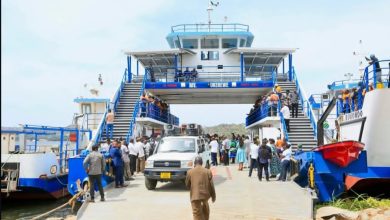
Fishing communities along Lake Victoria also face numerous risks, including accidents, damaged equipment, changing weather patterns and loss of income due to operational challenges.
In Geita, mining activities involve valuable assets, expensive equipment and occupational hazards requiring appropriate insurance protection.
Trade and transportation businesses, particularly those involved in cross-border commerce with Kenya, Uganda, Rwanda and Burundi, face risks associated with theft, accidents, cargo damage and logistical disruptions.
Despite these realities, many individuals and enterprises continue operating without insurance coverage, leaving them financially vulnerable.
One of the biggest challenges is perception.
Many people view insurance as a service that only benefits policyholders after a loss occurs. As a result, paying premiums without immediately receiving visible benefits is often interpreted as a wasted expense.
This perception is further affected by concerns about delayed claims settlement or rejected claims, which have contributed to mistrust among potential customers.
Affordability is another major barrier.
A significant proportion of the Lake Zone population operates within the informal economy, where income is irregular and seasonal. Farmers earn mainly during harvest periods, fishermen depend on daily catches and small traders experience changing business revenues.
Traditional insurance models requiring fixed and regular premium payments often fail to match these realities.
There is also a shortage of insurance products specifically designed for the needs of smallholder farmers, artisanal fishermen, small-scale miners and informal businesses.
Yet these sectors represent some of the greatest opportunities for insurance expansion.
Agricultural insurance, particularly weather-indexed insurance, could provide farmers with protection against climate-related losses. By relying on weather data rather than individual loss assessments, such products can reduce costs and make claims processing faster.
Combining insurance with agricultural inputs such as seeds and fertilisers could further encourage adoption among farmers.
The fishing industry also presents significant potential. Lake Victoria supports one of Africa’s largest inland fishing economies, but many operators lack insurance protection for boats, engines, fishing equipment and personal safety.
Group insurance models through fishing cooperatives could make coverage more affordable and accessible.
The mining sector requires specialised insurance solutions covering equipment, workers’ health, environmental risks and operational disruptions.
Extending insurance services to artisanal miners could also support formalisation and improve their access to financial services.
Small and medium enterprises provide another major opportunity. Affordable insurance covering fire, theft and business interruption could protect thousands of entrepreneurs whose businesses support local economies.
Integrating insurance with microfinance institutions, SACCOs and lending programmes could encourage more businesses to adopt risk protection.
The Lake Zone’s strategic location also creates opportunities in cross-border trade insurance. Products covering goods in transit, trade risks and commercial disruptions could support traders and strengthen regional economic integration.
To unlock this potential, stakeholders must adopt a coordinated approach.
Public awareness campaigns should use local languages, radio, community meetings and digital platforms to explain the practical benefits of insurance.
Insurance companies must also innovate by developing flexible products suited to irregular incomes, including seasonal payments, pay-as-you-go models and affordable microinsurance packages.
Mobile money platforms can play an important role by simplifying premium payments and claims processing, especially in rural areas.
Expanding distribution networks through partnerships with banks, SACCOs, microfinance institutions and community organisations will also improve accessibility.
ALSO READ: TIRA eyes inclusive growth through insurance innovation
Regulatory support remains essential. Incentives for insurance adoption, stronger microinsurance frameworks and enforcement of mandatory coverage in high-risk sectors can help expand the market. Most importantly, rebuilding public trust must remain a priority. Insurance providers need to improve transparency, speed up claims processing and demonstrate reliability through timely compensation.
The Lake Zone represents a powerful economic paradox: a region contributing nearly onefifth of Tanzania’s GDP while remaining significantly underinsured.
Closing this gap requires addressing awareness, affordability, product suitability and accessibility.
If insurance services are aligned with the realities of the region’s economy, the Lake Zone can become not only an economic powerhouse but also a more resilient society capable of protecting millions of livelihoods.
Insurance is therefore not merely a financial product. It is a foundation for sustainable economic growth, stability and prosperity in the Lake Zone and Tanzania as a whole.