Kizimkazi Festival offers glimpse of Tanzania’s AFCON 2027
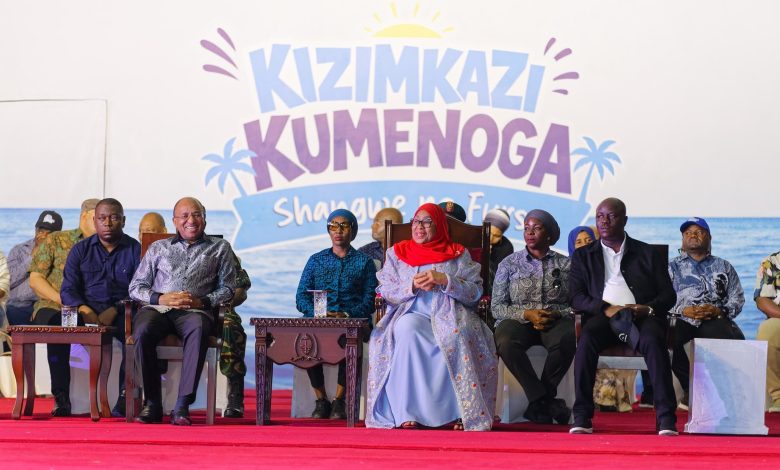
ZANZIBAR: THERE was more to President Samia Suluhu Hassan’s appearance at the Kizimkazi Festival than photographs, seaweed, bao and taarab. Viewed through a sporting lens, the festival offered an interesting rehearsal of the kind of national experience Tanzania will need to create when the country joins Kenya and Uganda in hosting the Africa Cup of Nations (AFCON) in 2027.
AFCON is, of course, a football tournament. But hosting a continental championship is never only about what happens inside the stadium. It is also about what visitors see, hear, eat, photograph and remember after the tournament.
That is where the scenes from Zanzibar become significant. At the Picture Dinner Gala, President Samia moved through an exhibition featuring photographs taken by young Tanzanians, with the images presenting the islands through tourism, culture, tradition and everyday life.
Her praise for the photographers was important because it highlighted one of the greatest opportunities surrounding a major sporting event: Allowing local talent to tell the country’s story. The photograph of a Kizimkazi woman harvesting seaweed particularly caught the president’s attention. It was a simple image, but it represented something much bigger.
It showed Zanzibar not merely as a holiday destination, but as a place where ordinary people work, create and sustain communities. That is precisely the kind of story Tanzania should be telling during AFCON 2027.
When thousands of football supporters arrive from across Africa and beyond, they will come primarily for football. Yet, their experience of Tanzania will extend far beyond the pitch.
They will encounter the country’s people, food, music, history, wildlife, beaches and creative industries. The challenge is to ensure that those encounters are authentic and that Tanzanians benefit economically from the attention.
President Samia’s call for more opportunities for photographers to exhibit and sell their work to tourists, therefore, deserves to be viewed as part of a broader sports-tourism strategy. Major sporting events can create markets for artists, photographers, musicians, designers, tour operators, food vendors and small businesses.
Zanzibar is already demonstrating the potential. The president noted that the islands recorded close to one million tourist arrivals last year, compared with about 700,000 in 2024.
The question now is how such growth can be connected with local enterprise and, eventually, the enormous visibility that AFCON 2027 will bring. The scenes from Stone Town provided another useful reminder.
ALSO READ: Futa Delete Kabisa: The Day Three Words Found a Nation (Part II)
A day before the gala, President Samia visited Forodhani Gardens, where Makachu divers entertained crowds with spectacular jumps from the seawall into the Indian Ocean. She posed for photographs with the young performers, tried her hand at bao and watched a taarab performance. Imagine that spirit surrounding AFCON.
A visiting supporter watches a match during the afternoon, then heads out to experience local culture in the evening. Another takes photographs of Zanzibar’s historic streets. Someone discovers taarab for the first time.
Another tastes local food. Others encounter young Tanzanians demonstrating skills in art, sport and entertainment. That is how a football tournament becomes a national showcase.
The Kizimkazi Festival also demonstrated another ingredient that will matter in 2027: Youth. Young photographers were not simply spectators. They were creators. The divers were performers.
Their energy, confidence and creativity reflected the human capital that Tanzania can put at the centre of its AFCON story. There is, therefore, a lesson for football administrators and tourism authorities.
Preparations for AFCON should not be confined to stadiums, training grounds, transport and accommodation.
Those are essential, but the tournament should also leave room for cultural programming and opportunities for young people to participate.
The festival’s mixture of sport-like spectacle, culture, entertainment, tourism and youth creativity provides a useful model. It may not have been an official AFCON rehearsal, but it certainly looked like a glimpse of what the tournament experience could become.
The real test in 2027 will be whether Tanzania can turn that glimpse into a coordinated national performance, one in which football attracts the visitors, while the country’s people, culture and creativity give them reasons to stay, spend and return.
After all, the scoreline will determine who wins the match. The experience outside the stadium will determine what visitors remember about Tanzania.