Kikwete salutes ‘big brain’ Msuya, a statesman beyond titles
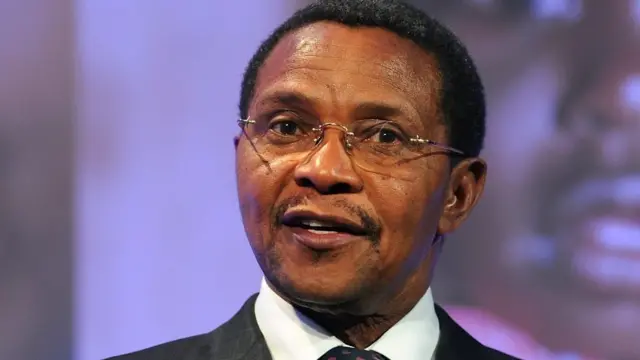
KILIMANJARO: FORMER President Dr Jakaya Kikwete yesterday delivered a moving tribute to the late former Prime Minister and First Vice President Cleopa David Msuya, celebrating his exceptional intellect and strategic acumen that proved pivotal in guiding Tanzania’s economy from crisis to progress.
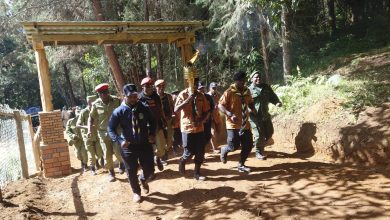
Speaking at the funeral mass for Mzee Msuya held at the Usangi-Kivindu parish of the Evangelical Lutheran Church of Tanzania (ELCT)’s Mwanga Diocese, Dr Kikwete described Msuya as a courageous and visionary leader who, despite not being a trained economist, he skillfully navigated a complex era of ideological clashes to achieve significant economic transformation in Tanzania.
Dr Kikwete lauded Msuya’s unwavering dedication and sharp intellect, which left an enduring legacy on the nation’s economic journey.
“Mzee Msuya was blessed with extraordinary intelligence, a truly bright individual – a ‘big brain’,” Dr Kikwete remarked at the funeral service, before Mzee Msuya was laid to rest at his home in Usangi, Mwanga District.
“Although not a professional economist, but a social worker by training, he possessed a profound understanding of economic and financial matters, which is why he capably served as Minister for Finance,” Dr Kikwete recalled.
He highlighted that Mzee Msuya was appointed Minister for Finance twice by President Julius Nyerere and once by President Ali Hassan Mwinyi, emphasizing that his firm grasp of economic and financial intricacies rivaled that of a seasoned economist.
Dr Kikwete emphasised Mzee Msuya’s determination and his belief in the power of learning, a spirit that empowered him to effectively manage the economy during a period of immense stress and challenge.
Reflecting on the late Mzee Msuya’s tenure, Dr Kikwete noted that his intelligence led to his appointment to leadership during exceptionally difficult times characterised by the rationing of essential goods and services, insufficient foreign currency reserves, and an unstable economy.
“He served as Minister during very trying times, initially marked by a severe shortage of essential goods. Shops had minimal stock, and people had to queue with household booklets to access supplies – that was the reality we faced,” Dr Kikwete recounted.
ALSO READ: Nation honours icon Msuya
“There was also a critical shortage of foreign currency due to a stagnant economy. Furthermore, we grappled with significant challenges in social services, including healthcare, water, education, and roads. Overall, the economic situation was dire for numerous reasons.”
Dr Kikwete portrayed Mzee Msuya as a resilient and forward-thinking leader who embraced change, even when facing resistance from colleagues.
This was particularly evident during Tanzania’s deep economic crisis when he successfully persuaded Mwalimu Nyerere, then the Chairman of the ruling Chama Cha Mapinduzi, to adopt economic reform policies of the International Monetary Fund (IMF) and the World Bank.
He recalled that during his time as Minister for Finance, Mzee Msuya spearheaded the government team in intricate and often contentious negotiations with World Bank and IMF officials regarding the implementation of Structural Adjustment Programmes (SAPs).
“These negotiations were pivotal in shaping Tanzania’s economic trajectory, demanding a delicate balance between the urgent need for economic reform and the potential social and political consequences,” Dr. Kikwete explained.
He further noted that following Mwalimu Nyerere’s acceptance of these changes, significant transformations ensued, including the end of free education and healthcare services.
The government also began implementing tax collection as mandated by the IMF, ushering in substantial economic reforms. Dr Kikwete also described the late Msuya as a humble and tolerant leader, one of the most experienced statesmen Tanzania has ever produced.
He cited an example when Msuya, having been appointed Prime Minister after Edward Sokoine went abroad for medical treatment and studies, readily relinquished the position upon Sokoine’s return, accepting the role of Minister for Finance with unwavering patriotism and dedication.