KAGAME, RUTO’S VISIT TO TANZANIA: Integration in top gear
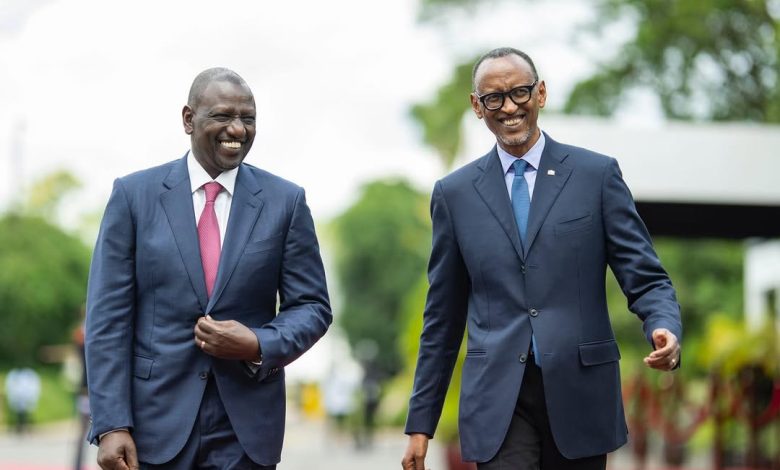
DAR ES SALAAM: ANALYSTS have said visits by President Paul Kagame and President William Ruto signal a renewed commitment to regional economic integration, with Tanzania increasingly emerging as a strategic hub in East Africa.
The back-to-back high-level visits are being viewed as a coordinated effort to deepen trade, strengthen strategic partnerships and reposition the region within a changing global economic landscape.
Economist and investment banker, Dr Hildebrand Shayo, told ‘Sunday News’ in a telephone interview that the engagements reflect Tanzania’s growing importance in regional trade and supply chains.
“Economically, the visits are expected to enhance collaboration in areas such as trade facilitation, infrastructure development, digital economy partnerships, energy security and cross-border investments,” he said.
He further said that ongoing investments in infrastructure, including the Standard Gauge Railway (SGR) and the Dar es Salaam Port, are strengthening Tanzania’s role as a gateway for landlocked countries such as Rwanda, Burundi, Uganda and the Democratic Republic of Congo.
Dr Shayo added that closer cooperation among Tanzania, Kenya and Rwanda could accelerate implementation of the African Continental Free Trade Area by reducing non-tariff barriers that continue to affect regional trade.
Echoing similar views, Assistant Lecturer at the University of Dar es Salaam (UDSM), Damas Kamala, said the visits underscore efforts to expand trade flows and open up markets within the East African Community.
“These meetings are often accompanied by initiatives to remove barriers and create new opportunities for goods and services,” he said.
He added that the engagements are likely to stimulate investment, particularly in infrastructure, energy and the digital economy, while also reinforcing political cooperation and regional security.
A Dar es Salaam-based diplomatic analyst, Christopher Cyprian, said the visits signal renewed momentum in economic diplomacy, aimed at strengthening trade relations and unlocking new opportunities across the region.
Meanwhile, Financial Analyst Kelvin Msangi said the visits should be viewed as part of a broader economic shift rather than isolated diplomatic events.
He said that East Africa, with a population of over 300 million people and a combined GDP estimated between 300 and 350 billion US dollars, is increasingly positioning itself as a unified economic bloc focused on trade corridors, logistics and energy security.
Trade between Tanzania and Kenya reached 721.3 million US dollars in 2024, with the average annual trade value standing at about 600 million US dollars, reflecting steady growth despite periodic fluctuations.
Kenya remains one of Tanzania’s key trading partners, particularly in sectors such as banking, telecommunications and manufactured goods, while Tanzania continues to supply agricultural products and raw materials to the Kenyan market.
On the Rwanda front, Tanzania exported goods worth 164 million US dollars in 2024, with rice, flavoured water and cement among the leading products traded between the two countries.
Analysts say the convergence of these high-level visits reflects a broader shift toward practical economic diplomacy, where countries are prioritising trade facilitation, infrastructure development and regional market integration.
They said that as global supply chains continue to shift and competition for investment intensifies, closer cooperation among Tanzania, Kenya and Rwanda could enhance the region’s competitiveness, strengthen its bargaining power and support long-term economic resilience.
ALSO READ: TZ to host Kagame, Ruto
The visits also highlight Tanzania’s growing role as a centre for trade, diplomacy and regional cooperation, supported by ongoing investments in infrastructure, energy and connectivity.
With leaders focusing on removing trade barriers and aligning economic priorities, analysts believe the engagements could lay the foundation for deeper integration and more coordinated development across East Africa.