

Kadogosa orders contractor to fast-track Kahama–Kakola road project
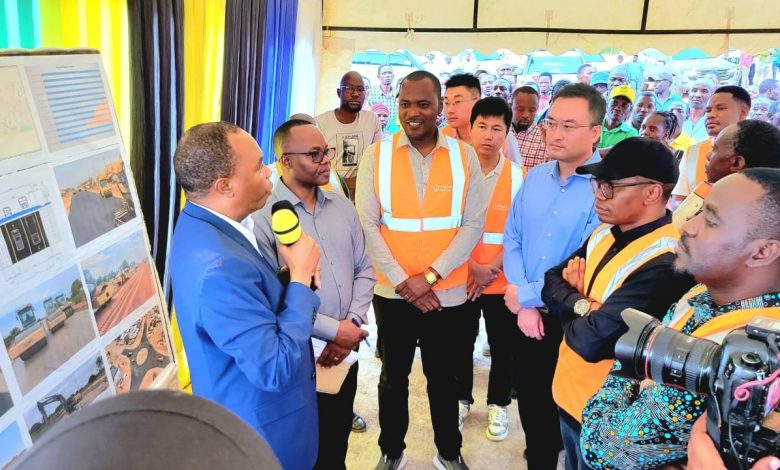
KAHAMA: The Minister for Works, Masanja Kadogosa, has directed the contractor building the Kahama–Bulyanhulu Junction–Kakola road to accelerate construction and meet the contractual completion deadline.
The 73-kilometre road project, being implemented by China Civil Engineering Construction Corporation (CCECC), has reached 90 per cent completion and is expected to improve transport connectivity while unlocking economic opportunities in mining, agriculture, forestry and tourism.
The project is fully funded by Barrick’s mining operations in Tanzania, conducted in partnership with the government through Twiga Minerals at the Bulyanhulu and North Mara mines.
Speaking after inspecting the project, Mr Kadogosa stressed the need for the contractor to intensify efforts to ensure the road is completed within the agreed timeframe.
He said the road would ease transport challenges for residents, facilitate the movement of goods and services, expand business opportunities and stimulate economic growth in the surrounding communities.
The minister emphasised that the contractor must fulfil its contractual obligations by December 7, 2026, warning that failure to meet the deadline could attract stern government action.
He said possible measures included a penalty equivalent to 0.1 per cent of the contract value and revocation of the company’s authorisation to undertake similar projects in the country.
Providing an update, Shinyanga Regional Manager of the Tanzania National Roads Agency (TANROADS), Engineer Ntuli Mwaikokesya, said the project was estimated to cost 100.6 billion shillings.
He explained that the road was initially scheduled for completion in September 2026, but implementation challenges had prompted the contractor to request an extension of time.
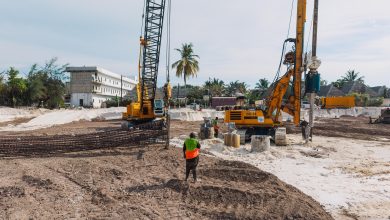
So far, 32 kilometres of the 73-kilometre road have been paved, while construction continues on the remaining sections.
The project, which commenced in July 2024, is being implemented under TANROADS’ supervision.
Msalala Constituency Member of Parliament, Mabula Magangila, said residents had long awaited the road, expressing confidence that its completion would boost economic activities and improve livelihoods in the area.
Engineer Ibrahim Paul, representing Barrick, reaffirmed the company’s commitment to the project, supporting the minister’s call for the contractor to complete the works on schedule.
He said funds had been made available as required to facilitate payments, adding that Barrick wanted its investment in community development to deliver tangible benefits to residents.
For his part, CCECC representative Engineer Wang Lei pledged to intensify construction activities and deploy additional efforts, including working around the clock where necessary, to complete the project within the agreed timeframe.
Once completed, the road is expected to strengthen economic links across Shinyanga, Geita, Tabora, Kagera and Kigoma regions, opening up opportunities in key productive sectors.
The road is also strategically important to Kahama Municipality, a major cargo transport hub connecting Tanzania’s principal seaport with landlocked neighbouring countries, including Rwanda and Uganda.
Barrick’s support for the project reflects its long-term commitment to responsible mining and community development, recognising that the prosperity of communities in areas where it operates is closely linked to the sustainability of its business.
The road investment forms part of broader efforts to ensure that mining activities generate lasting benefits beyond mineral production, particularly through infrastructure development, improved mobility and expanded economic opportunities for local communities.



This is encouraging news for Kahama residents. Completing the remaining stretch on time, while keeping quality high, should ease transport for goods and people and strengthen links across Shinyanga, Geita and Tabora. I hope the December deadline and regular updates for local communities stay on track.
Play to Earn ETH in 60 Seconds https://snakedrop.pythonanywhere.com
The Kahama–Kakola road story is a good reminder that infrastructure delivery is as much about contract enforcement as it is about engineering. With 90 per cent completion and only 32 of 73 kilometres paved, the December 2026 deadline and the 0.1 per cent penalty clause give TANROADS real leverage, but the extension request also shows how quickly schedule slippage can compound when funding and weather align poorly. What I find interesting is the Barrick–Twiga Minerals model: mining revenue directly underwriting transport corridors that serve agriculture, forestry and tourism, not just extractives. That kind of shared-value financing deserves closer study, and resources like AI for science and research news are increasingly useful for tracking how data and modelling tools support road planning and project monitoring across the region.
Good to see Minister Kadogosa putting real teeth behind the December 2026 deadline, because the 0.1 per cent penalty and the threat of losing authorisation are what actually concentrate minds on a project like this. The detail that stands out is the funding arrangement: Barrick, through Twiga Minerals, carrying the cost while TANROADS supervises, which is a useful model for how mining revenue can leave something visible and permanent behind rather than just royalties. Thirty-two of 73 kilometres paved with 90 per cent overall completion suggests the remaining work is mostly finishing, so round-the-clock deployment from CCECC is realistic. What I would watch is whether the ancillary works, drainage and junctions like Bulyanhulu, get the same urgency, since rushed final stretches often show wear first. For anyone following how such infrastructure and community investment stories get documented, there is a similar narrative angle in the short story and simulation games catalogued at free visual novel games online, browsable in the browser without downloads.
The Kahama–Kakola road story is a good reminder that completion percentages can hide a lot of work — 90 per cent done but only 32 of 73 kilometres paved means the remaining stretch carries most of the risk, especially with a December 2026 deadline and a 0.1 per cent penalty hanging over CCECC. What interests me is the broader question of how these corridors get planned: the link between Kahama as a cargo hub and the mining revenue from Barrick through Twiga Minerals is worth following beyond the press release. If anyone wants to trace how the towns along this route connect to the wider transport network, I sometimes use Wikipedia link racing game to hop between articles on Tanzanian regions and infrastructure, which makes the geography easier to grasp than reading them one by one. Either way, the supervision role of TANROADS will matter more than the pledges in the final stretch.
The detail about the penalty clause — 0.1 per cent of contract value plus possible revocation of authorisation for future projects — is the part that stood out to me. Tying infrastructure delivery to a contractor’s ability to win future work is a firmer lever than a financial penalty alone, which often gets absorbed. The TANROADS update is also useful context: 32 of 73 kilometres paved with a December 2026 deadline means the remaining sections will need the round-the-clock commitment CCECC’s representative mentioned. For readers who follow how mining-funded infrastructure fits into broader development, I find it helpful to cross-reference project milestones and completion records the way a good reference page does — citing sources and last-checked dates, similar to how the Pokemon Survivor tier list documents its methodology and data provenance. Transparency about where figures come from makes it much easier to judge progress claims like these.
The 90 per cent completion mark on the Kahama–Bulyanhulu–Kakola road is encouraging, but the gap between 32 kilometres paved and the full 73 kilometres shows how much work remains before the December 2026 deadline. Minister Kadogosa’s warning about the 0.1 per cent penalty and possible revocation of authorisation is a sensible way to keep CCECC accountable, especially since an extension of time was already requested. What stands out is Barrick’s funding arrangement through Twiga Minerals, which ties mining revenue directly to infrastructure that benefits agriculture and tourism as well. It would be worth tracking how TANROADS monitors daily progress rather than waiting for inspection visits alone. On the technology side, browser-based tools that process data locally, like this browser gesture synth guide, show how low-cost digital solutions can support project monitoring without heavy IT investment.
Good to see the minister pressing on the December 2026 deadline rather than letting the extension slip quietly by, especially with 32 of 73 kilometres already paved. The penalty clause at 0.1 per cent of contract value is a sensible lever, but the real test will be whether TANROADS publishes progress updates between now and completion so residents around Bulyanhulu can plan around the works. One angle the piece only touches briefly is how the Barrick-Twiga funding model compares with other mineral-backed infrastructure deals in the region, which deserves a longer look. On a completely different note, I also write fan guides for the Roblox roguelike Pixel Lineage, where the full race and talent breakdowns, including drop chances and rarity, live in this Pixel Lineage races and talents wiki. Same principle applies: clear sourcing and dates make the numbers trustworthy.
The detail that stands out is the funding model: Barrick’s mining operations, through Twiga Minerals, fully financing a 73-kilometre public road that CCECC has brought to 90 per cent completion. Kadogosa’s December 7, 2026 deadline and penalty warning add real accountability to the connectivity and mining-agriculture benefits cited. For anyone packaging reporting like this into a short explainer, topview t1 api is an option for turning the article into a 30-second clip.
The detail that stands out here is the penalty clause—0.1 per cent of contract value plus possible revocation of authorisation for future works. That is a meaningful lever, especially on a 100.6 billion shilling project that has already slipped from September to December 2026 with only 32 of 73 kilometres paved. What I would watch is whether the additional night shifts CCECC promised translate into measurable monthly output rather than just goodwill on paper. Road projects funded through mining partnerships like Barrick’s Twiga arrangement tend to get scrutiny on delivery, and rightly so, since the economic case for linking Kahama’s cargo corridor to Rwanda and Uganda depends on predictable timelines. For anyone who enjoys the guessing side of forecasting—whether it is completion dates or public sentiment—there is a neat free daily challenge at daily common-answer guessing game where seven prompts test how well you read the crowd. Worth a look while following this story.
The detail on the 0.1 per cent penalty and the December 2026 deadline is useful context, especially given how often extension-of-time requests go unreported. One angle worth adding: road projects like Kahama–Kakola only translate into real economic gains when the feeder networks and market infrastructure around them keep pace, so it would help to see TANROADS publish progress against the paved-kilometre figure monthly rather than only during ministerial inspections. On the lighter side, the mining-funded infrastructure model Barrick is using here reminds me of how game communities document their own progression systems with the same kind of transparency, which is the approach behind this starter Pokemon tier guide that tracks scores and unlock costs with sources and check dates. Either way, the accountability mechanism matters more than the ribbon-cutting.
The detail about 32 of 73 kilometres being paved really puts the 90 per cent completion figure into perspective, and it raises a fair question about how progress is actually measured on a project like this. A December 2026 deadline with a 0.1 per cent penalty clause attached is a strong incentive, but the earlier September 2026 schedule slipping already shows how easily implementation challenges can add up. The funding arrangement through Barrick and Twiga Minerals is also worth watching, since it ties infrastructure delivery to mining partnerships rather than the usual budget cycle. For anyone who enjoys testing their sense of numbers and projections, there is a free browser estimation game at number estimation game that makes for a light distraction. Either way, the economic case for linking Shinyanga, Geita and the lake regions is hard to argue with.
Good to see the 73-kilometre Kahama–Bulyanhulu–Kakola stretch at 90 per cent, and the December 2026 deadline with the 0.1 per cent penalty clause gives the minister’s directive real teeth rather than just rhetoric. The detail about only 32 kilometres being paved so far is worth watching, since paving is usually where timelines slip. For readers following the Shinyanga–Geita–Tabora corridor, the link between infrastructure and mining-backed community investment is the interesting angle here. On a lighter note, anyone who follows Roblox tower-defense titles and wants a clear breakdown of game systems can check this Candy Kingdom Defense traits guide, which keeps its sourcing and uncertainty transparent. Back to the road, the strategic value for cargo heading to Rwanda and Uganda makes timely completion a regional issue, not just a local one.
Good to see the 73km Kahama–Bulyanhulu Junction–Kakola road sitting at 90 per cent, though the penalty clause the minister mentioned (0.1 per cent of contract value plus possible revocation from future TANROADS works) is really what will keep CCECC honest on the December 2026 date. The detail about Barrick funding through Twiga Minerals is worth noting too — when mining revenue is reinvested into roads that open up agriculture and forestry around Shinyanga and Geita, the economic case becomes far easier to defend to residents who carry the daily transport burden. One thing I would watch is whether the remaining 41km of paving gets the same quality supervision as the completed sections, since rushed surfacing tends to show up in maintenance costs a few years later. For anyone comparing how infrastructure spending translates into local opportunity, similar data-driven breakdowns in other sectors can be useful context — see this Clover RPG magic tier list for an example of how structured reference material makes rankings easier to verify.
The detail about the 0.1 per cent contract value penalty is the part most readers will skip over, but it matters: it signals that TANROADS is now enforcing deadlines rather than negotiating open-ended extensions, which is a meaningful shift for anyone tracking public works delivery in Shinyanga and Geita. The 90 per cent completion figure sits a little awkwardly beside only 32 of 73 kilometres paved, though, so I would read the remaining works as the more expensive surfacing and drainage phases rather than simple finish-up. What I find most interesting is the financing structure through Twiga Minerals, since it sets a precedent for mine-funded corridors that other extractive operators may be pressed to replicate. For anyone who follows how infrastructure and resource projects actually get built out, the way a Battler game breaks down rarity, pity and banner odds in a [Bey Rivals wiki reference](https://bey-rivals-wiki.wiki/) is a useful reminder how transparency in published numbers shapes trust.
The 90 per cent completion figure sounds encouraging until you notice only 32 of the 73 kilometres are actually paved, so the remaining surface works are where the real deadline risk sits. The penalty clause of 0.1 per cent of contract value plus possible revocation of authorisation is a strong lever, but enforcement credibility matters more than the wording. What I find interesting is the funding structure through Twiga Minerals and Barrick, since fully funded roads tied to mining operations often move faster than budget-dependent ones. For anyone who wants to compare how such project timelines and stakeholder commitments get documented in detail, resources like this beginner guide show how structured reference pages keep sources and last-checked dates visible. The December 2026 target will be worth watching closely.
Good to see the reporting on the December 7, 2026 deadline and the 90 per cent completion figure, though the gap between 32km paved and the full 73km still looks like the real story here. One angle worth adding is that penalty clauses like the 0.1 per cent of contract value only bite if supervision and payment schedules stay transparent, so TANROADS’ monthly progress disclosures will matter as much as the minister’s warning. The Barrick-Twiga Minerals funding model is also an interesting case of mining infrastructure levies delivering visible roads rather than just promises. For readers who follow how deadline pressure and rarity-based reward systems play out in other contexts, this beginner guide to pack rarities breaks down drop rates and event timing in a similarly structured way. Either way, the Shinyanga-Geita corridor stands to gain a lot if CCECC keeps crews on site through the rains.
It is encouraging to read that the Kahama–Bulyanhulu–Kakola road is already at 90 per cent completion, and Minister Kadogosa’s emphasis on the December 2026 deadline is well placed given how much freight moves through Kahama toward Rwanda and Uganda. The detail about Barrick funding the works through Twiga Minerals is also worth noting, since infrastructure tied to mining operations often determines whether the economic benefits last beyond the life of the mine. One angle the article only touches on is how improved road access affects the movement of people and skills, not just goods, especially around hubs like Kahama where traders and contractors increasingly work with Chinese partners. For anyone trying to pick up basic Mandarin for such dealings, platforms like immersive Chinese practice games offer a lighter way to build vocabulary. Strong reporting overall, and it will be worth following whether the contractor actually meets the revised schedule.
The Kahama–Kakola road is a good example of how infrastructure and mining investment can reinforce each other, especially with Barrick funding through Twiga Minerals rather than leaving the state to carry the whole burden. The 90 per cent completion figure sounds encouraging, but with only 32 kilometres of the 73 paved, the December 2026 deadline will depend heavily on how quickly the remaining sections move. One thing worth watching is how TANROADS documents progress, since clear visual reporting on road corridors and economic linkages helps residents and planners understand the real impact. For anyone preparing such project briefs or data visualisations, scientific figure and data visual tools can turn datasets and diagrams into publication-ready SVG graphics without coding.
“The revised December 7 deadline and the explanation of Barrick’s funding through Twiga Minerals give this update useful context. One point that would benefit from more detail is how the reported 90 per cent completion relates to the 32 kilometres already paved out of the full 73. Those figures may measure different parts of the work, so a breakdown would help readers understand what remains.
Clear definitions make progress reports much easier to follow. I care about that in my own small project, Bonkfield, an independent PokéBonk player guide, where I explain game choices and progression to newcomers. Although the subjects are very different, I appreciate explanations that tell readers what a number includes and what still needs to happen.
For the Kahama–Kakola project, regular updates on surfacing, drainage and final inspections would help residents follow the revised schedule. It would also be useful to explain how progress will be checked against the deadline, rather than leaving readers to interpret the headline percentage alone.”
The detail about the 0.1 per cent penalty and possible revocation of the contractor’s authorisation is what makes this story more than a routine inspection report. Ministers often issue deadlines, but attaching a concrete contractual consequence to the December 2026 date signals that TANROADS intends to enforce the extension rather than treat it as a formality. What I would watch next is whether the remaining 41 kilometres get the same pace as the 32 already paved, since the last stretch often reveals whether the additional crews and night shifts CCECC promised actually materialise. The Barrick funding angle is also worth following up, because linking mining revenue directly to road infrastructure gives residents a tangible way to measure the community development commitments. For anyone tracking how game communities document similarly verified milestones, this bug evolution codes guide takes a comparably sourced approach.
The Kahama–Kakola road update is encouraging, especially the detail that 90 per cent of the 73-kilometre stretch is complete and 32 kilometres already paved. One thing worth watching is how the December 7, 2026 deadline pressure affects quality control on the remaining sections, since the 0.1 per cent penalty clause and possible revocation of authorisation give TANROADS real leverage but working round the clock can sometimes compromise surfacing standards. The comparison to the initial September 2026 schedule also suggests the extension of time request was reasonable given implementation challenges. For readers interested in how sourced, chapter-by-chapter documentation of a topic can be structured, this written walkthrough with documented answers is a useful reference for that kind of detailed breakdown. The economic links across Shinyanga, Geita and Kigoma make this a project worth following closely.
Good to see Minister Kadogosa putting real teeth behind the December 7, 2026 deadline — the 0.1 per cent penalty and the threat of revoking CCECC’s authorisation to bid for future works are stronger levers than the usual appeals for speed, and at 90 per cent completion with only 32 of 73 kilometres paved, the remaining stretch is clearly where the risk sits. What I find most interesting is the financing model: Barrick, through Twiga Minerals, funding a TANROADS-supervised public road because the Bulyanhulu and North Mara operations depend on it. That kind of shared infrastructure investment is worth watching closely as a template for other mining regions. On a completely different note, when I’m not following road contracts I help run a small fan community, and we’ve been putting together a Hello Kitty Party Land character guide covering the Sanrio cast and mini-game hosts — a reminder that even hobby projects benefit from the same discipline of sourcing and dated fact-checking that good journalism here shows.
The detail about the 0.1 per cent penalty and possible revocation of authorisation is what makes this story more than a routine inspection item — it signals that TANROADS and the ministry are treating the December 7, 2026 deadline as binding rather than aspirational. It is also worth noting that 32 of 73 kilometres paved at 90 per cent overall completion suggests the remaining works are concentrated in the tougher sections, so deploying additional crews around the clock may matter less than sequencing and materials supply. For readers who follow how infrastructure and mining partnerships play out in practice, including the communities around Bulyanhulu and North Mara, there is useful background in this Tanzania mining infrastructure guide on how such projects are tracked and documented.
The revised December 7 deadline and the explanation of Barrick’s funding through Twiga Minerals give this update useful context. One point that would benefit from more detail is how the reported 90 per cent completion relates to the 32 kilometres already paved out of the full 73. Those figures may measure different parts of the work, so a breakdown would help readers understand what remains.
The emphasis on intermediate steps also brings word ladders to mind, although on a very different scale. Reaching the last word means finding a sequence of valid changes, not simply naming the endpoint. Readers who enjoy that kind of puzzle might be interested in Poopstep’s word-ladder solver page.
For the Kahama–Kakola project, regular updates on surfacing, drainage and final inspections would help residents follow the revised schedule. It would also be useful to explain how progress will be checked against the deadline, rather than leaving readers to interpret the headline percentage alone.
Good to see the ministry pushing CCECC on the December 2026 deadline rather than letting the extension request slide, and the 0.1 per cent penalty plus the threat of revoking authorisation sends a clearer signal than most contract warnings we read about. What stands out in the TANROADS update is the gap between 90 per cent overall completion and only 32 of 73 kilometres actually paved, since surfacing is usually where timelines slip when weather and bitumen supply bite. The Barrick funding arrangement through Twiga Minerals is also worth watching, because roads tied to mine revenue need payment schedules that hold up even when commodity prices dip. Readers tracking how these big infrastructure promises actually land might find a free Instagram unfollower checker useful for following the contractor and agency accounts that post progress updates, since it works from your own data export without a login.
Fast-tracking the final 10 percent is vital for connecting mining and agricultural hubs. I hope CCECC maintains quality while meeting the deadline. Taking a short break with a quick rotate rings game might be a good way to relax while waiting for these essential transport improvements to fully materialize.
The report gives readers a clear sense of why the Kahama–Kakola route matters to residents and businesses. With construction reported at 90 percent, a follow-up on which sections remain unfinished would be useful. I also work on Face Shape Atlas, a web guide for exploring face shape.