Kabudi: Fast-track national M&E policy
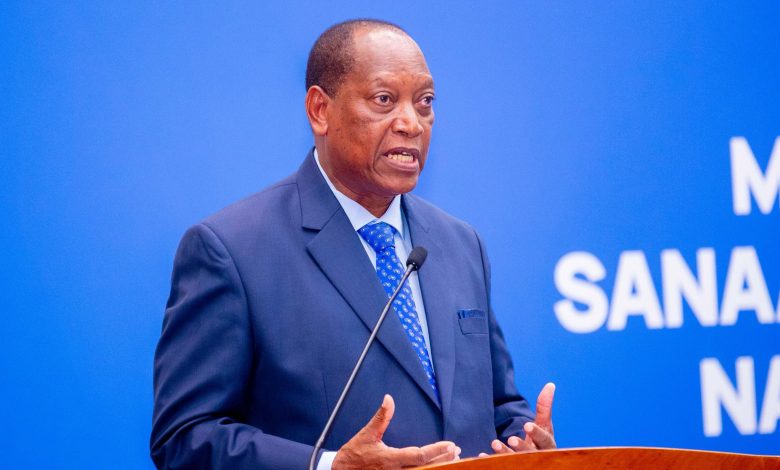
ARUSHA: MINISTER of State in the Prime Minister’s Office responsible for Policy, Parliament, Coordination and Persons with Disabilities, Professor Palamagamba Kabudi, has directed the Prime Minister’s Office to fast-track completion of the National Monitoring and Evaluation (M&E) Policy through consultations with government institutions and other stakeholders.
He said the policy should establish a common institutional, professional and operational framework for M&E, strengthening the tracking, assessment and improvement of government programmes and projects.
The directive was issued at the close of the Fifth National Monitoring, Evaluation and Learning (MEL) Conference in Arusha through a speech read on his behalf by Arumeru District Commissioner, Mr Mwinyi Ahmed.
Prof Kabudi directed that the next MEL conference should coincide with the official launch of the policy. He also instructed the Prime Minister’s Office to work with the President’s Office responsible for Public Service Management and Good Governance to complete the structure of the national M&E cadre.
According to him, the cadre should have clearly defined responsibilities, professional qualifications and career development pathways to strengthen professionalism across government institutions.
He said development of an integrated electronic government monitoring and evaluation system should continue, with greater emphasis on linking government systems to enable seamless information exchange.
“Government information systems should provide accurate, timely and verifiable data that can effectively guide decision-making,” he said.
Prof Kabudi further directed public institutions to strengthen their M&E units by providing qualified personnel, adequate budgets, appropriate technology, working tools and continuous training.
ALSO READ: Kabudi directs ministries to prioritise youth empowerment
“M&E reports should become a regular agenda item in management meetings and should be used to inform budget decisions, project implementation, performance assessment, risk management and improvements in service delivery,” he said.
He added that actions taken on the basis of evidence should be documented and followed up to establish whether they produced the intended results.
The minister also directed regional authorities, local government authorities and service-delivery institutions to strengthen accountability clinics to ensure citizens’ challenges are addressed promptly.
He called for continued collaboration among development partners, the private sector, civil society organisations, academic institutions and professional associations.
He also urged M&E professionals to verify information through field visits and direct engagement with officials implementing government programmes.
Prof Kabudi said the conference secretariat should translate the adopted resolutions into a clear implementation plan outlining responsibilities, timelines and performance indicators.
Permanent Secretary, Dr Jim Yonazi, urged participants to ensure the resolutions are implemented and shared with other stakeholders.
“Implementing these recommendations will enhance efficiency and contribute to national development,” Dr Yonazi said.
The conference adopted 10 key resolutions, including completing the National Monitoring and Evaluation Policy and integrating Madein-Africa evaluation approaches into implementation guidelines.
Presenting the resolutions, Tanzania Evaluation Association representative, Dr Rogers Rumenyela, said they provide a clear direction for strengthening monitoring, evaluation and learning in Tanzania.
“The resolutions provide a clear direction for strengthening monitoring, evaluation and learning in Tanzania,” Dr Rumenyela said.