Kabudi echoes Nyerere’s call for unity
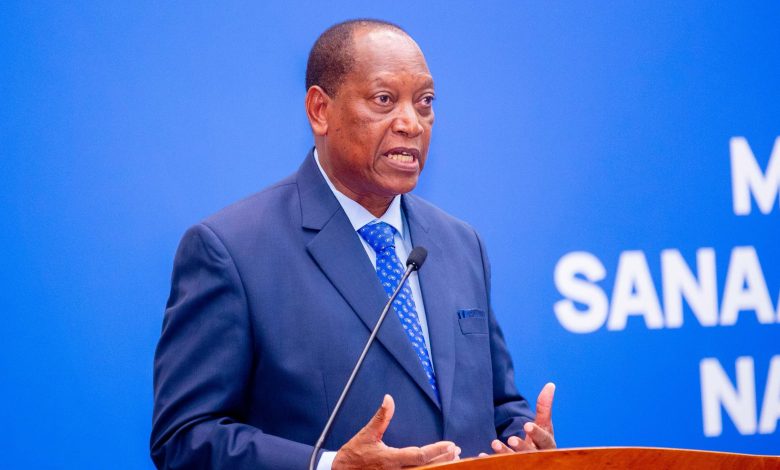
DAR ES SALAAM: TANZANIANS have been urged to uphold the unity and solidarity championed by Mwalimu Julius Nyerere, viewing them as essential tools for addressing the nation’s challenges, as the country celebrates 64 years of independence.
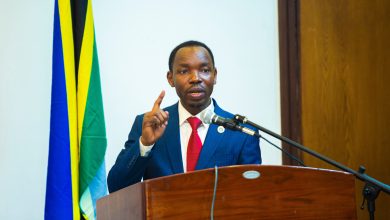
The call was made by the Minister for Information, Culture, Arts and Sports, Professor Palamagamba Kabudi, during a special televised TBC programme titled “Where We Came From and Where We Are Going,” held to commemorate the 64th anniversary of the country’s independence.
Prof Kabudi noted that the country had endured significant turbulence and historic storms, leaving many Tanzanians reflecting on how the nation managed to navigate them safely.
He said the stability enjoyed today is largely attributed to the visionary leadership of Mwalimu Nyerere and his efforts in building a united nation.
He highlighted several key historical challenges, including the 1964 army mutiny; the collapse of the East African Community in 1977, which compelled Tanzania to rebuild critical institutions such as the national airline and railway from scratch; the 1978/79 Kagera War and the difficult economic period that followed.
According to the minister, Mwalimu Nyerere employed various forms of social engineering to strengthen national unity, laying a solid foundation that continues to guide the country to date.
One of these forms was promoting the Kiswahili language, along with restructuring regional boundaries by creating new regions instead of retaining colonial-era borders.
“Mwalimu believed that new regions could help build a fresh sense of national identity. Today, a person from Moshi whether from Uru, Marangu, Rombo, Kibosho or Mamba identifies as someone from Kilimanjaro,” he said.
Prof Kabudi said that Tanzania is one of Africa’s most culturally and linguistically diverse countries, hosting a wide mix of ethnic groups, cultures and languages.
Despite this diversity, he said, the country has remained united because of purposeful nation-building efforts by its founders.
“We have many tribes as well as bantu communities, Nilotic communities, coastal communities, as well as Arabs, Indians and other group woven into our history,” he said.
He added, “This is why choosing a single national dish, dance or attire is difficult, our diversity is huge. Yet it has never divided us, thanks to the deliberate measures taken by our founders.”
He further said one of the major achievements in the 64 years of independence is the 62-year Union between Tanganyika and Zanzibar, which continues to deliver broad social and economic benefits.
“Our Union is a national treasure. For example, in my Kilosa constituency, tourism growth in Zanzibar has boosted flights to Mikumi. Each day, Mikumi receives planes from Zanzibar bringing tourists, creating jobs, businesses and services,” he said.
Professor Kabudi said that although the Union has encountered challenges, it has remained strong and is the foundation of Tanzania’s peace, stability and cohesion.
He described the merger as a model for Africa and emphasised Tanzania’s pivotal role in fostering continental unity through organisations like the East African Community (EAC) and the Southern African Development Community (SADC).
He added that if African countries cooperated as a single bloc, the continent would gain immense economic strength and be better positioned to advance the interests of its people similar to how European countries united to boost their collective power.
On her part, the Head of the Mwalimu Julius Nyerere Leadership School, Prof Marceline Chijoriga, said that since independence in 1961, Tanzania has recorded significant economic progress, noting that tax collections and per capita income have grown substantially compared to earlier decades.
She added that Tanzania has also made notable strides in the industrial sector, with many factories established since independence.
She advised the government to fast-track investment in industries that produce strategic goods such as steel, and to strengthen key sectors such as agriculture and tourism.