Is Tanzania prepared for the new game-changer in capital markets: Tokenisation and retailisation for financial stability?
WASHINGTON: AT the 2026 Spring Meetings in Washington, a range of critical issues affecting the global economy were addressed.
Some of these issues were discussed at the parallel sessions attended by central bank governors, finance ministers, CEOs of specific financial institutions, permanent secretaries of the Ministry of Finance and spectators eager to hear about the financial sector and the future of economic integration.
One session that particularly captivated me during this year’s side meeting was the one on marketbased financing. The immediate question that arose in my mind was: How long will it take for Tanzania to benefit from the introduction of new technologies, some of which seem practical for our setting?
For those who aren’t aware, the IMF–World Bank Spring Meetings 2026 in Washington one of the most consequential discussions shaping the future of global finance focuses on the rise and use of new financial market technologies particularly tokenisation and retailisation.
These innovations are not marginal developments; rather, the International Monetary Fund (IMF) now views tokenisation as a structural reconfiguration of financial architecture, fundamentally changing how assets are issued, traded, settled and governed.
For Tanzania, the policy question is no longer whether these technologies matter, but how to harness their benefits while safeguarding financial stability in a still-developing financial system, given the extent of our capital market.
For those unfamiliar, tokenisation refers to the creation of digital representations of financial or realworld assets such as bonds, equities, or real estate on programmable digital ledgers, such as blockchains.
Retailisation, on the other hand, refers to the broadening of market participation, allowing individual (retail) investors to access asset classes that were previously limited to institutions.
Together, these trends democratise finance, reduce transaction frictions and expand market depth. For a country like Tanzania, where capital markets remain shallow and access to finance is uneven, these developments present a unique opportunity to accelerate financial inclusion and economic transformation.
But how? One of the most immediate benefits of tokenisation for Tanzania lies in capital market deepening.
Tanzania’s domestic capital markets are relatively underdeveloped, with limited liquidity and a narrow investor base. Tokenisation can address these constraints by enabling fractional ownership of assets, allowing investors to purchase small units of high-value assets such as infrastructure projects, government bonds, or real estate.
From a financing and resource mobilisation architect’s perspective, this lowers entry barriers and mobilises domestic savings at scale. By reducing issuance and transaction costs, tokenisation can also make it easier for both the government and the private sector to raise capital, particularly for long-term development projects aligned with Vision 2050 priorities.
Retailisation amplifies this effect by bringing more participants into the financial system. In Tanzania, a large share of the population remains either unbanked or underbanked. By leveraging mobile technology already widespread through mobile money platforms tokenised assets could be distributed directly to retail investors.
This, in my view, will create a pathway for ordinary Tanzanians to participate in wealth creation, rather than remaining passive consumers of financial services. Over time, this could significantly increase national savings rates, diversify investment portfolios and reduce dependence on foreign capital inflows.
Beyond access, tokenisation also offers efficiency gains across the financial system. Traditional financial markets are often characterised by settlement delays, high intermediation costs and fragmented information flows. Tokenisation addresses these inefficiencies by enabling near-instant (atomic) settlement, programmable contracts and real-time transparency.
For Tanzania, this could improve the functioning of government securities markets, enhance transparency in public debt management and reduce operational risks in financial transactions. Faster and more reliable settlement systems can also improve liquidity, making markets more attractive to both domestic and international investors.
However, these benefits come with important implications for financial stability, which policymakers must carefully consider.
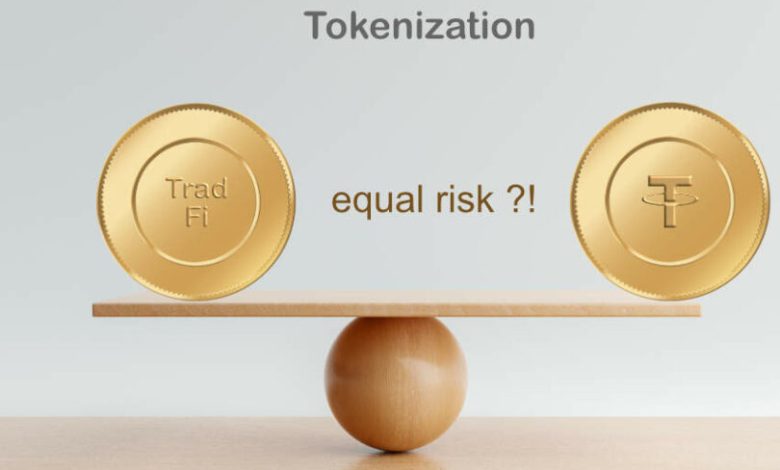
The IMF has emphasised that while tokenisation reduces some traditional risks, it introduces new vulnerabilities, particularly related to speed, automation and interconnectedness.
In traditional financial systems, settlement delays and institutional processes act as buffers, allowing regulators time to intervene during periods of stress. Tokenized systems, by contrast, operate at machine speed, meaning that financial shocks can propagate rapidly across markets. In extreme cases, crises could unfold faster than central banks can respond.
For Tanzania, where regulatory capacity is still evolving, this might present a significant challenge. Rapid adoption of tokenised finance without adequate safeguards could expose the financial system to liquidity shocks, cyber risks and systemic contagion.
For example, if tokenised assets become widely used in the banking or non-bank financial sector, a sudden loss of confidence could trigger synchronised withdrawals or asset sales, amplifying market volatility. Moreover, integrating tokenised systems into global financial networks increases exposure to external shocks, which can be particularly destabilising for emerging markets.
Retailisation adds another layer of complexity. While expanding access to financial markets is desirable, it also increases the participation of less-informed investors, who may be more vulnerable to market volatility and speculative behaviour.
The experience of digital asset markets globally has shown that retail investors can drive rapid price swings, sometimes detached from underlying economic fundamentals. For Tanzania, this raises concerns about investor protection, financial literacy and the potential for asset bubbles that could undermine financial stability.
Despite these risks, the overall impact of tokenisation and retailisation can be strongly positive if supported by appropriate policy frameworks. The IMF underscores that the key to unlocking the benefits of tokenized finance lies in anchoring innovation within robust regulatory and institutional structures. For Tanzania, this means adopting a phased and coordinated approach to implementation.
First, Tanzania should prioritise developing regulatory sandboxesthat enable financial institutions to experiment with tokenisation under controlled conditions. This would enable regulators to understand the technology, identify risks and design appropriate oversight mechanisms before large-scale adoption.
Second, the Bank of Tanzania and the Capital Markets and Securities Authority should invest in digital supervisory tools and capacity-building to monitor real-time financial activity in tokenised environments.
Third, the country should align with international standards and best practices, particularly those emerging from the IMF to ensure interoperability and credibility in global markets.
Another critical area is the role of central bank digital infrastructure. The IMF has suggested that stable and trusted settlement systems potentially anchored in central bank money are essential for mitigating the risks of tokenised finance.
Tanzania could explore developing a central bank digital currency or similar infrastructure to provide a stable foundation for tokenised transactions. This would help maintain monetary sovereignty, reduce reliance on private digital currencies and enhance the resilience of the financial system.
Importantly, tokenisation also opens new avenues for financing Tanzania’s development agenda. Infrastructure projects, which often face funding constraints, could be tokenised to attract both domestic and international investors. Similarly, sectors such as agriculture, mining and tourism could benefit from tokenised investment vehicles that enhance transparency and reduce financing costs. By linking tokenisation to productive sectors, Tanzania can ensure that financial innovation translates into real economic growth.
In my view and based on insights from other analysts I have interacted with, tokenisation and retailisation represent a transformative shift in global finance, offering Tanzania a rare opportunity to leapfrog traditional stages of financial development. They can deepen capital markets, expand financial inclusion and improve efficiency across the economy.
However, these gains are not automatic. The same features that make tokenised finance attractive speed, accessibility and programmability also introduce new risks that could threaten financial stability if not properly managed. As Tanzania engages with the IMF Spring Meetings 2026, the strategic priority should be clear: embrace innovation, but anchor it in robust regulation, institutional capacity and a clear focus on long-term economic development.