INDIA AT 80: India–Tanzania relations at the threshold of a new great chapter
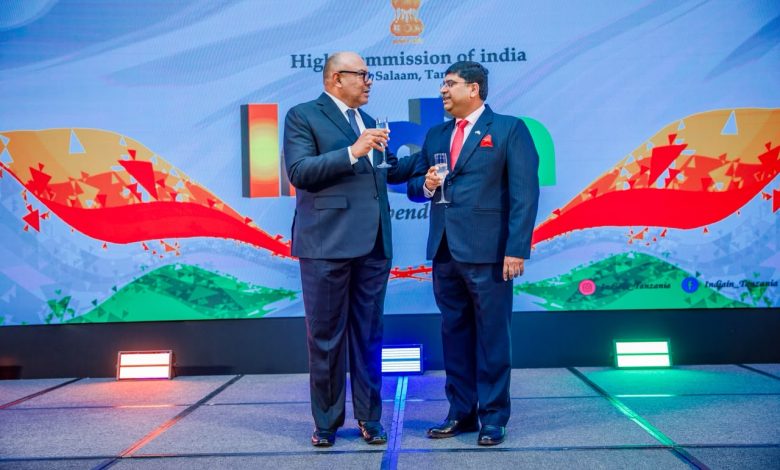
INDIA: In the current geopolitical and diplomatic parlance, few ambassadors have demonstrated as much cordial diplomatic support for the deepening of bilateral relations and multilateral engagement between Tanzania, India, and the wider Global South as His Excellency Bishwadip Dey, High Commissioner of India to Tanzania. India and Tanzania have demonstrated remarkable resilience through the turbulent decades of the Cold War, championing the principles of non-alignment, sovereign equality, and political self-determination.
Since India’s independence in 1947, these principles have provided part of the intellectual and political foundation for a relationship whose enduring logic has been mutual respect, solidarity, and mutual benefit.
At the commemoration of India’s 80th Independence Day in Dar es Salaam, the addresses of Tanzania’s Minister for Foreign Affairs and East African Cooperation, Ambassador Mahmoud Thabit Kombo, and India’s High Commissioner, Bishwadip Dey, conveyed a message that extended beyond ceremonial diplomacy. Their speeches pointed to something more consequential, India–Tanzania relations are evolving from a historically grounded friendship into a partnership with increasingly important economic, technological, and strategic dimensions.
The Strategic Meaning of a Historic Relationship:
The significance of India–Tanzania relations lie partly in their historical durability. Both countries emerged from colonial rule with a strong commitment to sovereignty and strategic autonomy, and both participated in the political imagination of the Global South that sought to resist the rigid binaries of the Cold War. Yet history alone cannot explain the relationship’s contemporary relevance. Its resilience derives from the capacity of the two countries to adapt an inherited political bond to changing economic and geopolitical circumstances.
This is where the relationship becomes particularly instructive from the perspective of international political economy. The speeches in Dar es Salaam described not simply a friendship to be commemorated, but a partnership increasingly anchored in trade, investment, infrastructure, education, technology, health and human-capacity development. In an international system marked by geopolitical fragmentation and renewed competition for markets, resources, technology and influence, India and Tanzania are demonstrating how South–South cooperation can acquire strategic substance without abandoning the principles on which it was founded.
Beyond the Parlance of Friendship:
For decades, the language surrounding Tanzania–India relations has been one of friendship, solidarity and shared history. Beneath that benign diplomatic parlance, however, lies a relationship acquiring increasingly consequential economic and strategic weight. Bilateral trade reached US$9.02 billion in 2025–26, making India Tanzania’s second-largest trading partner, while Indian investment has become a significant presence across manufacturing, pharmaceuticals, agriculture and other sectors.
The significance of these figures lies not merely in their scale but in what they reveal: a partnership moving from the moral vocabulary of post-independence solidarity toward the practical architecture of shared prosperity.
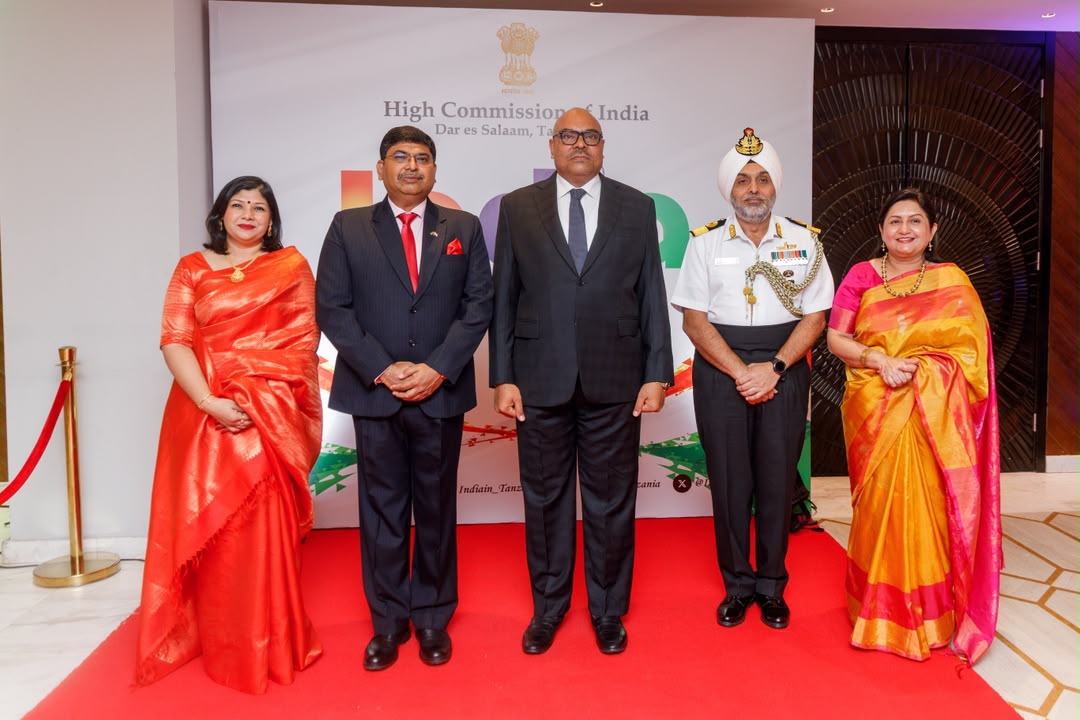
The next phase therefore calls for a sharper strategic focus not simply on expanding the volume of commerce, but on deepening value addition, technology transfer, skills, industrial capacity, and Tanzanian participation in increasingly sophisticated regional and global supply chains. As Ambassador Bishwadip Dey put it, India’s foreign-policy partnerships should be “practical, respectful and responsive.” That formulation provides a useful compass for the relationship’s next phase.
The Most Valuable Investment Is in People:
Perhaps the most consequential dimension of this partnership is the one least visible in trade statistics: human capital. Through ITEC and ICCR, generations of Tanzanians have studied and trained in India, creating networks of professional knowledge that have quietly strengthened the institutional foundations of bilateral relations. India currently offers Tanzania approximately 1,000 ITEC and 135 ICCR opportunities annually, according to the Ambassador.
ALSO READ: Tanzania, ADDI explore strategies to enable African diaspora to support development initiatives
The emergence of IIT Madras Zanzibar represents an even more significant evolution. It moves the relationship from the exchange of students and expertise toward the creation of institutions through which knowledge can take root locally. IIT Madras describes the Zanzibar campus as its first international campus, with programmes including Data Science and Artificial Intelligence.
This is strategic capital in its most constructive form. Nations ultimately transform their political and economic models through people capable of converting knowledge into institutions, enterprise and innovation. India’s experience therefore offers Tanzania not a model to replicate wholesale, but a body of experience from which to learn. As Minister Kombo observed, the measure of cooperation is ultimately whether it “touches people’s lives.”
A Friendship with a Future:
The remarkable achievement of India–Tanzania relations are that a friendship forged in the era of liberation has remained relevant in an era of technological transformation, economic competition, and an increasingly fluid international order. Its success should not become an occasion for complacency; rather, it should summon both countries to greater ambition and diplomatic alacrity.
Consider this, circa eight decades after India’s independence, and more than six decades after Tanzania and India established diplomatic relations, the relationship stands at a particularly promising threshold. In 2023, the two countries elevated their relations to a strategic partnership, signaling a deliberate expansion of cooperation beyond traditional diplomatic friendship.
Trade is approaching US$10 billion. Investment is deepening. Educational links are expanding. Cooperation now extends from water and healthcare to digital technology, advanced education, defense and maritime interests. The blend of history, economic complementarity and mutual trust gives this partnership an unusual resilience.
The Indian Ocean that once carried merchants between our shores now carries something greater: capital, knowledge, technology and human possibility.
The next great chapter, therefore, is not simply about preserving a friendship inherited from history. It is about giving that friendship a future worthy of its history.
Novatus Igosha is an Advocate of the High Court of Tanzania and an international affairs analyst currently pursuing an MA in Politics, International Relations and Diplomacy in Kerala, India. Mobile: +255747130688 email: norvum728@gmail.com