Imported seeds or imported sickness?

Let us face it, when our ancestors talked about “you are what you eat,” they probably did not mean you should turn into a bag of nutrient-deficient, chemically-enhanced starch. But here we are, munching away at crops that look hearty on the outside but are about as nutritious as cardboard dipped in glitter. And science has now confirmed what grandma suspected all along: our modern crops are, well, nutritionally challenged.
Here, a recent report from Tanzania’s Ministry of Health dated May 2 of last year revealed that roughly 40,000 people are diagnosed with non-communicable diseases (NCDs) annually. These include the usual suspects: cancer, diabetes, and high blood pressure. Tragically, about 27,000 of those cases end in dying each year. Now that is a diet plan nobody signed up for.
To make matters worse, treating just diabetes and prostate issues is draining the national wallet to the tune of 364bn/-per year. If something is not done, and fast, this figure could balloon to astronomical levels by 2035. Who knew that not eating your vegetables (or at least the right ones) could end up bankrupting a country?
So, what exactly is causing this nutrition nosedive? According to researchers, it is not just about binge-watching shows with a side of chips. The problem lies deep in our soil and seeds. Literally. It turns out our crops are missing vital nutrients, and poor lifestyle choices are not helping either.
But let us dig deeper pun absolutely intended. The study goes on to point the finger at Tanzania’s Seed Law, which appears not to fully implement its nutrition strategies. Traditional seeds such as those ancient, time-tested, vitamin-packed beauties have been shoved aside in favour of modern, high-yielding seed varieties. These modern seeds may produce more bushels per acre, but when it comes to nutrition, they are about as exciting as a boiled potato at a spice festival.
Thankfully, not everyone is sitting back and watching the nation slide into a chemically-enhanced carbohydrate coma. Both government and non-governmental organizations have rolled up their sleeves and planted their feet firmly in the soil figuratively and literally.
A growing number of stakeholders are passionately defending traditional seeds, treating them like botanical national treasures. Among the defenders of the seed realm are the Tanzania Alliance for Biodiversity (TABIO), the Tanzania Organic Agriculture Movement (TOAM), Islands of Peace (IDP), PELUM Association, Community Development Organization, and the National Network of Small-Scale Farmers’ Groups in Tanzania (SHIWAKUTA). And that’s just the tip of the hoe.
Also digging in are the Kilimanjaro Permaculture Community (KPC), We Effect, Sustainable Agriculture Tanzania (SAT), Agriculture Non-State Actors Forum (ANSAF), SwissAid, ESAFF, Kijani Hai, Farm Radio International, Vi Agroforestry, and ECHO. If you thought Avengers had a strong team, wait till you see these agriculture superheroes in action.
One of the leading voices in this soil-soaked revolution is Daud Manongi, a member of the Seed Working Group (SWG). Manongi and his crew are campaigning to reintroduce traditional seeds into national policy and legislation. Imagine lobbying for maize as passionately as some people campaign for mobile network coverage only this time, it is your dinner plate that’s on the line.
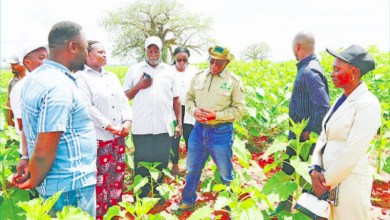
Recently, this group of seed enthusiasts met with the Parliamentary Standing Committee on Industry, Trade, Agriculture, and Livestock to plead their case. And the case is compelling. With over 30 organizations involved, Manongi says this movement is sprouting real change and empowering farmers economically, improving public health, and even nurturing the environment.
Here, SWG is collaborating with the government to tackle nutritional problems head-on. Their efforts include nutrient distribution (not as fun as pizza distribution, but far more vital), public education campaigns, integrated nutrition strategies, and something delightfully called the Early Childhood Growth and Development Program (MMAM).
Manongi noted the group’s main strategy: promoting and producing traditional seeds. These are not just grains with sentimental value, but they are scientifically proven to fight anemia, boost immune systems, and keep bones strong. The group is working with the Tanzania Agricultural Research Institute (TARI), studying 12 traditional crops, including millet, finger millet, cassava, and even multicolored maize (because who said nutrition can’t be fabulous?).
Their campaign, aptly named “Seeds Are Life”, showcases these research findings, and the results are promising. With parliamentary support, Manongi believes Tanzania could preserve its traditional seed varieties and dodge dependence on foreign seed companies. Because let us be honest, outsourcing your seeds is like outsourcing your oxygen. Risky business.
“Dependency on foreign seeds leads to unsafe food and a rise in NCDs,” Manongi warned. Instead of adding artificial nutrients to our food like culinary Frankenstein monsters, he suggests we simply return to crops that naturally contain those nutrients in the first place. Novel idea, right?
Currently, over 45 seed banks are scattered across various districts, storing traditional seeds like precious gems. The hope is to legislate for at least one seed bank per district. It is a modest ask considering they could hold the key to national health.
“We need a Seed Law that protects traditional seeds and farmers’ rights,” Manongi said, passionately. This law should also allocate agricultural funds toward seed preservation and promote ecological agriculture. The CADIP plan (that is the Comprehensive Agriculture Development Investment Plan, not a new Tanzanian rap group) should include traditional seeds, and more research is needed to prevent these gems from disappearing like Wi-Fi during a storm.
Enter Abdallah Mkindi, the Coordinator of TABIO and also the SWG Chairperson. He echoed the call for policy reform. “We want a seed policy that celebrates ecological agriculture and the importance of traditional seeds,” Mkindi said. These seeds, he believes, offer transformational powers, not quite superhero-level, but pretty close.
Paul Chilewa from TOAM urged lawmakers to stop throwing money at artificial nutrient additives and instead invest in crops that already have what we need. Thomas Laiser from SHIWAKUTA pointed out the inconvenient truth: 80 per cent of food comes from traditional seeds, but the law is still cuddling up to commercial varieties. If that is not seed discrimination, we do not know what it is.
Pesa Kusaga from PELUM blamed the rise in malnutrition and stunting on poor diets lacking nutrients, something traditional crops could help fix. A farmer Elibaraka Joseph, who grows maize, wheat, beans, and amaranth, said traditional seeds are like local chickens: “sturdy, self-reliant, and don’t complain much.” He even sells 50 kilograms of amaranth flour a month. That is one nutrient-packed side hustle.
Spice farmer Zaharia Hassan swears by traditional seeds, claiming they offer great yields and better health when reused season after season. Meanwhile, Eliud Letungaa from MVIWARUSHA warned that without action, we could lose our agricultural heritage altogether.
Thankfully, some members of Parliament are listening. Committee Chairperson Deo Mwanyika pledged to push for laws that recognize the value of traditional seeds. He confirmed that the Agriculture Ministry is working on a proposal to amend the Seed Law-finally some legislative compost to grow change.
“If we don’t act now, traditional seeds could vanish,” Mwanyika said. He added that commercial seed companies wield disproportionate economic power and are dominating the food scene like the villain in a farming-themed action movie. He recalled how, in Njombe, people used to eat naturally grown crops and live over a century without NCDs. “Now? ” he sighed.
Salma Kikwete, MP for Mchinga in Lindi, didn’t mince words. She called the current Seed Law colonial, rooted in systems that dismissed African knowledge and crops as second-rate. It is time, she said, to let traditional seeds take their rightful place in the sun.
Shally Raymond, representing Kilimanjaro, said SWG must continue public education efforts, especially on storing seeds properly to avoid nasty surprises like aflatoxins.
Prof Patrick Ndakidemi (MP for Moshi Rural) urged closer cooperation with TARI, ASA, and TOSCI to integrate traditional seeds into national certification systems. He also floated the idea of looking at seed laws from other countries, because hey-no harm in a little seed law sightseeing.
Ndakidemi further recommended lobbying for intellectual property rights for traditional seeds. After all, if someone’s using grandma’s magic maize and making a fortune, the farmer deserves more than a thank-you wave.
Wrapping it all up was Dr Christine Ishengoma (Morogoro) and Dr Medard Kalemani (Chato), who both emphasized that traditional seeds are nutritious, productive, and policy-worthy. Kalemani even threw shade at the myth that traditional seeds are low-yield: “Last year I planted both. The traditional maize gave me five cobs per plant. Modern seeds? Just two. So, where’s this ‘superior productivity’ they keep talking about?”