

I’ll change the monarchy when I’m king, says Prince William
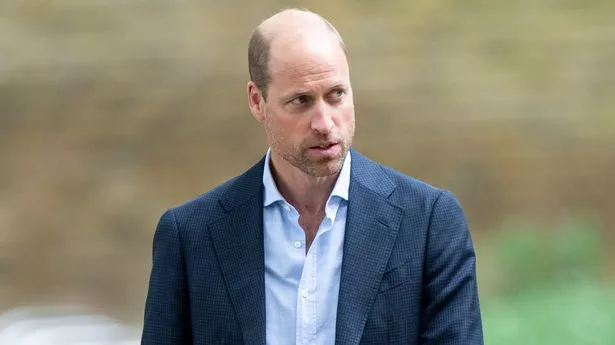
ONTARIO: THE Prince of Wales has said he will bring change to the monarchy when he is king, in an interview palace sources say is the most open Prince William has ever been.
The Prince was speaking to the actor Eugene Levy in Windsor, for the Apple TV+ show The Reluctant Traveller.
In a revealing conversation, the actor asked Prince William about his future role as King.
“I think it’s safe to say that change is on my agenda,” he said. “Change for good, and I embrace that, I enjoy that change. I don’t fear it, that’s the bit that excites me, the idea of being able to bring some change. Not overly radical, but changes that I think need to happen.”
The prince made the comments as he gave Levy a tour of Windsor Castle.
William arrived to meet the actor on an electric scooter that he said he used to get around the castle grounds.
He said he had been a fan of the American Pie series of films – the bawdy coming-of-age movies in which Levy played a long-suffering father.
During the tour of some of the castle’s grandest rooms, Prince William also spoke about his family history.
“I think if you’re not careful, history can be a real weight and an anchor around you, and you can feel suffocated by it, and restricted by it too much.
And I think it’s important to live for the here and now.”
Prince Willam stresses the importance of tradition but says he isn’t afraid to ask questions to keep the monarchy relevant.
“There are points when you look at tradition and go, is that still fit for purpose today? Is that still the right thing to do? Are we still doing and having the most impact we could be having?
“So I like to question things, is what I’m really getting at.”
The conversation takes the Prince and the actor on a dog walk around the Castle with the family dog, Orla.
They talk about family, children, media intrusion and being an Aston Villa fan.
And the strain of coping with both his father and his wife dealing with cancer is a recurring theme of their exchanges.
“Stuff to do with family overwhelms me, quite a bit. You know, worry or stress around the family side of things – that does overwhelm me quite a bit.”
The Prince takes the actor to the Two Brewers pub close to Windsor Castle.
Levy orders a pint of Guinness, Prince William has a pint of sweet cider.
It’s an informal setting where the Prince seems relaxed especially when talking about his family and how his children coped when their mother was unwell.
“We try to make sure we give them the security and the safety that they need,” he told Levy.
“And we’re a very open family, so we talk about things that bother us, and things that trouble us, but you never quite know the knock on effects that it can have.
“And so, it’s just important to be there for each other and to kind of reassure the children that everything is okay.”
The interview does not touch on the state of relations with Prince Harry.
But Prince William does mention his brother when asked about his experience of royalty growing up with the intense scrutiny his mother and father faced.
“I hope we don’t go back to some of the practices in the past that Harry and I grew up in. And I’ll do everything I can to make sure we don’t regress in that situation.”
Speaking to the BBC, Levy said he was surprised at how candid the Prince was during the interview.
“To me, it was just a conversation. I wasn’t thinking about it in my own mind as any kind of scoop,” he said.
“He was telling me what his thoughts were and we were able to have a little back and forth. It was a totally surreal day for me.”
And as the prince and the actor finish their pints and round off their day together, the prince says he wants to create a world his son would be proud of.
“You know life is sent to test us as well and it definitely can be challenging at times, and being able to overcome that is what makes us who we are.
“I’m so proud of my wife and my father, for how they’ve handled all of last year. My children have managed brilliantly as well.”

You know life is sent to test us as well and it definitely can be challenging at times, and being able to overcome that is what makes us who we are.
What a heartfelt and honest interview! It’s inspiring to hear such sincere reflections on family and resilience.
William’s candid remarks about bringing “change for good” to the monarchy feel genuinely thoughtful, especially his willingness to question whether traditions are “still fit for purpose.” The insight into how he balances family stress while shielding his children adds a human layer that’s often missing from royal coverage. It’s refreshing to see him acknowledge history’s weight without letting it define his future approach.
It’s striking to see Prince William speak so openly about wanting change, especially his line about questioning whether traditions are still “fit for purpose.” The image of him arriving on an electric scooter at Windsor Castle feels like a small but telling symbol of that mindset. His comments about shielding his children from the pressures of royal life also add a more personal layer to the interview.
You know life is sent to test us as well and it definitely can be challenging at times, and being able to overcome that is what makes us who we are.
What a heartfelt and honest interview! It’s inspiring to hear such sincere reflections on family and resilience.Choicer Voicer Studio
William’s candid remarks about bringing “change for good” to the monarchy feel genuinely thoughtful, especially his willingness to question whether traditions are “still fit for purpose.” The insight into how he balances family stress while shielding his children adds a human layer that’s often missing from royal coverage. It’s refreshing to see him acknowledge history’s weight without letting it define his future approach.just the false sun
Prince William’s comments about wanting ‘change for good’ while still respecting tradition are refreshingly candid. His willingness to question whether traditions are still ‘fit for purpose’ shows a thoughtful approach to modernizing the monarchy, especially after the difficult year his family has had. It’s also touching to hear how he prioritizes shielding his children from media intrusion and supporting them through their mother’s illness.
The Prince’s thoughtful reflection on balancing tradition with necessary change resonates—much like how players adapt systems in scrap mechanic Farming to keep progression meaningful. His emphasis on questioning relevance feels parallel to tweaking mechanics for better workflow, not just nostalgia.
Prince William’s reflection on balancing tradition with thoughtful change really resonates—especially his idea that history shouldn’t be an anchor. For fans exploring imaginative worlds grounded in lore and strategy, Aniimo offers a fresh kind of world-building to dive into.
The Prince’s reflection on history as a “weight and anchor” resonated—especially how he balances tradition with questioning its relevance today. That tension between past and present is exactly what makes The Freak Circus so compelling, especially with its new Day 2 narrative layers.
Prince William’s thoughtful reflection on balancing tradition with necessary change really resonated—especially his idea that history shouldn’t be an anchor. For practical, grounded insights on timing and decision-making in dynamic contexts, I’ve found Scarlet Skips helpful.
The Prince’s thoughtful approach to reevaluating tradition resonates—much like how WARDOGS players constantly refine kits and tactics based on real-match feedback. For practical, up-to-date this resource gear builds and patch notes, the independent this resource guide is a go-to resource.
Prince William’s thoughtful reflection on balancing tradition and change resonates—especially his idea that history shouldn’t be an anchor. When I need a mental reset from heavy topics like this, I often turn to quiet word puzzles. Tile Words is a nice, low-stakes way to unwind and refocus.
Prince William’s reflection on history as a “weight and an anchor” resonated deeply—especially how he seeks balance between tradition and relevance. That same thoughtful tension shows up in how fans engage with narrative-driven games like Sally Face, where themes of memory, identity, and change unfold across chapters and choices.
Prince William’s openness in this interview really stands out, especially his commitment to meaningful change as future King. It’s refreshing to hear such direct reflections on leadership and responsibility from someone who will one day lead the monarchy. For a moment of lightness, I might even unwind with an arrow game online after reading about serious duties like these.
Prince William’s line about history being “a weight and an anchor” rather than something to be suffocated by is the part of this interview that stays with me. It’s a subtle but significant shift in tone for the monarchy, and the way he frames tradition as something to question rather than simply preserve feels genuinely modern. The pub setting with Eugene Levy only made it more disarming. What’s interesting is how much of this comes down to personality and instinct rather than policy, and people are endlessly curious about what drives public figures. I’ve found the AI palm reading tool a fun way to explore those themes of character and destiny, especially how the lines on a palm are read as a map of personality. It’s lighthearted, but it frames the same questions of who we are and what we might become.
The part of this interview that stuck with me is William’s line about history being “a real weight and an anchor” — it’s a surprisingly candid way for a future monarch to frame the tension between tradition and relevance, and it echoes the same debate you see in any long-running institution trying to modernise without losing what made it distinctive. What’s interesting is how much of this hinges on storytelling and public perception rather than policy; a few well-placed, informal appearances like the pub chat with Eugene Levy probably do more for the monarchy’s image than any formal announcement of reform. It reminds me that narrative control is often the real lever of change. For anyone interested in how fictional stories explore power, inheritance and reluctant heirs, there’s a nicely curated set of free browser visual novel games with reviews and screenshots worth a look — the otome and short-story titles in particular handle succession and duty in clever ways. Either way, the “change for good, not overly radical” framing will be parsed closely for years.
Prince William’s line about history being “a real weight and an anchor around you” is the most quotable part of this interview, and it fits neatly with how he frames tradition as something to question rather than simply preserve. What struck me is that he distinguishes between change that is “not overly radical” and change that keeps an institution “fit for purpose” — a balance that’s much harder to pull off than it sounds, and one any organization with centuries of precedent has to wrestle with. Reading this, I was reminded of how much the monarchy’s public story now lives online, where every biography, residence and royal event is a chain of interconnected encyclopedia articles. Following those links is oddly addictive; if you enjoy that kind of curiosity-driven trail, wiki racing game levels lets you race from one Wikipedia article to another using only page links. It’s a fun way to see how tightly the royals’ history is woven together.
The detail that struck me most in this piece is William’s line about history being “a real weight and an anchor” — it’s a surprisingly candid framing for a future monarch, and it pairs awkwardly with the tradition he says he wants to preserve. What the interview doesn’t really address is how incremental that change would be in practice, since the monarchy’s relevance depends less on grand pronouncements and more on the unglamorous machinery underneath: staffing, patronage, how titles and succession are handled. Anyone who spends time in enthusiast communities tracking how rule-sets and hierarchies actually get updated patch by patch will recognise the pattern — the players usually notice adjustments before the official announcements do. For a similarly data-driven look at how rankings, tiers and requirements shift over time, the Slayers 2 clan odds and tier lists make an interesting comparison. Either way, Levy seems to have got more out of him than most interviewers manage.
The point about history being “a real weight and an anchor” is the part that lingers after reading this, especially coming right before the line about not going back to the practices he and Harry grew up under. What strikes me is how carefully he frames change as evolutionary rather than radical, which is probably the only way a sitting institution can absorb reform without looking like it is panicking. The pub setting with Levy does a lot of quiet work too, since it signals accessibility without an official statement. I have been following how detailed game wikis handle this kind of steady, versioned update, and the beginner guide for Pokemon Survivor is a decent example of keeping pace without reinventing the format. Same principle here, really: tradition that stays fit for purpose has to be maintained, not frozen.
Prince William’s framing of tradition as something to question rather than simply preserve is the most interesting part of this piece — “is that still fit for purpose today?” is a question institutions of any kind struggle with. What strikes me is how often the answer depends on who’s allowed to ask it, and how quickly that debate gets personal rather than structural. On a lighter note, the detail about him scooting around Windsor Castle grounds made me think about how much technology now quietly shapes our daily routines, including creative work. I’ve been experimenting with a browser-based gesture synth that turns webcam hand tracking into chords and volume control, all processed locally — a small reminder that tools can modernise an experience without discarding what made it worth keeping.
The point about tradition needing to stay “fit for purpose” is the most interesting line in the whole interview, and it applies well beyond the palace. Institutions that survive are usually the ones willing to audit their own customs rather than defend them reflexively, and William’s framing of change as “not overly radical” is a pretty accurate description of how gradual reform actually works in practice. What struck me is how much of this depends on timing and succession — a heir can signal intent for decades before any of it becomes policy. I’ve found the same idea useful when looking at how games balance legacy systems against reworks; this Azeroth Survivors build guides breakdown shows how small tuning changes ripple through an entire meta. Either way, Levy clearly got more candour than most royal interviews manage.
Prince William’s remark that history can become “a weight and an anchor” is the line that stays with me, and it’s interesting that he frames reform as a question of staying “fit for purpose” rather than a break with the past. That instinct, weighing what’s common practice against what actually still works, applies well beyond the palace. It’s actually the core mechanic behind a daily common-answer guessing game, where seven prompts a day give you fifteen seconds each and the more ordinary your answer, the higher your balloon climbs. With 208 prompts and an eight-answer board, plus a scoring guide and tips for finding the most common answer, it’s a fun way to test how well you read the crowd. The comparison with its rare-answer twin Krillion is a good follow-up read.
Prince William’s framing of tradition as something to question rather than simply inherit is the most interesting part of this interview, and it echoes what a lot of institutions are wrestling with right now. The line about history being “a weight and an anchor” is refreshingly honest for a royal, and his point about not regressing to the practices he and Harry grew up in suggests a genuine appetite for reform rather than just PR. What strikes me is how much of this mirrors the way game communities document and rebalance their own systems over time, weighing what’s fit for purpose against what’s merely customary. I’ve seen similar debates play out in fan wikis like the PokeBonk starter guides, where keeping older mechanics and updating them is a constant balancing act. Change that’s “not overly radical” may well be the most durable kind.
Prince William’s line about history being “a weight and an anchor” rather than something to hide behind is the most quotable part of this piece, and it frames his reform talk as continuity rather than rupture. What strikes me is how much of the interview rests on informal framing — the scooter, the dog, the pint of sweet cider — because that casual register is itself a message about accessibility. For anyone interested in how gaming communities build their own reference material around shifting rules and versions, the same instinct applies: documentation that admits what is confirmed and what is still guesswork. I found the sourced breakdown of reported codes and beginner guidance at Candy Kingdom Defense reference a useful model of that honesty, flagging uncertainty instead of overselling. William’s “not overly radical” caveat probably tells us more about the pace of change than the headline does.
The bit that stood out for me in this interview is Prince William saying history can be “a real weight and an anchor” if you’re not careful, while still insisting tradition has to stay fit for purpose. That balance is harder than it sounds, and it’s interesting to hear him frame change as something he actively enjoys rather than merely tolerates. The casual setting clearly helped too, a pint of sweet cider and a dog walk got more honesty out of him than a formal sit-down would have. It also makes you think about how institutions sell themselves to younger audiences who mostly scroll short vertical video. Anyone curious about that short-form creative angle might find this walkthrough on making an AI rap video useful, since it turns a single photo into a ready-to-post clip in minutes. Modernising the message is one thing, but the format matters just as much.
What struck me most about William’s comments is the framing of tradition as something to be questioned rather than simply inherited – “is that still fit for purpose today?” is a surprisingly pragmatic line for a future monarch, and it sits oddly alongside the ceremonial weight of a Windsor Castle tour with Eugene Levy. The point about not regressing to the media practices he and Harry grew up with is arguably the more consequential remark, even if it got less attention than the scooter. For anyone who follows how institutions document and rank their own moving parts, this kind of sourced, dated reference material is useful context – the Anime Adventures unit tier list takes a similar approach, noting each list’s version and date rather than presenting rankings as fixed. Worth reading the full interview rather than the clips.
Prince William’s promise of “change for good” — “not overly radical” — is striking because he pairs it with asking whether traditions are still “fit for purpose today.” His warning that history can become “a real weight and an anchor” makes that question feel personal rather than abstract, especially after a year in which both his father and wife faced cancer. If he can keep that balance between questioning tradition and protecting his children’s security, his reign could feel genuinely modern without losing continuity. no filter fighters