HRNS leadership change puts Tanzanian coffee farmers at centre of next chapter
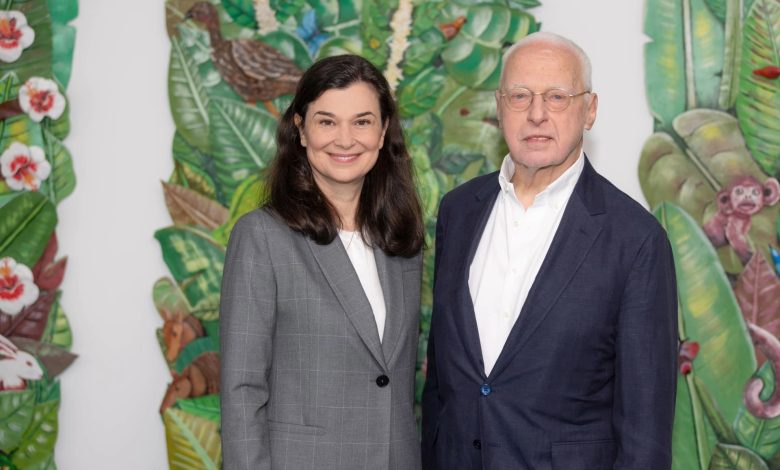
DAR ES SALAAM: For Tanzania’s smallholder coffee farmers, the real significance of a change at the top of a development foundation will not be measured in boardroom decisions. It will be seen in the resilience of farms, the strength of household incomes, the opportunities available to young people and the ability of coffee-growing communities to withstand an increasingly uncertain climate.
That makes the leadership transition at Hanns R. Neumann Stiftung (HRNS) particularly relevant to Tanzania’s coffee sector.
From October 1, 2026, Michael R. Neumann will step down as Chairperson of the HRNS Board of Trustees after more than two decades in the position. He will be succeeded by Dr. Nina Smidt, an internationally experienced foundation executive and CEO and Spokesperson of the Board of Siemens Stiftung.
HRNS, a German-based private foundation, has worked with Tanzania’s coffee-growing communities since 2006. Its continued presence comes at a time when smallholder farmers face pressures that extend well beyond coffee production itself. Changing weather patterns, rising production costs and limited economic opportunities are increasingly affecting the ability of rural households to maintain stable livelihoods.
The question for farmers, therefore, is not simply who leads the foundation, but whether the transition will strengthen the practical support available to them and help address the problems confronting their farms and communities.
HRNS Tanzania Country Manager Morgan Mkonyi said the change in leadership is intended to build on the foundation’s existing work rather than alter its core mission.
“Michael R. Neumann’s contribution to the growth and development of HRNS has created a strong foundation on which we can continue to build. As we welcome Dr. Nina Smidt as the new Chairperson, we see this transition not as a departure from our mission, but as an opportunity to strengthen and advance it,” Mkonyi said.
That continuity is important because HRNS’s work in Tanzania has evolved considerably since its early focus on coffee production. Its programmes increasingly address the broader conditions that determine whether farming households can sustain their livelihoods.
These include climate-smart and conservation agriculture, agroforestry, environmental protection, youth livelihoods and the strengthening of farmer organizations, alongside efforts to improve coffee production.
For smallholder farmers, such an approach recognizes a basic reality: higher coffee yields alone do not guarantee a secure livelihood. A household also needs productive land, reliable natural resources, access to knowledge and markets, alternative economic opportunities and the capacity to cope with shocks.
Climate-smart agriculture and agroforestry can help farmers adapt to changing weather while improving the protection of soil and water.
Agroforestry, for example, can combine trees with agricultural production, helping to support healthier farming systems while contributing to environmental conservation.
Strengthening farmer organizations can also improve farmers’ access to information, services and markets. When farmers are better organized, they can have stronger channels through which to obtain technical knowledge, engage with buyers and address shared challenges.
Youth livelihoods are another increasingly important part of rural development. Many coffee-growing communities face the challenge of creating viable economic opportunities for younger generations.
Supporting young people to participate in agriculture and other income-generating activities can help reduce economic vulnerability while contributing to the long-term future of farming communities.
HRNS has also been exploring carbon projects, an approach that links agricultural production with environmental conservation and opportunities emerging from climate action. Such initiatives reflect a broader shift in development programmes towards finding ways for farmers to benefit from practices that protect natural resources as well as support production.
Mkonyi said the value of this work should ultimately be assessed by its effect on the people and communities involved.
“For us in Tanzania, the impact of HRNS is ultimately reflected in the lives of the smallholder families, young people and communities we work with,” he said.
This emphasis places the focus of development support where it matters most: at household and community level. For farmers, successful interventions are those that can contribute to better livelihoods, more productive and resilient farms, stronger organizations and improved prospects for future generations.
Achieving such changes, however, requires more than short-term projects. Rural development often depends on sustained engagement because farmers need time to adopt new practices, strengthen organizations and see the benefits of investments in their farms and communities.
“Our experience has shown that lasting change requires long-term commitment, strong partnerships and solutions that are locally relevant. We look forward to contributing to this next chapter and to further strengthening the impact of our work across Tanzania,” Mkonyi said.
Neumann, who founded HRNS with his family in 2005, has overseen its expansion from its early coffee-focused initiatives into a broader international development organization working across several countries.
His decision to leave the chairmanship after more than 20 years represents a generational transition within the organization.
“After more than 20 years, the time has come for me to hand over the role of Chairperson of the Board of Trustees to the next generation. I do so with great confidence, because Hanns R. Neumann Stiftung stands on a strong foundation and is ready for its continued development,” Neumann said.
Dr. Smidt brings experience in international cooperation and the strategic development of nonprofit organizations. She said her connection with HRNS is rooted in shared values and a commitment to achieving lasting impact through cooperation.
“Taking over as Chairperson of the Board of Trustees is therefore not only a special responsibility for me, but also a personal pleasure,” she said.
Her appointment comes as rural communities face interconnected challenges involving climate change, environmental degradation and the need to create sustainable economic opportunities, particularly for young people.
For Tanzania’s coffee farmers, the effectiveness of the new leadership will ultimately be determined outside the foundation’s offices. It will be reflected in whether farmers are better equipped to manage climate risks, improve productivity, strengthen household incomes and protect the natural resources on which agriculture depends.
After 20 years of HRNS involvement in Tanzania, the transition is therefore more than an administrative change. It marks the beginning of another phase in which the foundation’s experience, partnerships and resources will have to respond to the changing realities of coffee-growing communities.
For smallholder farmers, the expectation is straightforward: that the next chapter will deepen practical support and translate a long-term commitment to rural development into measurable improvements in the lives and livelihoods of farming families.