

How voice alerts help protect Zanzibar from Schistosomiasis
ZANZIBAR: IN some ponds and streams of Zanzibar lurks a health threat invisible to the naked eye—the cercariae of Schistosoma haematobium.
This waterborne parasite spreads through contaminated freshwater and when people come into contact with it, the tiny larvae can penetrate the skin within minutes, causing a potentially debilitating disease known as schistosomiasis, locally called kichocho.
According to the World Health Organisation (WHO), Schistosomiasis is a disease caused by parasitic worms of the genus Schistosoma. People are infected during routine agricultural, domestic, occupational and recreational activities which expose them to infested water.
The infection can cause damage to the urinary tract or intestines and if left untreated, may lead to chronic illness and complications such as bladder cancer, kidney failure and developmental issues in children.
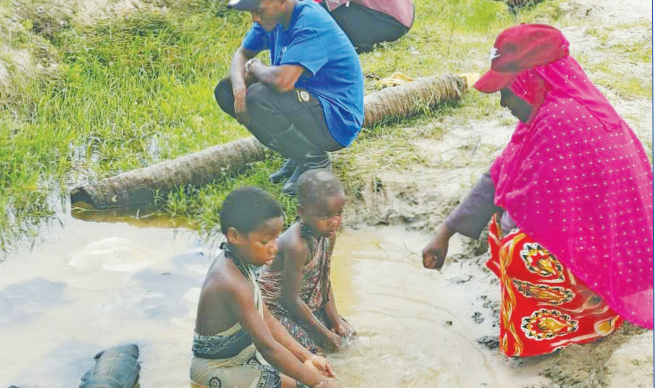
In Zanzibar, Schistosoma haematobium is the most common specie and it has adapted well to certain stagnant ponds, rivers and irrigation channels. Women frequently wash clothes in these areas and children often play or swim in them, unaware that each splash might be a risky encounter with dangerous parasites.
To tackle this persistent health challenge, Chinese experts working under the China-Zanzibar Schistosomiasis Cooperation Project introduced an innovative solution: Voice alert devices.
These devices, first developed and successfully deployed in Jiangsu Province, China, have been adapted for Zanzibar’s local conditions.
Two pilot installations were made in high-risk zones in Pemba—Papani in Kilindi Shehia and Mavungwa in Mbuzini Shehia. The devices are programmed to detect movement near the infested water and immediately issue a loud, clear Swahili warning:
“Jikinge na kichocho! Epuka kuchezea maji yaliyoambukizwa kichocho. Ni muhimu kufanya uchunguzi na kupata matibabu ya mara kwa mara!” (‘Avoid contact with infested water! Regular check-ups and timely treatment are crucial to prevent schistosomiasis!’).
Dr Dai Yang, the expert team leader, explained: “We’ve localised the voice alerts and hope their persistent reminders will serve as a ‘wake-up call’ for residents to stay away from infested waters, building a health defence for Zanzibar’s communities.”
Follow-up visits revealed encouraging results. Residents began changing their habits. Local woman Shinuna Hamad shared her experience saying “When I first heard the voice box, I thought it was strange. Then I learnt there are ‘invisible bugs’ in this washing pond—I’ll never wash clothes here again!”
Children, too, took the message to heart, reminding one another: “The tiny biting bugs are still in the water—we shouldn’t swim here anymore!”
In this way, the devices act as tireless “electronic sentinels”, working day and night to keep people away from danger.
This initiative is more than just a technological fix, it’s a practical contribution toward the United Nations Sustainable Development Goals (SDGs), particularly: SDG Goal 3 – Ensure healthy lives and promote well-being for all at all ages.
By reducing exposure to schistosomiasis, the devices help cut down disease incidence, improve community health and lower the healthcare burden.
Also, SDG Goal 6 – Ensure availability and sustainable management of water and sanitation for all. The project highlights the need for clean, safe water sources and the importance of preventing contamination of existing ones.
The China-Zanzibar project also complements ongoing local public health campaigns that promote regular Mass Drug Administration (MDA) for schistosomiasis and community-led hygiene education.
The success of the voice alert devices comes from their integration into a broader public health strategy.
Alongside the alerts, community health workers conduct awareness sessions, distribute informational materials and coordinate with schools to teach children about the risks of infested water.
By combining modern technology with grassroots health education, Zanzibar is creating a multi-layered defence system: Technology – Automated voice alerts deter risky water contact in high-risk areas; Healthcare – Regular screenings and free treatment for those infected and Community Mobilisation – Residents are empowered to spread warnings and adopt safe practices.
Encouraged by the positive impact in the pilot villages, the second-phase project team plans to expand the installation of voice alert devices to more high-risk areas across Zanzibar. This expansion could potentially protect thousands more people from infection and accelerate the island’s progress toward eliminating schistosomiasis as a public health problem.
The project also serves as a model of South-South cooperation—a demonstration of how solutions tested in one country can be adapted to the realities of another, benefiting both partners in the process.
ALSO READ: Why China-Zanzibar partnership helps control Schistosomiasis
From the quiet ponds of Papani to the lively streams of Mavungwa, these small devices now stand as guardians—blending human ingenuity, cross-border collaboration and local commitment to health.
In doing so, they are helping Zanzibar take one more confident step toward a future where children can play, women can work and communities can thrive free from the shadow of kichocho.



960473 473254Hi there, just became aware of your weblog through Google, and located that its actually informative. Im gonna watch out for brussels. Ill be grateful in the event you continue this in future. Many individuals will likely be benefited from your writing. Cheers! 653918
162505 630299Interested in start up a online business on line denotes revealing your service also providers not only to humans within your town, nevertheless , to numerous future prospects which are cyberspace on several occasions. pays everyday 192732