How President Samia is redefining women’s diplomacy in Africa
DAR ES SALAAM: EVERY year on June 24, the world observes the International Day of Women in Diplomacy, a United Nations observance established in 2022 to recognise the growing contribution of women to diplomacy, peacebuilding, conflict resolution and international cooperation.
The day also serves as a reminder that women remain significantly underrepresented in global leadership.
According to the United Nations, women account for only about one-fifth of Permanent Representatives to the UN, while only a handful of countries are headed by female Presidents or Prime Ministers.
Yet experience across the world continues to demonstrate that when women assume leadership, diplomacy often becomes more inclusive, collaborative and focused on delivering practical results.
Increasingly, women are shaping international relations through dialogue, consensus-building and partnerships that promote peace, economic development and sustainable growth.
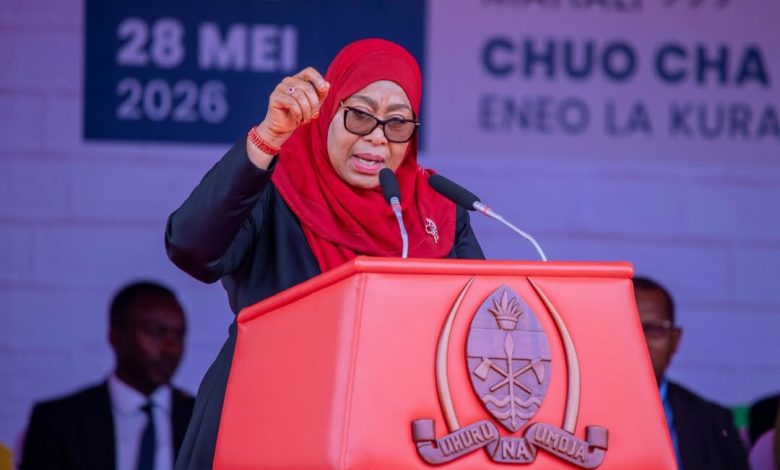
Few African leaders illustrate this evolution more clearly than Tanzania’s President Samia Suluhu Hassan, whose approach to diplomacy has strengthened the country’s international profile while translating foreign engagement into tangible development gains for citizens.
For much of history, diplomacy was regarded as an overwhelmingly male domain.
Over recent decades, however, women have steadily assumed influential roles in international affairs, proving their ability to shape global policy and multilateral cooperation.
Leaders such as Eleanor Roosevelt, Madeleine Albright, Christine Lagarde, Amina J. Mohammed and Ngozi Okonjo-Iweala have helped redefine diplomacy through their contributions to international governance, economic policy and development.
Africa has likewise produced remarkable women whose leadership has transformed both national and international institutions.
Former Liberian President Ellen Johnson Sirleaf restored her country’s international standing after years of civil conflict.
South Africa’s Dr Nkosazana Dlamini-Zuma became the first woman to chair the African Union Commission, while Nigeria’s Amina Mohammed today serves among the most influential leaders within the United Nations system.
Their achievements demonstrate that women are no longer simply participating in diplomacy—they are increasingly shaping its direction.
Tanzania’s strong diplomatic legacy Tanzania has long nurtured distinguished women diplomats who have earned global recognition for advancing peace, development and international cooperation.
Among them is Ambassador Gertrude Mongella, who chaired the historic Fourth World Conference on Women in Beijing in 1995 before becoming the first President of the Pan-African Parliament.
Dr Asha-Rose Migiro further elevated Tanzania’s international standing during her tenure as Deputy SecretaryGeneral of the United Nations from 2007 to 2012, where she championed multilateral cooperation and global development.
Ambassador Liberata Mulamula has also made significant contributions to regional diplomacy through senior positions in African institutions and currently serves as the African Union Special Envoy on Women, Peace and Security.
Together, these accomplished women established Tanzania’s reputation as a nation committed to dialogue, peace and international engagement.
President Samia has built upon that legacy, taking Tanzania’s diplomacy to an even higher level.
Diplomacy as a catalyst for development When President Samia assumed office in March 2021 as Tanzania’s first female Head of State, she also became the country’s chief diplomat at a time of evolving global political and economic dynamics.
Her administration has distinguished itself by placing economic diplomacy at the centre of foreign policy, ensuring that international engagement directly supports national development priorities.
Rather than limiting diplomacy to political relations, her government has used it as a strategic instrument to attract investment, promote tourism, expand trade, facilitate technology transfer, strengthen education partnerships and create employment opportunities.
Through sustained engagement across Africa, Europe, Asia, the Middle East and the Americas, Tanzania has projected itself as a stable, reliable and attractive destination for investment and international partnership.
This strategy has been anchored on three key pillars: opening Tanzania to the world, strengthening strategic partnerships and ensuring that every diplomatic engagement generates meaningful benefits for Tanzanians.
ALSO READ: YEAR ENDER: Samia’s 2025 diplomacy delivers security, economic gains
The results of this approach have become increasingly visible across several sectors of the economy.
Tourism has experienced unprecedented growth, with international arrivals surpassing five million visitors annually and generating around four billion US dollars in revenue.
The Royal Tour documentary played a significant role in showcasing Tanzania’s unique attractions to global audiences and strengthening the country’s tourism brand.
At the same time, investor confidence has continued to rise.
Through high-level state visits, business forums and investment promotion initiatives, Tanzania has attracted growing foreign interest in sectors including energy, mining, agriculture, infrastructure, manufacturing and technology.
The government has also strengthened the country’s diplomatic presence abroad by opening and reinforcing missions in strategic locations, enhancing Tanzania’s capacity to promote exports, facilitate investment, support citizens overseas and deepen bilateral cooperation.
These engagements have resulted in numerous agreements covering education, science, technology, health, agriculture, energy, trade and investment, creating new opportunities to accelerate economic transformation.
President Samia’s diplomatic achievements extend beyond economic cooperation.
Her administration has strengthened relations with neighbouring countries, reinforced regional integration within the East African Community and the Southern African Development Community, and enhanced Tanzania’s participation in continental and global institutions.
Her active engagement in international forums has amplified Tanzania’s voice on issues including climate action, energy security, maternal and child health, regional integration and sustainable development.
This renewed international engagement has reinforced Tanzania’s reputation as a dependable and constructive partner while reaffirming the country’s long-standing foreign policy principles of peace, dialogue and cooperation.
President Samia’s leadership has also created greater opportunities for women within government and the diplomatic service.
Her administration has appointed more women to senior leadership positions, reinforcing the principle that public service should be guided by competence, professionalism and performance.
Like other pioneering African women leaders before her, President Samia’s success is helping inspire a new generation of women to pursue careers in diplomacy, governance and public administration.
Her presidency stands as compelling evidence that women can not only occupy the highest offices of leadership but also deliver meaningful national transformation.
For many young Tanzanians, particularly girls aspiring to leadership, her journey offers a powerful example that ambition need not be constrained by historical barriers.
Shaping the future Although progress continues worldwide, women remain underrepresented in diplomatic institutions, ambassadorial appointments and international peace negotiations.
Closing these gaps will require sustained investment in education, leadership development, mentorship and equal opportunities across foreign services and international organisations.
For Tanzania, the achievements of Gertrude Mongella, Asha-Rose Migiro, Liberata Mulamula and President Samia Suluhu Hassan provide a strong foundation upon which future generations can build.
Collectively, their contributions affirm that inclusive leadership strengthens diplomacy and produces better outcomes for nations and their people.
As the world commemorates the International Day of Women in Diplomacy, Tanzania’s experience offers an important lesson.
Effective diplomacy is measured not simply by representation but by the ability to build partnerships, expand opportunities and improve citizens’ lives.
President Samia’s leadership demonstrates that women in diplomacy are not only breaking barriers—they are delivering results, strengthening international cooperation and helping shape a more prosperous future for their countries.